




01. Edit your form online
Type text, add images, blackout confidential details, add comments, highlights and more.

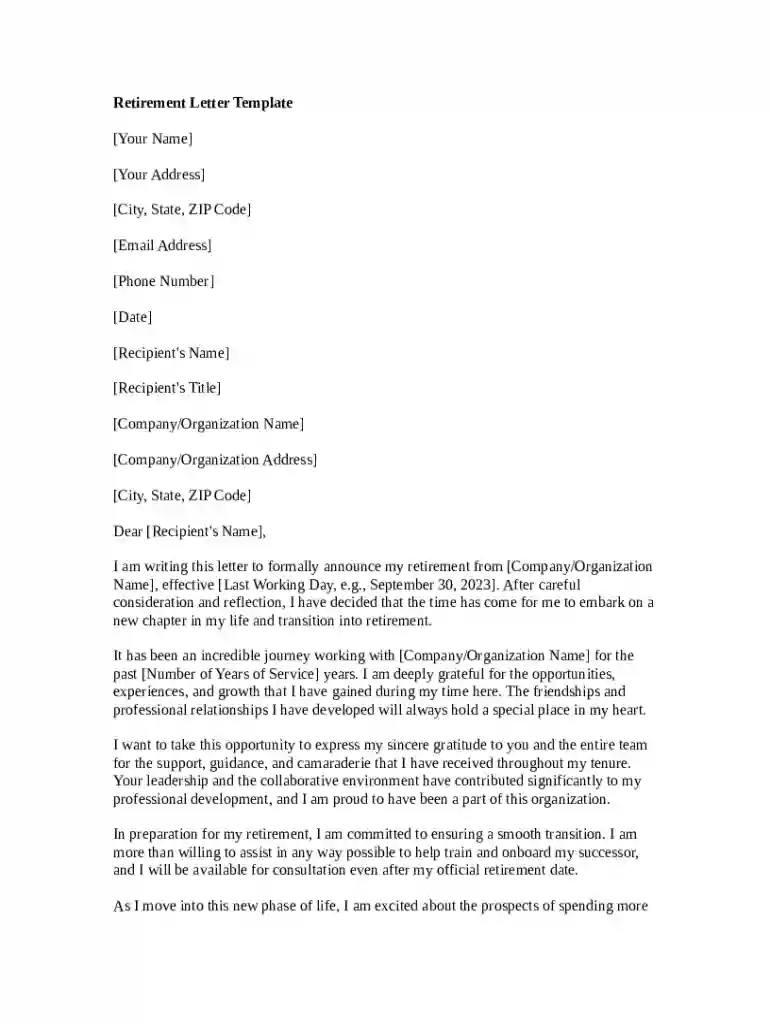
Type text, add images, blackout confidential details, add comments, highlights and more.

Draw your signature, type it, upload its image, or use your mobile device as a signature pad.

Send it via email, link, or fax. You can also download it, export it or print it out.
A retirement letter is a formal document announcing an individual’s decision to retire from a company or organization. It serves as an official notice to the employer, allowing for smooth transitions and planning. This specific template assists employees in expressing gratitude for their experience, offering help during the transition, and articulating plans for future endeavors. The purpose of utilizing a template is to ensure that all necessary components are included, presenting the information succinctly and professionally.
Using a retirement letter template involves selecting a sample that closely matches your personal situation. Begin by customizing the letter with your details, such as your name, position, and intended retirement date. Consider incorporating personalized elements, such as specific experiences or relationships that influenced your career positively. Ensure the letter is aligned with the tone and style of your company’s culture, showing appreciation and professionalism.
Select the Appropriate Template:
Insert Personal Details:
Customize Content:
Outline Transition Assistance:
Proofread and Finalize:
The template typically includes several crucial components to convey your message effectively:
Introduction:
Express Appreciation:
Transition Plan:
Future Plans:
Formal Closing:
These templates are primarily utilized by employees nearing the end of their career journey who wish to formally announce their retirement. It’s suitable for individuals from various industries, including:


Retirement letters are legally significant as they serve as a formal notice of termination of employment from the employee’s side. While they are not a legal requirement in all workplaces, providing such a letter:
Check employment agreements and company policies, as some organizations might have specific requirements for retirement notifications.
Several real-world scenarios highlight the utility of this template:
Both digital and paper versions of retirement letters hold importance:
Digital Versions:
Paper Versions:
Choosing the format depends on company policy, personal preference, and the method typically used for internal communications.
At DocHub, your data security is our priority. We follow HIPAA, SOC2, GDPR, and other standards, so you can work on your documents with confidence.


