






Definition and Purpose of Case 304-cv-00013-CDL Document 128 - GPO
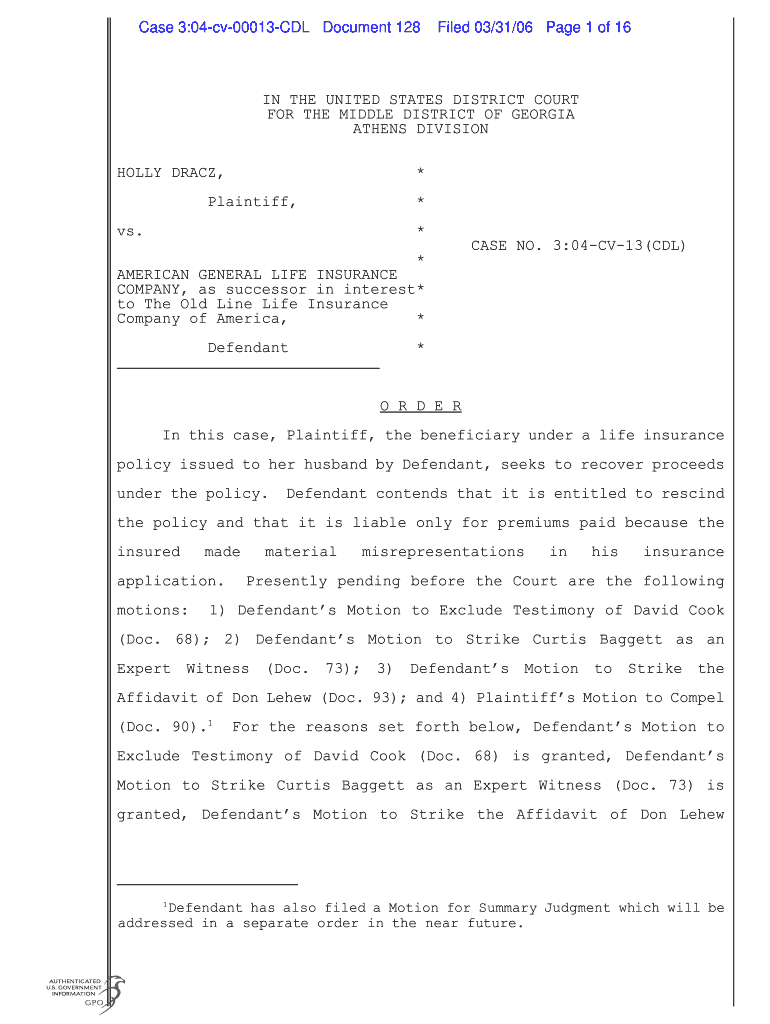
Case 304-cv-00013-CDL Document 128 - GPO is an order issued by the United States District Court in a legal dispute involving the plaintiff, Holly Dracz, and the defendant, American General Life Insurance Company. The primary purpose of this document is to address and rule on motions concerning expert testimony and evidence in the lawsuit, where the plaintiff is attempting to recover life insurance proceeds, while the defendant seeks to rescind the policy due to alleged misrepresentations by the insured.
Key Elements and Considerations
The core elements of Document 128 revolve around the court's decisions on several procedural and evidentiary matters. Critical components include:
- Rulings on the exclusion of expert testimonies.
- Orders to strike specific expert witnesses presented by the plaintiff.
- Resolution of defendant's motion to exclude certain testimonies based on relevance and admissibility.
- The court's decision to deny as moot other motions relating to evidence.
These actions set the stage for how the case will proceed, focusing on clarifying which evidence will be considered permissible.
How to Use the Document in Legal Proceedings
For parties involved in legal proceedings, understanding the implications of this document is crucial:
- Review Court Orders: Lawyers should carefully analyze the orders to comprehend the limitations on expert witness testimony.
- Adjust Legal Strategies: Based on which evidence and testimonies have been excluded, legal teams may need to adjust their strategies.
- Prepare for Next Steps: Anticipate potential appeals or motions based on the rulings and prepare arguments accordingly.
Who Uses Case 304-cv-00013-CDL Document 128 - GPO
This document is primarily utilized by:
- Legal Practitioners: Attorneys representing any involved parties, leveraging the document's rulings to shape case strategies.
- Judges: Referencing past decisions for precedent in similar cases.
- Legal Scholars and Students: Examining the document's application in court to understand procedural law and evidentiary standards.
Legal Implications and Use
The legal implications of this document are significant in dictating how the trial will proceed, particularly regarding accepted evidence. Key considerations include:
- Standard of Proof and Evidence Handling: The document outlines the court's expectations for how evidence should be presented and scrutinized, impacting the trial's dynamics.
- Precedent for Future Cases: Other courts may look to this decision for guidance in similar cases, highlighting its potential influence on legal standards.
Steps to Obtain the Document
To access this document, follow these steps:
- Court Clerk's Office: Request a physical or digital copy directly from the court where the case was filed.
- Online Legal Databases: Utilize platforms like PACER for electronic access, often requiring a subscription or fee.
- Law Libraries: These institutions might offer copies for educational and legal research purposes.
Common Terms and Definitions
When reviewing Document 128, familiarize yourself with key legal terms:
- Expert Testimony: The specialized statements given by experts to provide insights on complex matters within the case.
- Motion to Exclude: A request to the court to exclude certain evidence from consideration based on specific legal reasons.
- Material Misrepresentation: False statements that could affect the outcome or decisions in a contractual agreement, such as an insurance policy.
Digital Versus Paper Versions
With the rise of digital documentation, understanding the nuances between digital and paper versions is essential:
- Digital Versions: Offer easy access, storage, and sharing. Useful for quick edits and integration with legal software.
- Paper Versions: Still preferred by some legal professionals for annotations and a tangible reference during proceedings.
Penalties for Non-Compliance
Failing to adhere to court orders such as those in Document 128 can result in serious repercussions:
- Contempt of Court: Parties may face legal consequences for not complying with rulings.
- Negative Impact on Case: Ignoring court decisions can harm a party's standing, affecting the likelihood of a favorable outcome.