







Definition & Meaning
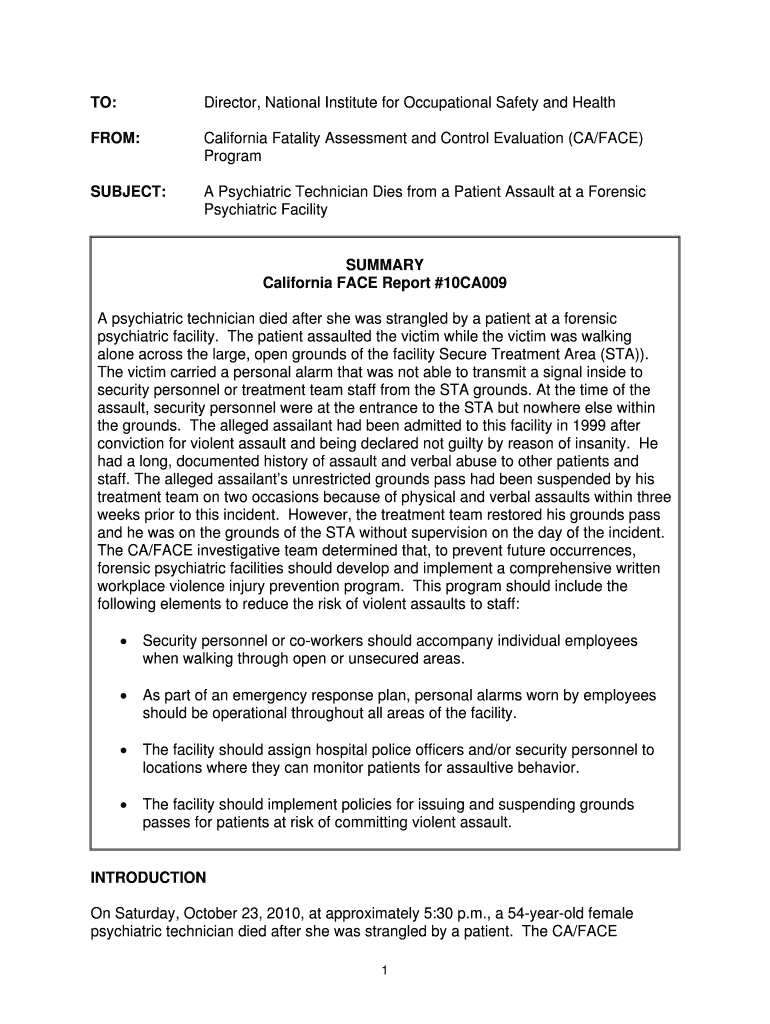
The FACE Report No 10CA009, titled "A Psychiatric Technician Dies from a Patient Assault at a Forensic, Californ," provides a comprehensive examination of the tragic incident involving a psychiatric technician who was killed by a patient at a forensic psychiatric facility in California. It serves as a crucial documentation of workplace violence in mental health settings, highlighting the need for enhanced safety measures and protocols to prevent similar occurrences in the future.
Key Elements of the FACE Report
The report details several critical components that contributed to the incident, primarily the lack of effective security measures and communication systems within the facility. These elements include:
- Ineffective Personal Alarms: The technician's personal alarm did not function effectively outdoors, which was a significant factor in the inability to prevent the assault.
- Inadequate Communication Systems: The facility's communication systems were insufficient, hindering timely alerts and responses during emergencies.
- Lack of Staff Accompaniment: The absence of a protocol requiring staff accompaniment in unsecured areas left workers vulnerable.
- Patient Grounds Pass Policies: The report underscores the necessity of stricter control over patient movements, particularly in granting grounds passes.
Steps to Complete the FACE Report
Completing the FACE Report involves a thorough examination of the incident details and contributing factors. Key steps include:
- Incident Description: Detail the circumstances surrounding the assault, including time, location, and actions taken by involved parties.
- Analysis of Security Protocols: Evaluate existing security measures and identify gaps or failures that may have contributed to the assault.
- Recommendations for Improvement: Propose actionable measures to enhance safety, such as updating alarms, revising communication systems, and enforcing staff protection protocols.
- Implementation Plan: Develop a clear plan for implementing recommendations, including timelines and responsible parties.
- Follow-Up: Establish follow-up processes to ensure the effectiveness of the implemented measures and adjustments as necessary.
Legal Use of the FACE Report
The FACE Report No 10CA009 is utilized legally to enhance workplace safety policies in forensic psychiatric facilities. It serves as a foundational document for developing comprehensive violence prevention programs by:
- Guiding Policy Development: The report informs the creation of new policies and procedures aimed at improving security and communication in similar settings.
- Training and Education: It is used in training sessions to educate staff on potential hazards and appropriate safety measures.
- Regulatory Compliance: Ensures facilities meet regulatory standards for worker safety and patient handling.
Examples of Using the FACE Report
Forensic psychiatric facilities utilize the FACE Report in various scenarios, including:
- Staff Training Programs: Implementing training sessions that use report insights to educate staff about potential risks and response protocols.
- Safety Audits: Conducting audits to identify current security gaps based on the report's findings.
- Policy Revisions: Modifying existing safety policies to incorporate recommended practices from the report.
- Emergency Response Drills: Planning and executing drills that simulate scenarios described in the report to test staff preparedness.
Who Typically Uses the FACE Report
The FACE Report is predominantly used by:
- Forensic Psychiatric Facilities: These facilities use the report to improve their safety protocols and training programs.
- Workplace Safety Regulators: Agencies may utilize the report to assess and enforce compliance with industry safety standards.
- Legal Professionals: Attorneys may reference the report in litigation involving workplace incidents or failures in safety compliance.
- Health and Safety Researchers: Academic researchers analyzing workplace safety trends and preventive measures in high-risk environments.


State-Specific Rules
While the FACE Report provides general safety recommendations applicable across various settings, specific regulations may vary by state. Facilities must:
- Review State Regulations: Verify local occupational safety laws and compare them against recommendations in the report.
- Adjust Implementation Strategies: Tailor the recommended safety measures to align with state-specific requirements and standards.
- Coordinate with Local Authorities: Engage with state health departments and safety regulators to ensure compliance and receive guidance.
Penalties for Non-Compliance
Failure to address the safety gaps outlined in the FACE Report can result in:
- Fines and Sanctions: Facilities may face monetary fines from regulatory bodies for failing to implement adequate safety measures.
- Increased Liability: Non-compliance can lead to higher liability in legal cases involving workplace incidents.
- Reputational Damage: Facilities may face reputational harm, impacting public trust and staff morale.
Business Types Benefiting from the Report
Various business entities can benefit from the insights provided in the FACE Report, including:
- Healthcare Organizations: Particularly those operating psychiatric or high-risk patient care facilities.
- Security Firms: Companies providing security services can use the report to tailor their offerings to meet specific industry needs.
- Training Providers: Organizations specializing in safety training can develop programs that incorporate findings from the report.
These selected blocks ensure a detailed, comprehensive understanding of the FACE Report No 10CA009 while offering practical insights into its application and implications within relevant sectors.




