







Definition & Meaning
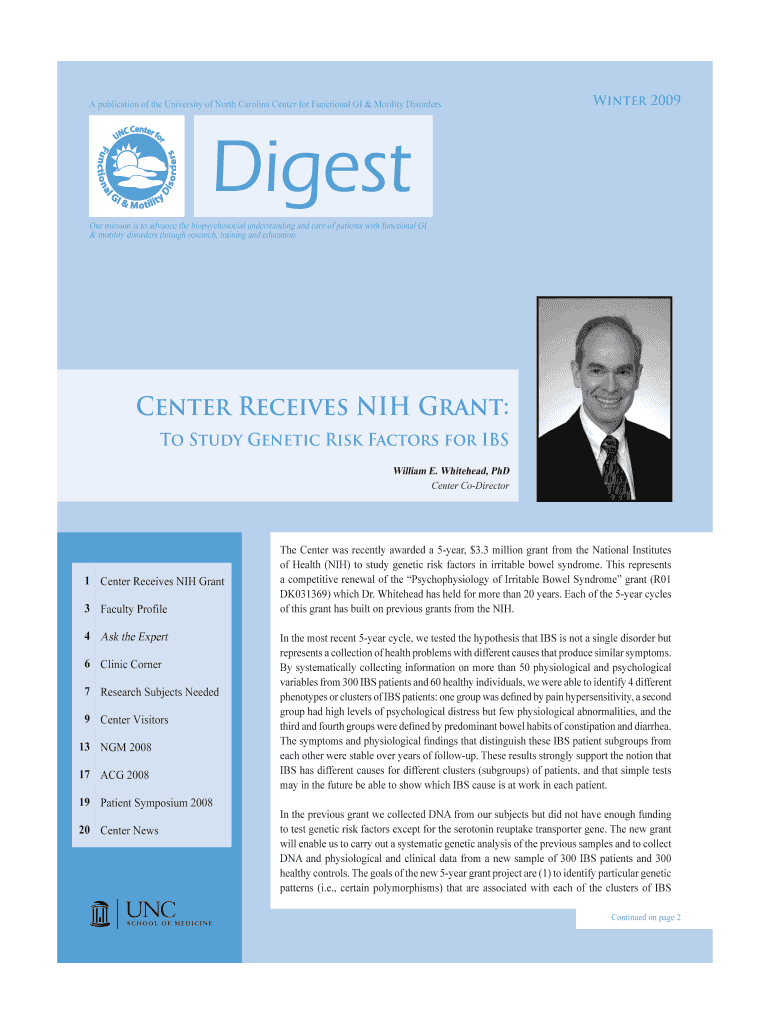
The "Winter 2009 - UNC School of Medicine - University of North Carolina - med unc" refers specifically to a publication from the University of North Carolina's Center for Functional GI & Motility Disorders. This publication is significant for its focus on advancing the understanding and treatment of functional gastrointestinal disorders. The Winter 2009 edition highlights several key initiatives, including a noteworthy NIH grant aimed at exploring genetic risk factors associated with irritable bowel syndrome (IBS), thereby reinforcing the center's commitment to research and education in this field.
How to Use the Winter 2009 Publication
For students, researchers, or professionals in the medical field, the Winter 2009 publication can serve as a valuable resource. It provides insights into ongoing research projects, detailed faculty profiles, and information on patient symposiums and studies associated with functional gastrointestinal disorders. This publication can be utilized to gain a deeper understanding of how research in this field was being conducted during this time and what methodologies were applied to enhance patient treatment and care.
- Research Reference: Use the publication as a reference for citing ongoing studies or methodologies.
- Educational Tool: Employ the findings and discussions as part of educational materials in academic settings.
- Research Inspiration: Draw inspiration for new research projects or collaborations in the field of gastrointestinal studies.
How to Obtain the Winter 2009 Publication
To access the Winter 2009 edition, you can reach out directly to the University of North Carolina's School of Medicine or explore their online resources and archives. The publication may also be available through academic databases that host historical issues of medical journals and research papers.
- University Archives: Check the UNC library or online digital archives.
- Contact faculty or departments: Direct inquiries to faculty members involved in the Center for Functional GI & Motility Disorders.
- Academic Databases: Use research databases like JSTOR or PubMed, which might list this publication in their records.
Steps to Complete an Analysis of the Publication
Conducting a thorough analysis of the Winter 2009 publication involves several steps to ensure a comprehensive understanding:
- Read the Entire Document: Start by reviewing the publication from start to end, noting key themes and topics.
- Highlight Important Sections: Mark sections that detail new research findings or significant announcements like the NIH grant.
- Identify Key Researchers and Contributions: Focus on identifying faculty members and their specific contributions outlined in the publication.
- Analyze Study Results and Discussions: Break down study methodologies and results to understand their impact on IBS research.
- Summarize Findings: Outline the major takeaways and their potential implications on current research trends.
Who Typically Uses the Winter 2009 Publication
Primarily, the Winter 2009 publication is utilized by researchers, medical students, educators, and professionals interested in the field of functional gastrointestinal disorders. This group views it as a resource to understand IBS more deeply and apply findings to clinical or educational scenarios.
- Medical Researchers: Focus on utilizing data for further study proposals or comparative analysis.
- Healthcare Educators: Incorporate findings into curricula or case studies for teaching future healthcare professionals.
- Medical Practitioners: Use insights for evidence-based practice enhancements in gastroenterology.


Key Elements of the Winter 2009 Publication
The core elements of the publication include:
- Research Highlights: Summaries of significant findings and methodologies within the field.
- Genetic Risk Factors: In-depth coverage of genetic links to IBS as facilitated by the NIH grant.
- Patient-Centric Approaches: Discussions on the importance of customized treatment plans based on patient subgroups.
- Conference and Symposium Details: Information about past and upcoming events to foster learning and collaboration.
Legal Use of the Winter 2009 Content
Utilizing the Winter 2009 publication for educational and research purposes typically falls under fair use, especially within non-profit academic or educational settings. However, it is essential to ensure proper attribution to the original authors and the institution when citing or referencing findings.
- Citation Requirement: Crediting the publication appropriately in any academic work or presentation.
- Non-Commercial Use: Limiting use to educational or research purposes unless direct permission is obtained for other uses.
Important Terms Related to the Winter 2009 Publication
Understanding the accompanying terminology can enhance the use of the publication:
- NIH Grant: A significant funding award that supports research initiatives.
- IBS Subgroups: Classifications within IBS patients that require unique treatment protocols.
- Functional GI Disorders: A group of disorders related to functions of the gastrointestinal tract without visible structural abnormalities.
These sections should provide an in-depth understanding of the "Winter 2009 - UNC School of Medicine - University of North Carolina - med unc," its relevance, and how it can be effectively used within medical and academic communities.




