Overview and Purpose of the Vaccine Fridge Temperature Record Month
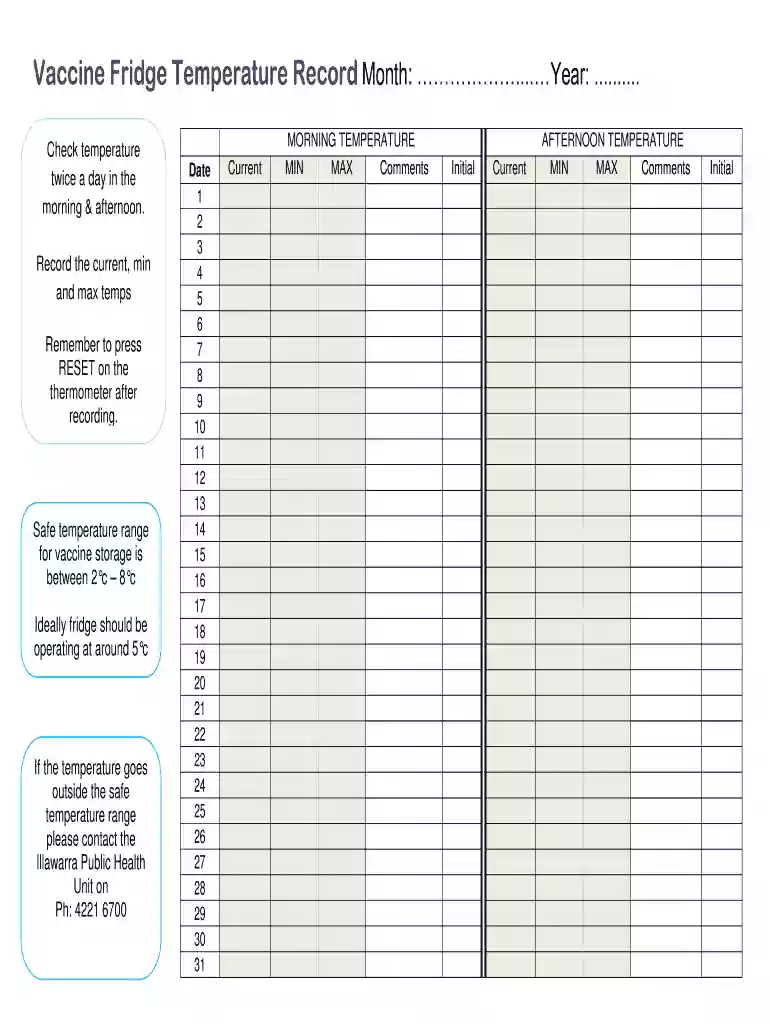
The Vaccine Fridge Temperature Record Month is a critical document designed to ensure the safe storage of vaccines by monitoring and recording fridge temperatures. This form serves to maintain vaccine efficacy by documenting the temperature range within which vaccines are stored. Keeping vaccines at the recommended temperature range of 2°C to 8°C, ideally around 5°C, is essential to prevent spoilage and maintain their effectiveness.
Importance of Temperature Monitoring
- Preservation of Vaccine Potency: Regular temperature checks are crucial for sustaining the potency of vaccines. Temperatures outside the recommended range can compromise the vaccines, reducing their effectiveness and potentially leading to public health risks.
- Regulatory Compliance: Health organizations and government agencies require strict adherence to vaccine storage guidelines. The document helps facilities comply with these regulations, mitigating legal risk.
- Quality Assurance: This form ensures that temperature fluctuations are promptly identified and addressed, ensuring the integrity of vaccines provided to the community.
How to Use the Vaccine Fridge Temperature Record Month
Recording Protocols
- Frequency of Temperature Checks: Temperatures should be checked and recorded twice daily, once during the morning and once in the afternoon, to ensure consistent monitoring.
- Thermometer Reset: After each temperature logging, it is important to reset the thermometer to ensure accurate future readings.
- Immediate Actions for Temperature Deviations: If temperatures fall outside the safe range, immediate documentation and corrective measures are necessary. Contacting the relevant health authority, such as the Illawarra Public Health Unit, is advised.
Filling Out the Form
- Section for Date and Time: Each entry should include the exact date and time of the temperature recording.
- Temperature Field: Record the precise temperature reading as displayed on the fridge thermometer.
- Comments Section: This area is for noting any abnormalities or actions taken if the temperature is outside the acceptable range.
Steps to Complete the Vaccine Fridge Temperature Record Month
- Setup and Calibration: Ensure that the thermometer is calibrated correctly before using it to record temperatures.
- Documentation: Log the temperature twice daily. Use the form's fields effectively, ensuring all necessary information is accurately captured.
- Verification and Sign-off: After recording, ensure that the entries are reviewed and signed off by an authorized staff member to maintain record accuracy and accountability.
Key Healthcare Personnel
- Nurses and Health Assistants: Often responsible for daily temperature checks and record maintenance.
- Pharmacists: Ensure compliance with vaccine storage guidelines in pharmacy settings.
- Facility Managers: Oversee the overall compliance with refrigeration practices and documentation requirements.
Important Terms Related to Vaccine Fridge Temperature Record Month
- Safe Temperature Range: Defined as the margin between 2°C and 8°C, with 5°C being optimal.
- Calibration: The process of adjusting a thermometer to ensure its accuracy.
- Deviation Report: Documentation of any instance where recorded temperatures fall outside the safe range.
Key Elements of the Vaccine Fridge Temperature Record Month
Required Information Fields
- Date and Time: Must be recorded accurately for each temperature check.
- Recorded Temperature: Ensure precision in the temperature recorded.
- Signature: The individual's signature confirms they conducted the temperature check.
Form Features
- Clear Layout: The form is designed for ease of use with distinct sections for input.
- Comprehensive Instructions: Guidance is included to help users understand the procedures for maintaining logs accurately.
Examples of Using the Vaccine Fridge Temperature Record Month
Scenario 1: Routine Monitoring
A healthcare clinic records fridge temperatures every morning and afternoon. Each entry ensures vaccines remain effective and ready for patient immunizations.
Scenario 2: Addressing Temperature Deviations
A pharmacy discovers a slight temperature rise during an afternoon check. They document the deviation, contact the appropriate health unit as recommended, and take corrective measures.
Legal Use and Compliance of the Vaccine Fridge Temperature Record Month
Regulatory Observations
- Health & Safety Protocols: Following these guidelines helps avoid legal consequences and promotes public safety.
- Audit Trail: Proper use and storage of this form create an audit trail proving compliance with storage regulations.
By following the structured process and maintaining accurate records, healthcare facilities can ensure both compliance with legal requirements and the safety of their vaccine supplies.