
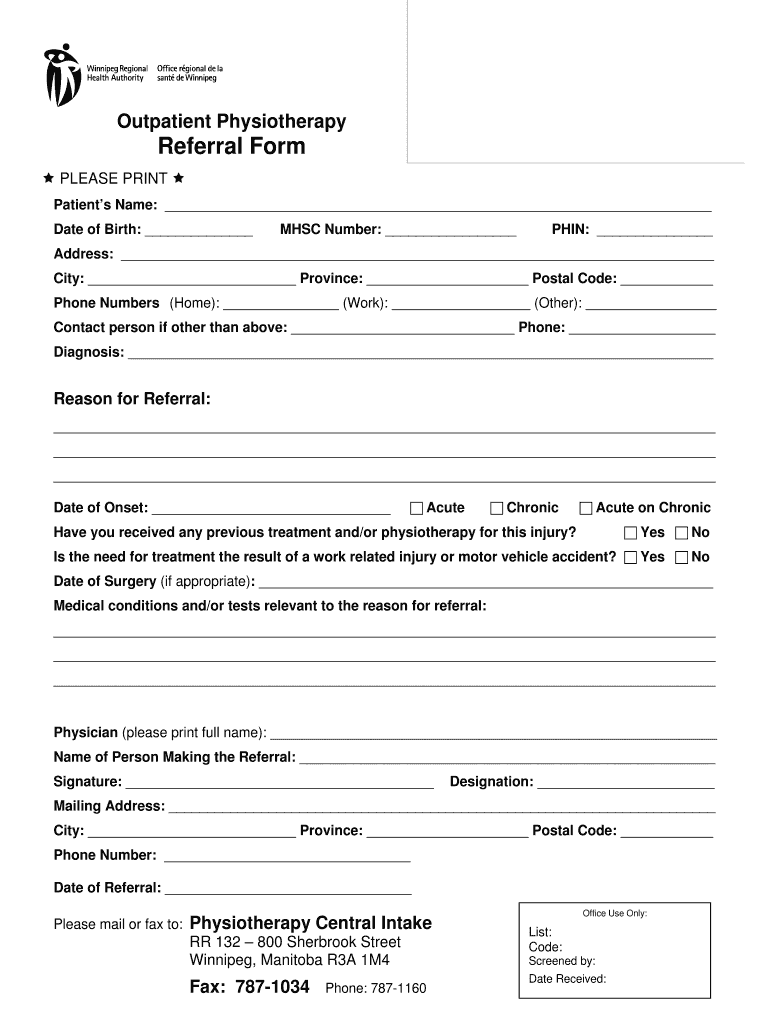







Definition and Meaning
The "Outpatient Physiotherapy Referral Form" is a standardized document used to facilitate the referral process from healthcare providers to physiotherapy services. This form collects crucial patient information, including personal details, diagnosis, and the reason for referral, thereby streamlining communication between different healthcare professionals.
Components of the Form
- Patient Information: This section records the patient's full name, address, contact information, and date of birth. Capturing this data ensures that the referral is accurately matched with the patient's records.
- Medical Details: Includes diagnosis, current treatment regimen, and relevant medical history to inform the physiotherapist about the patient's condition and needs.
- Referral Reason: A specific section where the healthcare provider outlines the reasons for recommending outpatient physiotherapy, which helps tailor the treatments to the patient's requirements.
How to Use the Outpatient Physiotherapy Referral Form
Step-by-Step Process
- Access the Form: Obtain the form from your healthcare provider's office or the relevant department.
- Fill Out Patient Information: Input essential details, ensuring accuracy to prevent any clerical errors.
- Complete Medical Details: Provide comprehensive details about the patient's current medical condition and history.
- Specify Referral Reason: Clearly articulate why physiotherapy is being recommended to ensure the treatment plan aligns with patient needs.
Typical Use Cases
- Clinical Referrals: Used by physicians to send patients to physiotherapy clinics.
- Specialist Recommendations: Employed by specialists who determine that a patient would benefit from specific physiotherapy techniques or routines.
How to Obtain the Outpatient Physiotherapy Referral Form
Available Sources
- Healthcare Facilities: Most commonly provided at hospitals, clinics, and doctor’s offices.
- Online Portals: Some healthcare providers offer downloadable forms on their websites.
- Physiotherapy Clinics: Clinics may also have copies of these referral forms available for new patients.
Things to Consider
- Verification: Always ensure the form is the latest version by checking with the issuing facility.
- Fillable Forms: Some versions of the form might be interactive, allowing patients and providers to complete them digitally.
Steps to Complete the Outpatient Physiotherapy Referral Form
Detailed Guidance
- Identify the Correct Form Version: Ensure that the form aligns with the specific needs of the referring provider and physiotherapy service.
- Accurate Data Entry: Double-check the entries for any typographical or informational errors.
- Attach Additional Documents: Depending on the form requirements, attach any supplementary medical records or notes.
- Submit the Form: Follow the instructions provided for submission, which could be through email, mail, or in-person delivery.
Who Typically Uses the Outpatient Physiotherapy Referral Form


Primary Users
- Healthcare Providers: Doctors, specialists, and nurse practitioners commonly utilize this form to refer patients for physiotherapy.
- Physiotherapy Clinics: Clinicians use the form to gather necessary information before initiating treatment.
Secondary Users
- Patients: May use the form to verify information or keep records of their treatment journey.
- Administrative Staff: Handle the logistics of form submission, processing, and filing.
Key Elements of the Outpatient Physiotherapy Referral Form
Essential Sections
- Patient’s Personal Details: Captures identification and contact information critical for communication and billing.
- Diagnosis and Treatment History: Provides context for the physiotherapist to understand the scope and history of the patient’s condition.
- Healthcare Provider’s Details: Includes the referring provider's name, contact information, and medical license number to ensure validity.
Supporting Elements
- Insurance Information: Often included to facilitate the billing process and determine coverage for physiotherapy services.
- Signature Fields: Required for the authorization of the referral by both the patient and healthcare provider, confirming consent and accuracy.
Examples of Using the Outpatient Physiotherapy Referral Form
Real-World Scenarios
- Post-Surgery Rehabilitation: Used to refer patients requiring rehabilitation after orthopedic surgeries, like knee or hip replacements.
- Chronic Pain Management: Utilized for patients experiencing chronic pain conditions that benefit from long-term physiotherapy interventions.
Case Studies
- Example 1: A family doctor uses the referral form to send a patient with a recurring back injury to a specialized physiotherapist.
- Example 2: A cardiologist refers a cardiac patient to outpatient physiotherapy for a tailored cardiac rehabilitation program, detailing history and specific instructions on the referral form.
Legal Use of the Outpatient Physiotherapy Referral Form
Compliance Requirements
- Patient Consent: The form often requires patient consent to share medical information between practitioners and facilities.
- Confidentiality Agreements: Governed by HIPAA regulations to ensure the protection of patient information during the referral process.
Legal Considerations
- Signature Authenticity: Verification processes may include identifying the authenticity of the healthcare provider’s and patient’s signatures.
- Retention Policies: Healthcare facilities must maintain records of the referral form as part of the patient's permanent medical records.
Form Submission Methods (Online, Mail, In-Person)
Diverse Submission Options
- Mail Submission: Traditional method, still widely used, where forms are sent to the physiotherapy clinic or hospital department.
- Online Submission: Increasingly popular due to convenience; forms can be submitted through secured platforms or email.
- In-Person Delivery: Preferred in cases where immediate discussion or assessment might be needed following the referral submission.
Factors Affecting Choice of Method
- Urgency: Immediate needs may favor in-person submission for faster processing.
- Security: Online methods must ensure encryption and compliance with legal standards to protect patient data.




