
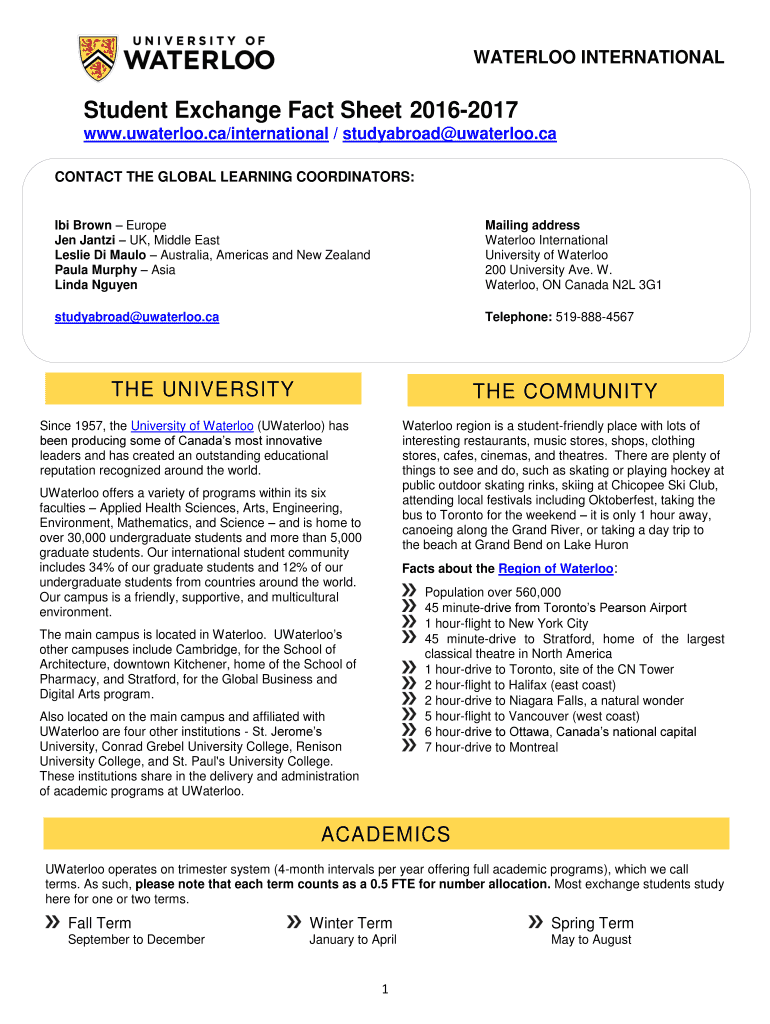







Definition & Meaning
The "Student Exchange Fact Sheet 2" serves as an essential informational guide for prospective exchange students interested in attending the University of Waterloo during the 2 academic year. It offers a comprehensive overview of the university's offerings, highlighting critical aspects such as academic programs, application procedures, and key dates. The document is designed to aid international students in navigating the intricacies of studying abroad and to ensure they have access to all necessary information before making their academic and personal arrangements.
Key Elements of the Student Exchange Fact Sheet 2
This fact sheet contains several vital components that are crucial for exchange students:
- University Overview: Introduction to the University of Waterloo, emphasizing its multicultural environment and student-friendly community.
- Academic Requirements: Details regarding the prerequisites for undergraduate and graduate students wishing to study at the university.
- Course Selection Guidelines: Instructions on choosing appropriate courses that align with students' academic goals.
- English Language Proficiency: Specifications on the required levels of proficiency in English for non-native speakers.
- Fees and Living Costs: Breakdown of anticipated expenses, including tuition fees and estimated living costs during the exchange period.
- Housing Options: Information on available accommodations, ranging from university dormitories to private rentals.
- Immigration Regulations: Guidance on necessary visas and other immigration-related requirements for international students.
Steps to Complete the Student Exchange Fact Sheet 2
Completing the form efficiently involves the following steps:
- Gather Required Documents: Collect academic transcripts, proof of English proficiency, and any other necessary documents.
- Review Academic Requirements: Ensure you meet the prerequisites for your desired courses.
- Fill Out Application Forms: Provide detailed personal and academic information as requested.
- Select Courses: Choose the courses that fit your academic plan, following the guidelines provided.
- Calculate Fees and Budget: Use the provided figures to estimate your financial requirements for the duration of your stay.
- Submit Application: Send your completed application along with supporting documents through the specified method.
How to Use the Student Exchange Fact Sheet 2
Students can utilize the fact sheet as their primary resource throughout the application process for an exchange semester or year. It is recommended to refer to each section in the fact sheet for guidance on specific steps, such as understanding program offerings or meeting language requirements. This document is particularly useful in planning, ensuring that all academic and logistical parameters are met.
Who Typically Uses the Student Exchange Fact Sheet 2
The fact sheet primarily serves:
- Prospective Exchange Students: Individuals considering a semester or year abroad at the University of Waterloo.
- Educational Consultants: Professionals who assist students in navigating foreign exchange programs.
- University Administrators: Staff involved in coordinating international study programs and student exchanges.


English Language Proficiency Requirements
To ensure student preparedness and ease of integration into academic programs, specific English language proficiency levels are outlined in the fact sheet:
- Minimum Scores: Acceptable test scores from standardized exams such as TOEFL or IELTS.
- Alternative Assessments: Approved alternative methods for demonstrating proficiency if applicable.
- Exemptions: Criteria under which some students may be exempt from these requirements.
Application Process & Approval Time
The application process involves several key steps, each outlined to ensure clarity and facilitate a smooth experience for applicants:
- Timeline: Suggested timeframe for submitting applications to secure timely processing.
- Steps to Follow: Detailed instructions covering each phase of the application.
- Approval Time: Estimated duration before receiving acceptance notifications or additional information requests.
Important Dates and Deadlines
The fact sheet also provides crucial dates, ensuring students are always aware of significant timelines:
- Application Deadlines: Final dates for application submissions to ensure consideration.
- Program Start Dates: Beginning of academic sessions for planning travel and accommodation.
- Orientation and Event Dates: Important events that exchange students are encouraged to attend, facilitating smoother integration into campus life.
Housing Options and Costs
This section of the fact sheet aids in understanding the variety and costs associated with living accommodations:
- On-Campus Housing: Options available within university dormitories, including cost and availability.
- Off-Campus Alternatives: Information on local rentals and exchange student communities.
- Cost Estimates: Estimated ranges for various housing options to help budget accordingly.
Immigration Regulations for International Students
International students must navigate several regulations as outlined in the fact sheet:
- Visa Requirements: Detailed information on obtaining student visas and necessary documentation.
- Legal Compliance: Guidance to ensure adherence to local immigration laws.
- Support Services: Resources offered by the university to assist with immigration-related queries and paperwork.
Real-World Use Cases
Illustrating how the fact sheet assists students in practice, example scenarios could include:
- Planning an Academic Year: A step-by-step guide for a student from Europe planning a full academic year abroad.
- Addressing Language Barriers: How non-native English speakers can use the language requirements section to meet necessary standards.
- Budgeting for Exchange: A case study on creating a financial plan using the fee and cost breakdowns provided.
By providing complete and detailed information, the Student Exchange Fact Sheet 2 effectively supports students through each stage of their international study journey.




