
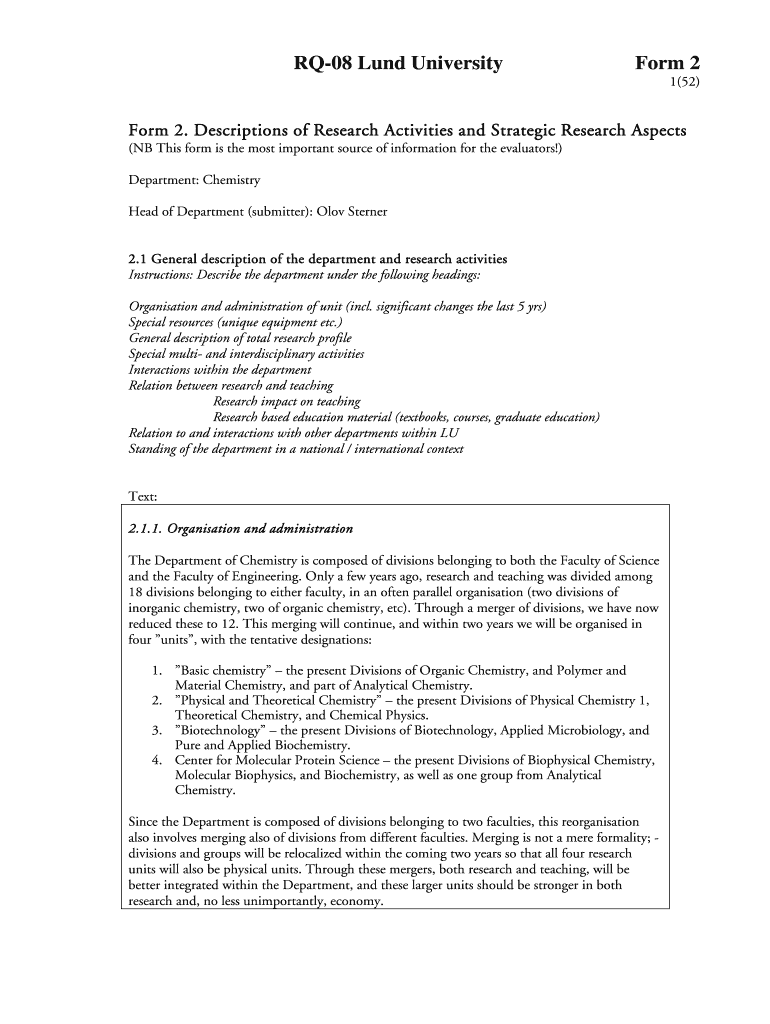







Definition and Purpose of the FORM2 Chemistry Engineering Doc
The FORM2 Chemistry Engineering doc is a structured document typically used in academic and professional settings related to chemistry and engineering. It serves multiple purposes, such as providing a detailed outline of theories, formulas, experimental procedures, or engineering principles. The document can also be a tool for submitting projects, lab reports, or engineering calculations. Its structured format allows for comprehensive presentation and analysis of technical information, making it a crucial resource in educational and professional environments.
Essential Elements of the FORM2 Chemistry Engineering Doc
The document is composed of several key components that are essential to its effectiveness and utility. These include:
- Header and Title: Provides the document's purpose and author details.
- Introduction: Outlines the scope, objectives, and background information.
- Methodology: Describes the procedures, materials, and technology used.
- Analysis and Results: Presents data, calculations, and findings.
- Conclusions and Recommendations: Summarizes insights and suggests future actions.
- References: Cites sources, standards, or regulations relevant to the content.
How to Complete the FORM2 Chemistry Engineering Doc
Completing the FORM2 Chemistry Engineering doc involves a series of methodical steps:
- Gather Necessary Information: Compile data, references, and methodologies.
- Draft the Introduction: Clarify the document's scope and objectives.
- Detail Methodology: Step-by-step listing of processes and materials.
- Analyze Results: Interpret data, perform calculations, and assess findings.
- Write Conclusions: Synthesize insights and propose recommendations.
- Review and Edit: Ensure accuracy, clarity, and compliance with guidelines.
Who Uses the FORM2 Chemistry Engineering Doc
The document is widely used by a variety of professionals and students, including:
- Academics: Professors and researchers documenting experiments.
- Engineering Professionals: Engineers presenting technical analyses.
- Students: Chemistry and engineering students submitting coursework.
- Regulatory Bodies: Agencies verifying compliance with standards.
Each group utilizes the document to enhance communication, ensure accuracy, and uphold industry standards in chemistry and engineering.
Important Terms Related to the FORM2 Chemistry Engineering Doc
Understanding key terms enhances the effective use of the document:
- Stoichiometry: Calculations of reactants and products in chemical reactions.
- Thermodynamics: The study of heat and energy transfer.
- Kinetics: The rate of chemical reactions and factors affecting them.
- Fluid Dynamics: Analysis of fluid flow and its properties.
These terms are vital for effectively communicating technical aspects within the document.
Legal and Compliance Considerations
Legal aspects play a significant role in how the FORM2 Chemistry Engineering doc is used. It should:
- Adhere to Industry Standards: Follow established guidelines for accuracy.
- Include Proper Citations: Avoid plagiarism by referencing all sources.
- Comply with Regulatory Requirements: Address regulations such as OSHA, EPA, or local codes.
- Ensure Confidentiality: Protect sensitive information depicted in the document.
Compliance ensures the document meets legal obligations and maintains professional integrity.
Digital vs. Paper Version of the FORM2 Chemistry Engineering Doc
The document is available both digitally and on paper, with each format offering distinct benefits:
- Digital Version: Facilitates easy editing, sharing, and storage. Compatible with software like Microsoft Word and PDF readers.
- Paper Version: Preferred for hand-written calculations or signatures. Often used in formal submissions or archives.
Choosing the appropriate format depends on the user's needs for flexibility, editing, or formal documentation.
Examples of Using the FORM2 Chemistry Engineering Doc
Practical applications of the document showcase its versatility:
- Conducting Research: Used by researchers to outline and analyze experiments.
- Engineering Projects: Engineers use it to design blueprints, calculations, and project proposals.
- Academic Assignments: Assists students in presenting lab reports or project write-ups.
- Compliance Audits: Helps organizations document procedures for regulatory compliance.
These examples underscore the document's role in fostering detailed and organized presentations in chemistry and engineering contexts.




