




01. Edit your shift to shift narcotic count sheet template online
Type text, add images, blackout confidential details, add comments, highlights and more.

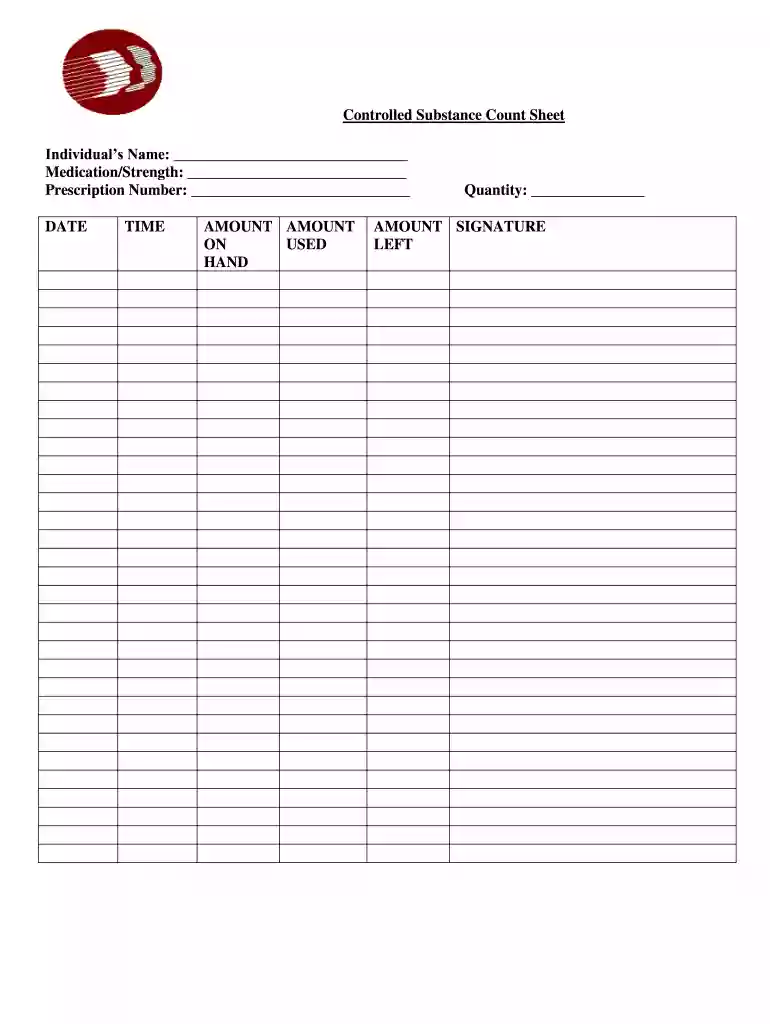
Type text, add images, blackout confidential details, add comments, highlights and more.

Draw your signature, type it, upload its image, or use your mobile device as a signature pad.

Send free printable narcotic count sheet via email, link, or fax. You can also download it, export it or print it out.
The shift to shift narcotic count sheet template is a crucial tool for healthcare professionals managing the inventory of controlled substances. This document facilitates accurate tracking and accountability for narcotics during changeovers between shifts in settings such as hospitals, clinics, and pharmacies.
The narcotic count sheet includes several vital sections that ensure proper documentation and compliance. Key fields within the template typically cover:
Using the shift to shift narcotic count sheet effectively requires adherence to specific procedures:
Adhering to the guidelines established in the narcotic count sheet template is critical for legal compliance and operational integrity.
To maximize the utility of the narcotic count sheet, healthcare facilities should implement best practices:
Managing narcotic counts can be fraught with challenges. Being aware of common issues and solutions can facilitate smoother operations:
By developing a comprehensive understanding of the shift to shift narcotic count sheet template and adhering closely to its requirements, healthcare facilities can ensure effective management of controlled substances, improving accountability and patient safety in the process.
Sure, a typed name is recognized as a legitimate electronic signature when you add it to your document using a compliant solution like DocHub. Simply upload your narcotic count sheet shift change to our editor, click Sign in the top tool pane → Create your signature → Type your name in the appropriate tab, and select how it will look on your document.
If you are searching for a state-specific narcotic count sheet pdf sample, you will find it in our DocHub Forms & Templates catalog. Use the search field, enter your form’s name, and search through the results for your state. You can also filter out irrelevant results while exploring our catalog by groups.
At DocHub, your data security is our priority. We follow HIPAA, SOC2, GDPR, and other standards, so you can work on your documents with confidence.




These forms are provided as a resource to the RN instructor for use during the Medication Administration training. Forms may be copied.
Oct 4, 2018 Shift to Shift Count Sheet ADMH logo which stands for Alabama Department of Mental Health. 100 North Union Street Montgomery, AL 36130; MediaRead more
Sep 26, 2019 So all of our votes are recorded on -- voting number one is on this pink sheet of paper. We will hand them in. Theyre all formally reported.Read more


