







Definition and Meaning of NSERC Form 250 (2001) p65
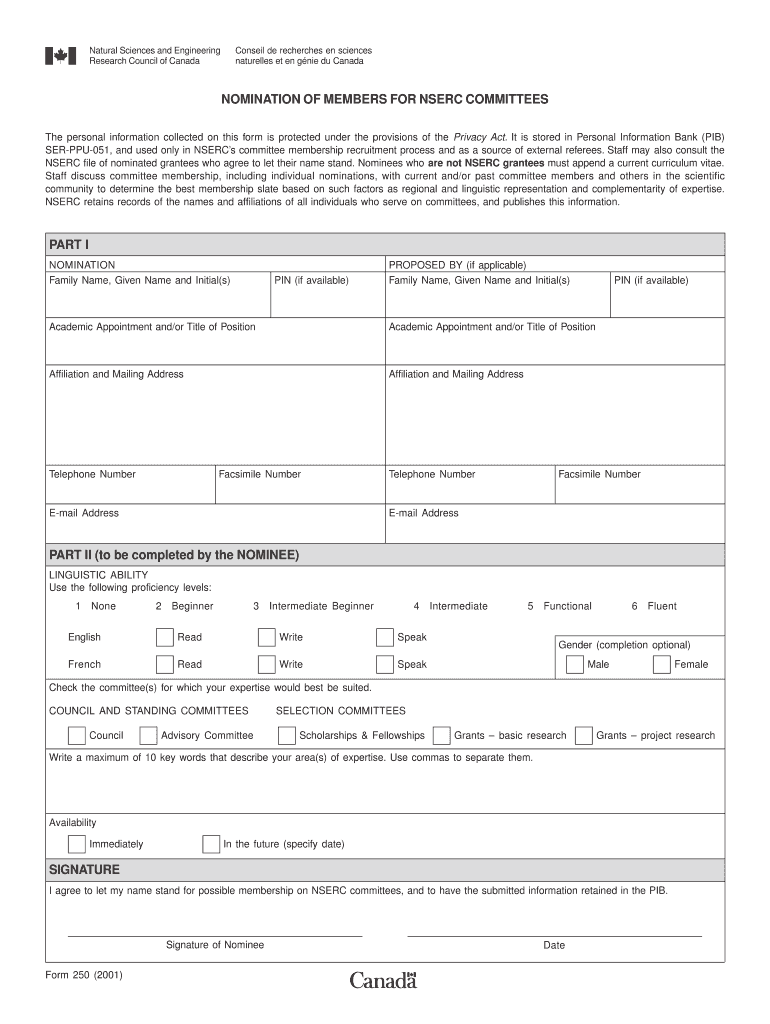
NSERC Form 250 (2001) p65, developed by the Natural Sciences and Engineering Research Council of Canada (NSERC), serves as a crucial document for nominating members to NSERC committees. It allows the collection and application of personal information under the Canadian Privacy Act. This form ensures that candidates with diverse representation and expertise are selected for committee membership, which is essential for equitable participation in shaping research directions and priorities.
How to Use the NSERC Form 250
Gathering Required Information
Before completing NSERC Form 250, gather all necessary information regarding the nominee. This includes personal details, linguistic abilities, committee preferences, and areas of expertise. Ensuring all information is prepared beforehand streamlines the completion process and avoids delays in submission.
- Personal information: Name, contact details, and relevant identification numbers.
- Linguistic abilities: Languages spoken and level of proficiency to ensure effective participation in bilingual contexts.
- Committee selection: Indicate preference for specific committees based on knowledge and interest areas.
- Areas of expertise: Detailed description of professional experience, qualifications, and academic history.
Completing the Form
The form should be filled out accurately and thoroughly. Pay special attention to sections regarding the nominee's availability and willingness to participate in committee activities, as these factors impact their potential appointment.
- Follow the structure of the form, ensuring all mandatory fields are completed.
- Proofread entries for accuracy and completeness to prevent errors that could affect the nomination.
How to Obtain NSERC Form 250
Downloading from the NSERC Website
To obtain the NSERC Form 250, visit the official NSERC website where the form is available for download. This digital access ensures you have the most updated version.
- Navigate to the NSERC committee nomination section.
- Select the appropriate form version; if unsure, verify with relevant guidelines or contact NSERC for assistance.
Requesting a Physical Copy
For those requiring a paper copy, contact NSERC directly to request a form by mail. Make sure to allow adequate time for delivery and ensure all deadlines for submission are met.
Steps to Complete NSERC Form 250
-
Read Instructions Thoroughly: Begin by carefully reviewing the form instructions. Understanding the requirements and expectations is crucial for an accurate and complete submission.
-
Fill Out Personal Information: Enter all required personal details, ensuring accuracy as this data is vital for processing.
-
Determine Eligibility: Verify that the nominee meets all eligibility criteria listed within the form.
-
Detail Expertise and Preferences: Provide comprehensive information on areas of expertise and specify committee preferences.
-
Submit the Form: After completing all required sections, ensure the form is signed and submitted according to NSERC’s specified submission methods.
Importance of NSERC Form 250
The NSERC Form 250 is vital for selecting suitable candidates for NSERC committees, ensuring a diversity of perspectives. Representation across various demographics and disciplines is crucial for robust decision-making processes and advancing Canada's scientific and engineering landscapes.
Who Typically Uses NSERC Form 250
Nominees and Their Employers
Prospective committee members and their employers typically utilize this form. Employers, such as academic institutions or research organizations, often play a key role in nominating eligible individuals who can contribute meaningfully to committee work.
NSERC Committee Members
Current NSERC committee members may also engage with Form 250 as part of their procedural responsibilities in vetting and selecting new nominees.
Key Elements of NSERC Form 250
Personal Details Section
This section requires precise and comprehensive information about the nominee to establish eligibility and suitability for committee roles. It often includes details such as contact information, identification numbers, and professional affiliations.
Expertise and Committee Preferences
A detailed account of the nominee's areas of expertise and their preferences for committee assignments is essential. This helps align individual skills with committee needs, promoting effective contributions.
Important Terms Related to NSERC Form 250
- Privacy Act: Governs how personal information is collected and used, ensuring that nominees understand their rights regarding data submitted on the form.
- Linguistic Ability: Reflects the nominee’s capability to participate in a bilingual setting, an important factor in committee selection for effective communication and collaboration.
Legal Use of NSERC Form 250
Using NSERC Form 250 mandates compliance with Canadian laws relating to privacy and personal data protection. It is crucial to understand these legal requirements, ensuring all information provided is handled ethically and lawfully. Nominees should consent to the collection and use of their personal information as outlined in the form.
State-Specific Rules for NSERC Form 250
While NSERC is a national entity, there may be provincial considerations influencing nominees’ selection, particularly around expertise in region-specific research priorities. Understanding these can benefit nominees aiming to align their expertise with provincial and national research needs.




