




01. Edit your dna test form pdf online
Type text, add images, blackout confidential details, add comments, highlights and more.

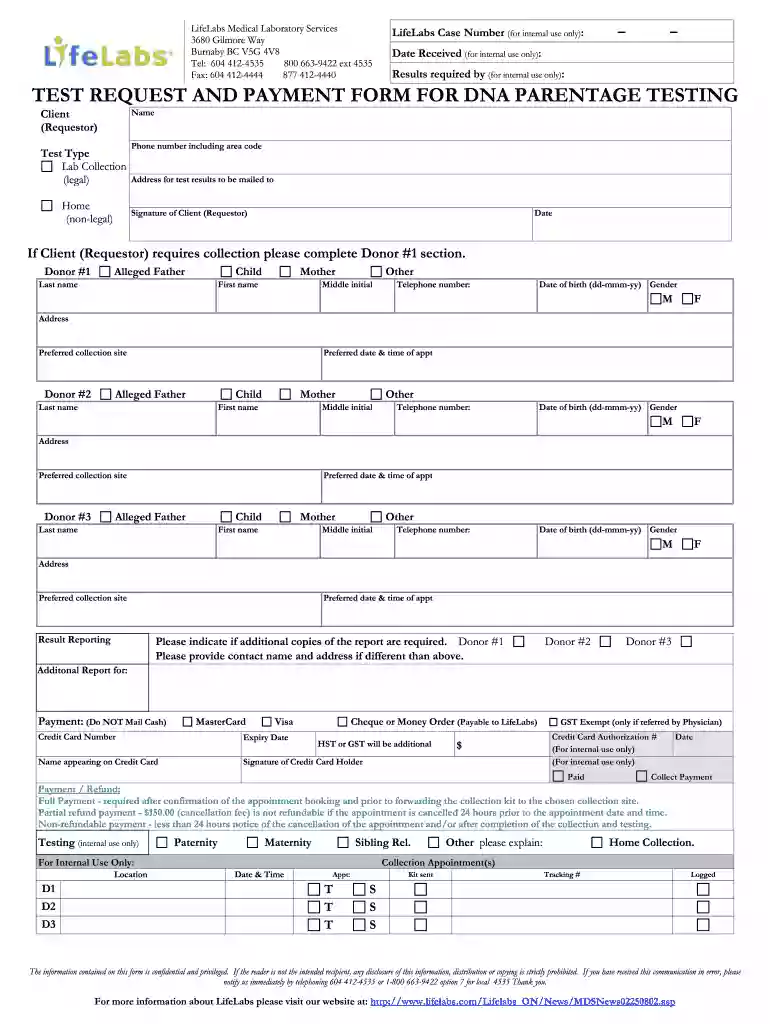
Type text, add images, blackout confidential details, add comments, highlights and more.

Draw your signature, type it, upload its image, or use your mobile device as a signature pad.

Send dna test paperwork via email, link, or fax. You can also download it, export it or print it out.
The DNA test form PDF is an essential document for individuals seeking DNA testing, whether for paternity, maternity, or ancestry purposes. This form serves as an official request for testing services and outlines the necessary information required for processing. Understanding the components and structure of this form is vital for ensuring a smooth testing experience.
The dna test form pdf typically includes several important sections that guide the user through the necessary information needed for testing.
Completing the dna test paperwork accurately is crucial for a successful application. Adhere to the following steps to ensure all necessary information is provided:
The dna test template serves multiple critical purposes in the testing process:
There are various formats and regulations associated with different types of DNA tests:
Both digital and physical submissions of the dna test form are options that facilities may accept:
Understanding the recognized legal standing of the dna test form pdf is critical, especially when used in a courtroom context:
Individuals utilizing the dna paperwork are responsible for:
By adhering to these guidelines, users can navigate the complexities of DNA testing more effectively, ensuring their forms are completed correctly and submitted in accordance with testing protocols.
Yes, and it’s really easy! DocHub is a web-based PDF editor with advanced document processing features that allow you promptly modify your forms, complete blank fields and drop new ones for other people to fill out, and create electronic signatures in several ways. Upload your dna test template, provide information as required, and decide how you want to eSign your document - by typing your name, drawing your signature, uploading its image, or using a QR code.
If your go-to email service is Gmail, it is simple to integrate your DocHub editor in your work. Edit your dna test template pdf with DocHub instruments and connect it to your drafts in Gmail. See how easy it can be to exchange files and collaborate with a swift PDF editing solution at hand.
At DocHub, your data security is our priority. We follow HIPAA, SOC2, GDPR, and other standards, so you can work on your documents with confidence.
We will collect DNA from your (blood/saliva/cheek, etc.). This testing and research may help us learn why some people are more likely than others to have [Read more
Feb 13, 2004 Diagnosis of testotoxicosis confirmed by DNA analysis of peripheral blood samples; no evidence of central precocious puberty as demonstrated byRead more


