
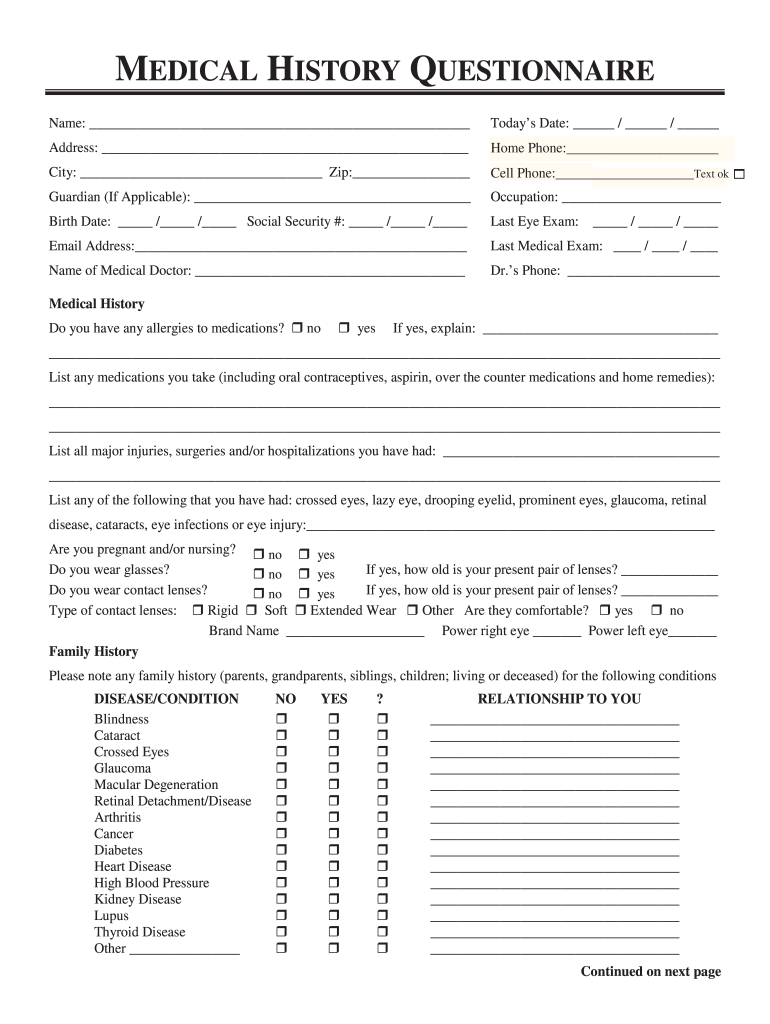







Definition and Purpose of the Medical History Checklist Questionnaire
The medical history checklist questionnaire is a comprehensive tool designed to gather crucial information regarding a patient's health background. It typically includes sections on personal details, medical history, family health conditions, and lifestyle factors such as tobacco and alcohol use. This form assists healthcare providers in identifying key medical information to enhance diagnosis and treatment planning.
Key Components of the Questionnaire
- Personal Information: This section requests basic information such as name, address, and contact details.
- Medical History: Patients provide information on past medical conditions, surgeries, allergies, and current medications.
- Family Medical History: This part inquires about health conditions that may run in the patient's family, which can help identify genetic predispositions.
- Social Habits: Questions in this area focus on lifestyle choices that can affect health, including diet, exercise, and substance use.
Practical Steps for Using the Medical History Checklist Questionnaire
To maximize the utility of the medical history checklist questionnaire, follow these outlined steps:
-
Obtain the Form: Access a reliable source to download or print the questionnaire. Many healthcare facilities provide a standardized medical history questionnaire template.
-
Fill Out Personal Details: Complete the initial section with accurate personal information. This is crucial for establishing patient identity and ensuring clear communication.
-
Disclose Medical History: Thoroughly detail any past illnesses, surgeries, and allergies. This section should be filled out as comprehensively as possible to aid in effective clinical assessments.
-
Include Family History: Provide information on family health conditions that may affect your health. Specify any chronic diseases or hereditary conditions present in immediate family members.
-
Review Social Habits: Answer questions regarding lifestyle choices to give healthcare providers context about factors that may influence health outcomes.
-
Submit the Completed Questionnaire: After reviewing the information for accuracy, submit the form securely to your healthcare provider.
-
Discuss with Healthcare Provider: During your appointment, go over the document to address any concerns or questions that arise based on the information provided.
How to Obtain and Complete the Medical History Checklist Questionnaire
Obtaining the medical history checklist questionnaire can typically be done through several avenues:
- Healthcare Providers: Many doctors’ offices or hospitals have medical history questionnaire templates available. Patients can often download them from the facility's website or request them directly.
- Online Resources: Websites like DocHub offer customizable medical history questionnaire templates to suit various needs.
Steps for Completing the Questionnaire
- Begin by entering your personal details, ensuring you have accurate contact information.
- Move into the medical history section and include any relevant illnesses or conditions, using specific terms for clarity.
- For the family medical history section, consult with family members if necessary to provide accurate data.
- Social habits should be answered honestly, as they play a significant role in healthcare decisions.
Importance of the Medical History Checklist Questionnaire
The medical history checklist questionnaire plays a critical role for several reasons:
- Comprehensive Overview: It provides healthcare professionals with a holistic view of a patient’s health, which is vital for effective diagnosis and treatment.
- Identification of Risk Factors: Understanding a patient’s medical and family history helps identify risk factors for developing certain conditions, allowing for preventative measures to be implemented.
- Enhancing Clinical Decisions: Accurate and complete information enables healthcare providers to make informed clinical decisions, tailor treatment plans, and ensure safer prescribing.
Common Users of the Medical History Checklist Questionnaire
The medical history checklist questionnaire is utilized by various stakeholders within the healthcare system, including:
- Primary Care Physicians: They use it during routine check-ups to gain insights into patients’ backgrounds.
- Specialists: Doctors specializing in specific fields rely on these questionnaires to understand the broader health context of their patients.
- Hospitals and Clinics: These environments often require filled-out questionnaires to create patient records and ensure informed medical care.
- Researchers: In clinical studies, researchers may collect medical history data to understand trends and patterns in health outcomes.


Key Elements of the Medical History Checklist Questionnaire
Several critical elements are fundamental to the effectiveness of the medical history checklist questionnaire. These include:
- Accuracy: Ensuring all information is correct and truthful enhances patient care.
- Comprehensiveness: Covering all relevant areas of health, including lifestyle, family history, and medical history.
- Clarity: Questions should be straightforward to avoid confusion, allowing patients to provide accurate information.
- Confidentiality: Protecting patient data throughout the data collection and sharing process is essential for maintaining trust.
Variants and Alternatives to the Medical History Checklist Questionnaire
While the medical history checklist questionnaire is a standardized form, various adaptations and alternatives exist:
- Specialty-Specific Questionnaires: Certain fields, like pediatrics or geriatrics, may have tailored questionnaires focusing on age-appropriate health concerns.
- Digital Versions: Increasingly, healthcare facilities offer online versions of the questionnaire that can be filled out securely before appointments.
- Triage Questionnaires: Emergency rooms may use abbreviated versions that focus solely on immediate and critical health concerns.
Understanding the varied forms and uses of the medical history checklist questionnaire serves to enhance patient-provider relationships, ultimately leading to better healthcare outcomes.




