




01. Edit your basketball tryout template free online
Type text, add images, blackout confidential details, add comments, highlights and more.

Type text, add images, blackout confidential details, add comments, highlights and more.

Draw your signature, type it, upload its image, or use your mobile device as a signature pad.

Send basketball tryout evaluation form via email, link, or fax. You can also download it, export it or print it out.
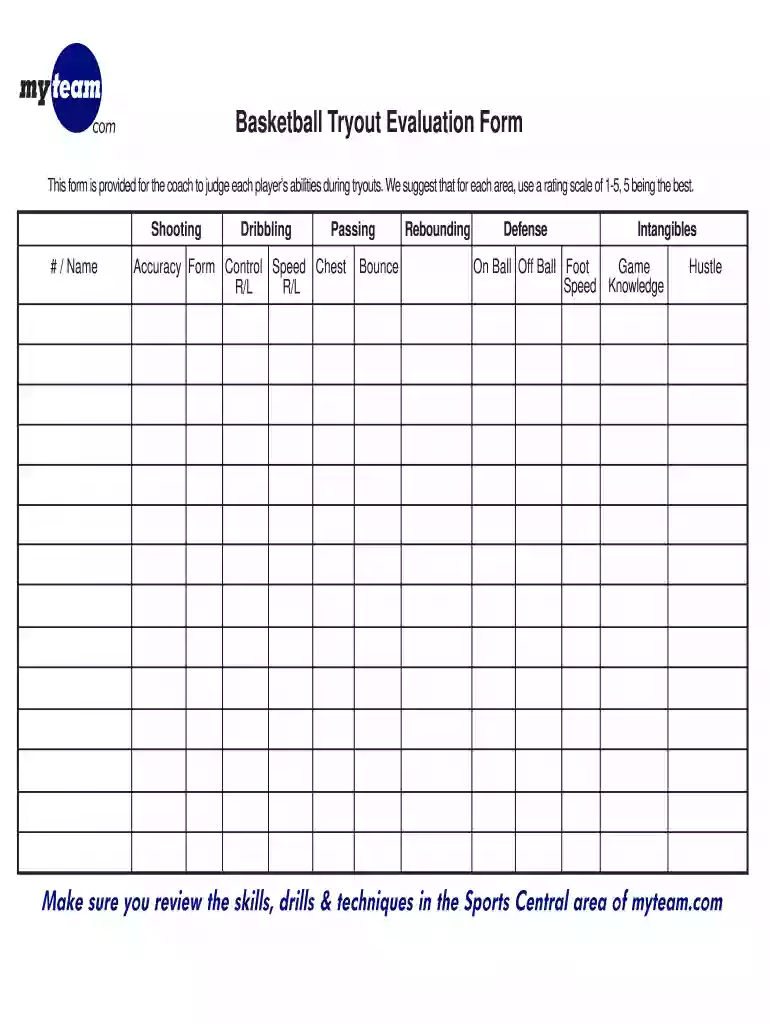
The basketball tryout evaluation form is a key tool used by coaches to assess players' skills during tryouts. This form typically employs a rating scale of one to five to evaluate various important categories, enabling coaches to make informed decisions about team selections.
A basketball tryout evaluation form generally includes several crucial sections, each focusing on different skill areas. Here are the primary components often featured on these forms:
Skill Assessment Categories: The evaluation usually categorizes player skills into shooting, dribbling, passing, rebounding, defense, and overall intangibles.
Rating Scale: Coaches assign scores from one to five, with one indicating poor performance and five representing excellent performance. This nuanced scoring system allows for detailed assessments.
Comments Section: A designated area for additional comments helps coaches provide qualitative feedback on each player's performance, noting strengths and areas for improvement.
Creating an effective basketball tryout evaluation form involves thoughtful consideration of the skills and attributes vital to basketball performance. Follow these steps to develop your form:
Decide the Evaluation Categories: Identify the key skill areas you wish to evaluate, such as shooting accuracy, ball handling, defensive capability, and teamwork.
Develop a Scoring System: Clearly define the scoring system. For instance, establish what each score represents and ensure consistency in evaluations across all coaches reviewing the players.
Add Space for Comments: Include sections where evaluators can jot down observations, which can provide context to the scores given.
Format and Design: Choose a layout that is easy to read and navigate. Tables can be useful for listing skills and corresponding scores side by side.
Test the Form: Before finalizing it, test the form in an actual tryout scenario to ensure it meets the evaluation needs effectively.
After tryouts, the collected evaluation forms should be analyzed to make final decisions regarding team selection. Here's how to utilize the evaluation results properly:
Comparative Analysis: Compare scores across different players to identify those who stand out in the evaluated categories. Look for trends, such as consistently high scores in shooting or defense.
Identify Development Areas: Use the comments and scores to highlight specific areas where players may need improvement. This can guide future training sessions.
Communicate Feedback: Providing players with their evaluation results offers transparency and allows them to understand where they excel and what they can work on.
Different scenarios may require different versions of a basketball tryout evaluation form. Here are a few common types:
Youth Basketball Tryout Evaluation Form: Tailored for younger players, this form may focus more on foundational skills and sportsmanship.
Middle School Basketball Tryout Evaluation Form: Slightly more advanced, this version might emphasize teamwork, positional play, and competitive spirit.
Printable Basketball Tryout Evaluation Form: A physical version that coaches can fill out manually, allowing for quick feedback in a gym setting.
To enhance the evaluation process and ensure fairness, consider the following best practices:
Standardization: Use the same form for all players in a particular tryout session to maintain consistency across evaluations.
Multiple Evaluators: Having several coaches assess players can help dilute personal biases and offer a more rounded perspective on each athlete's abilities.
Clear Instructions: Provide evaluators with guidance on how to fill out the forms, ensuring everyone understands the scoring criteria and categories.
Utilizing a basketball tryout evaluation form effectively can streamline the selection process, making it transparent and equitable for all players involved.
At DocHub, your data security is our priority. We follow HIPAA, SOC2, GDPR, and other standards, so you can work on your documents with confidence.


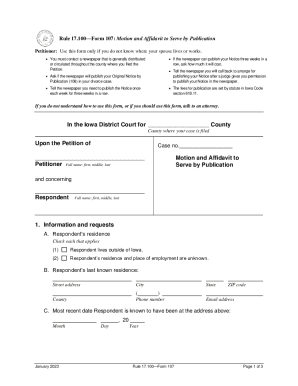


Printable Basketball Tryout Evaluation Form - This file serves as a comprehensive player evaluation form for basketball coaches. The form includes sections toRead more
WINTER SPORTS. Basketball: 1. If a contest official removes a student with signs, symptoms, or behaviors consistent with a concussion or brain injury fromRead more
(Note: This form is to be filled out by the patient and parent prior to seeing the physician. The physician should keep a copy of this form in the chart.).Read more


