




01. Edit your farnsworth d15 test score sheet online
Type text, add images, blackout confidential details, add comments, highlights and more.

Type text, add images, blackout confidential details, add comments, highlights and more.

Draw your signature, type it, upload its image, or use your mobile device as a signature pad.

Send d15 score sheet via email, link, or fax. You can also download it, export it or print it out.
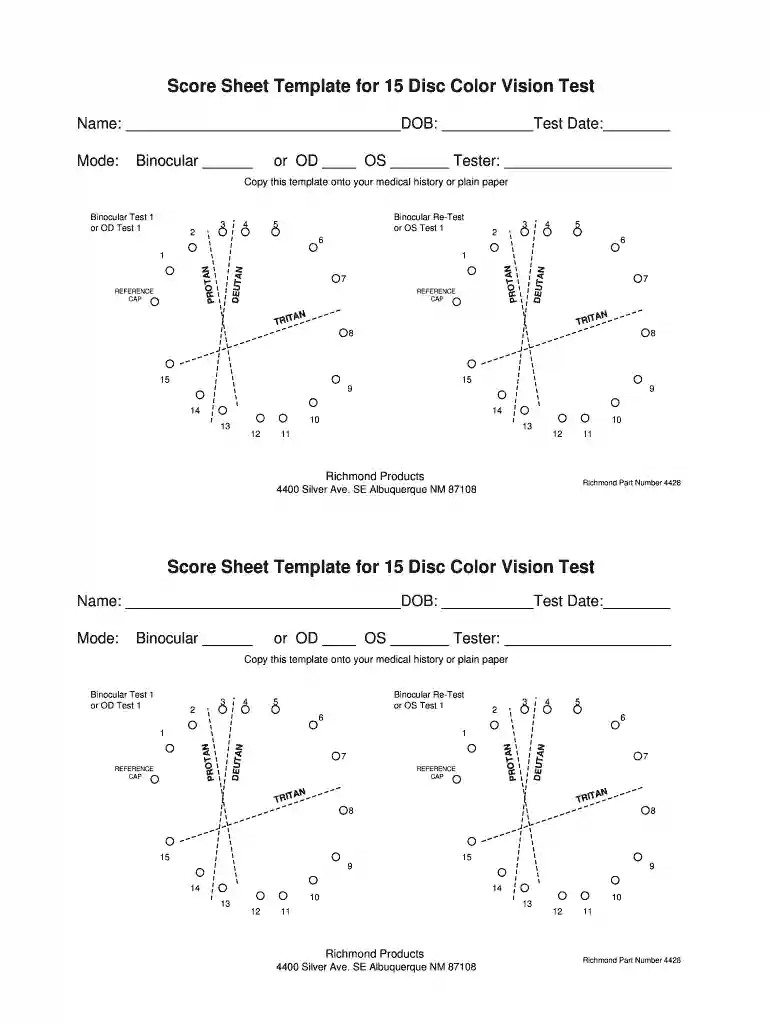
The Score Sheet Template for the 15 Disc Color Vision Test is a structured document designed for recording results from a specific color vision assessment. This test evaluates an individual's ability to distinguish colors and is primarily utilized in various professional settings, including optometry and occupational health. The template streamlines the process of collecting and interpreting test results, serving as a vital tool for practitioners.
The primary purpose of the score sheet template is to facilitate the accurate documentation and analysis of color vision test outcomes. It ensures that the results are systematically recorded, allowing for easy reference and evaluation. Key features included in the score sheet are:
Using the Score Sheet Template for the 15 Disc Color Vision Test involves several straightforward steps:
Adhering to these steps ensures precise data collection, which is essential for effective assessment of color blindness and related conditions.
The score sheet encompasses several critical elements that enhance its functionality:
These aspects contribute to a more efficient workflow, enabling clinicians to focus more on patient care rather than the administrative tasks involved in color vision testing.
The Score Sheet Template for the 15 Disc Color Vision Test is commonly utilized by:
By understanding the intended users, appropriate adaptations can be made to the score sheet to meet specific professional needs.


The legal use of the Score Sheet Template adheres to relevant medical and occupational health regulations in the United States. Practitioners must ensure that any information recorded complies with privacy laws, such as the Health Insurance Portability and Accountability Act (HIPAA) for patient data confidentiality. Maintaining accurate records not only supports clinical decisions but is also essential for legal documentation in case of disputes or inquiries regarding an individual's visual capabilities.
Ensuring compliance with these standards is crucial for the ethical practice of administering color vision tests and handling test results responsibly.
At DocHub, your data security is our priority. We follow HIPAA, SOC2, GDPR, and other standards, so you can work on your documents with confidence.


