




01. Edit your rugby player profile template online
Type text, add images, blackout confidential details, add comments, highlights and more.

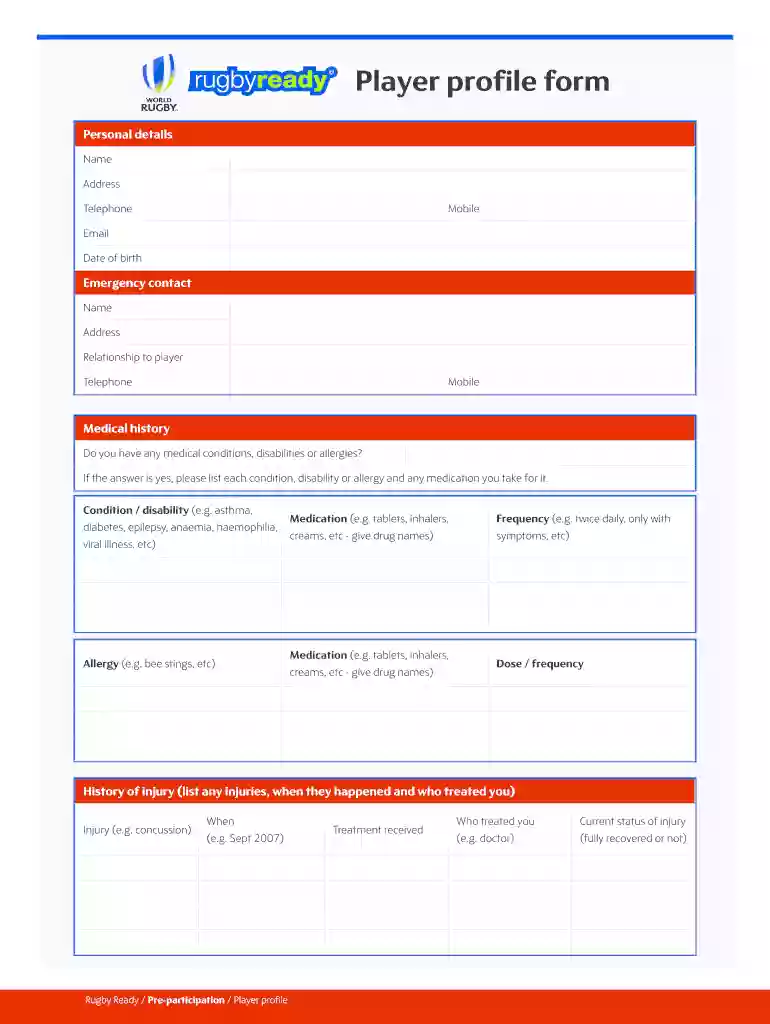
Type text, add images, blackout confidential details, add comments, highlights and more.

Draw your signature, type it, upload its image, or use your mobile device as a signature pad.

Send player profile template via email, link, or fax. You can also download it, export it or print it out.
The rugby player profile template is a formal document designed to collect essential information about rugby players. It serves multiple purposes within the sport, including ensuring player safety, documenting medical histories, and gathering contact details for emergencies. By standardizing the collection of important data, the profile template helps coaches, medical staff, and team administrators make informed decisions about player fitness and readiness.
In detail, this template typically includes personal information such as name, age, and contact details, as well as specific sections for medical history. These sections may cover prior injuries, current health conditions, and fitness assessments, which are crucial for minimizing risks during matches and training. Additionally, the profile can serve as a way to assess a player's experience and skills, depending on how the template is structured, making it invaluable for recruitment and player development.
Completing the rugby player profile template requires attention to detail and accuracy to ensure that all necessary information is collected. Here are the steps involved:
Personal Information: Fill in basic details such as the player's full name, date of birth, and contact information. This section is crucial for identification and communication.
Emergency Contacts: List at least one emergency contact, including their relationship to the player and a phone number where they can be reached. This is critical for safety during matches and training.
Medical History: Provide comprehensive health information, including any previous injuries, surgeries, or medical conditions. Players should disclose current medications and allergies to assist medical personnel in case of emergencies.
Fitness Assessments: Include current fitness levels and results from recent health screenings, if applicable. This data can assist coaches in tailoring training regimens to individual needs.
Signature and Date: End the document with the player’s signature, indicating that the information provided is accurate and complete. This formalizes the document and ensures that the player acknowledges the data submitted.
Upon completing these steps, the profile can be reviewed by coaches or medical staff to ensure all necessary information is present and accurate. Proper completion of the template contributes significantly to player safety and performance evaluation.
Utilizing a rugby player profile template offers several key benefits that enhance the management process within rugby teams:
Overall, the template enhances organization, communication, and safety, making it an indispensable tool in managing rugby teams effectively.
A comprehensive rugby player profile template should contain several fundamental elements to ensure it serves its intended purpose effectively:
Including these key elements ensures that all necessary information is captured, enabling coaches and team medical staff to make well-informed decisions regarding player management and safety.
The rugby player profile template is utilized by various stakeholders within the sport:
By ensuring that all these parties are involved in the creation and maintenance of the player profiles, the template can significantly improve team organization and player safety management.


At DocHub, your data security is our priority. We follow HIPAA, SOC2, GDPR, and other standards, so you can work on your documents with confidence.
by J Francis 2019 Cited by 27 This study aimed to develop a valid and reliable performance analysis template for quantifying team action variables in elite mens
Objective. The aim of this study was to describe the body composition, strength and speed characteristics of elite junior South African rugby players.


