







Understanding Modulo Art in Math
Modulo art is a unique blend of mathematics and creativity that leverages the concept of modular arithmetic to create artistic patterns and designs. In its essence, modulo art combines mathematical concepts, specifically the modulo operation, with artistic expression. The modulo operation involves finding the remainder after division of one number by another, typically represented as "a mod b." This principle is the cornerstone for creating various artistic grids and patterns in modulo art.
Fundamental Concepts of Modulo Art
-
Definition of Modulo Operation: The modulo operation is a mathematical function that determines the remainder when dividing one number by another. For example, 7 mod 3 equals 1, as 7 divided by 3 leaves a remainder of 1. In modulo art, this simple operation is used to create complex designs through repetition and structure.
-
Application in Design: Artists utilize the modulo operation to generate repeating patterns across a grid. This method results in visually compelling artworks that often explore symmetry, balance, and asymmetry through calculated repetition.
Examples of Modulo Art Patterns
-
Circular Grid Modulo Art: Artists can create designs within a circular framework using modulo calculations to determine where colors, shapes, or patterns should appear around the circle. This approach often results in kaleidoscopic effects that are both pleasing and mathematically fascinating.
-
Square Grid Modulo Art: This involves delineating a square grid where each cell is filled based on a specific modular formula. For instance, if an artist decides to use a coloring scheme based on the numbers one through four, each cell’s color could correspond to its position calculated using modulo 4.
Creating Modulo Art Designs
Tools and Resources
-
Modulo Art Maker: Various online tools allow for experimentation with modulo art designs. Using a modulo art generator can help visualize patterns and facilitate learning for beginners looking to understand the underlying math.
-
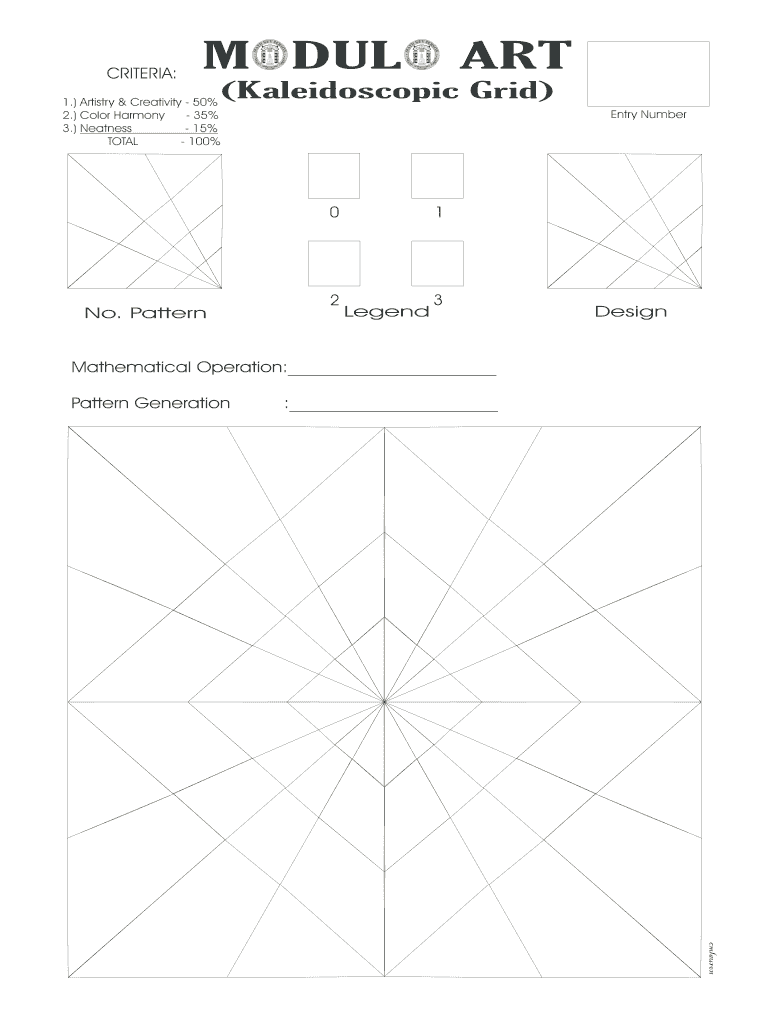
Templates for Modulo Art: Downloadable templates can serve as guides for creating specific designs. Circular grid modulo art templates or square grid modulo art templates are examples that can help artists structure their work efficiently.
Practical Steps to Create Modulo Art
-
Select A Grid Type: Determine whether to work within a circular grid or a square grid format.
-
Choose Colors and Patterns: Decide on a palette and any repeating elements, such as shapes or motifs.
-
Calculate Positions: Using the modulo operation, calculate the position of where each color or shape will appear in the grid. This could involve using a simple formula such as x mod n, where x is the current position and n is the number of colors available.
-
Fill the Grid: Start placing colors or shapes into the grid based on the calculated positions. Adjust as necessary to ensure a visually appealing design.
Common Applications of Modulo Art
-
Educational Tools: In educational settings, modulo art acts as a fun method for teaching students about modular arithmetic and pattern recognition. It combines art with math, making abstract concepts more concrete through creative expression.
-
Art Exhibitions: Artists showcasing works that exemplify the principles of modulo art often draw interest due to their fusion of mathematical precision and artistic flair. Circular modulo art can create stunning visual displays in galleries.
Exploring Modulo Art Templates and Generators
Available Templates
-
Modulo Art Circular Grid Template: These templates provide a structured approach to creating circular designs, pre-divided into sections that represent modular positions. They can be downloaded and printed for practical use.
-
Modulo Art Square Grid Template: Similar to circular templates, these offer a pre-defined square grid where creators can easily apply their designs using modular arithmetic.
Online Modulo Art Generators
Many websites provide free modulо art generators, allowing users to experiment with various parameters and instantly see the results. Features often include customizable grid sizes, color palettes, and patterns, making it easier for artists at any skill level to engage with modulo art.
Examples of Modulo Art Practices
-
Kaleidoscopic Designs: Utilizing a modulo art kaleidoscopic grid, one can create intricate patterns that are symmetrical and visually invitational. Each section of a grid could represent a varying color based on modulo values, creating a harmonious blend of art and math.
-
Pattern Experimentation: Artists may explore different configurations and styles within their modulo art practice, such as alternating color rows or incorporating dynamic elements to enhance visual appeal.
Conclusion: The Intersection of Math and Art in Modulo Art
Modulo art beautifully illustrates how mathematical principles can serve as a foundation for artistic expression. The interplay of color, shape, and modular arithmetic not only produces captivating designs but also invites deeper engagement with mathematical concepts. By leveraging tools like modulo art makers and templates, both educators and artists can explore this unique field, encouraging a creative approach to mathematics.


