







Comprehensive Overview of a Printable Gun Inventory Sheet
Definition and Purpose of a Gun Inventory Sheet
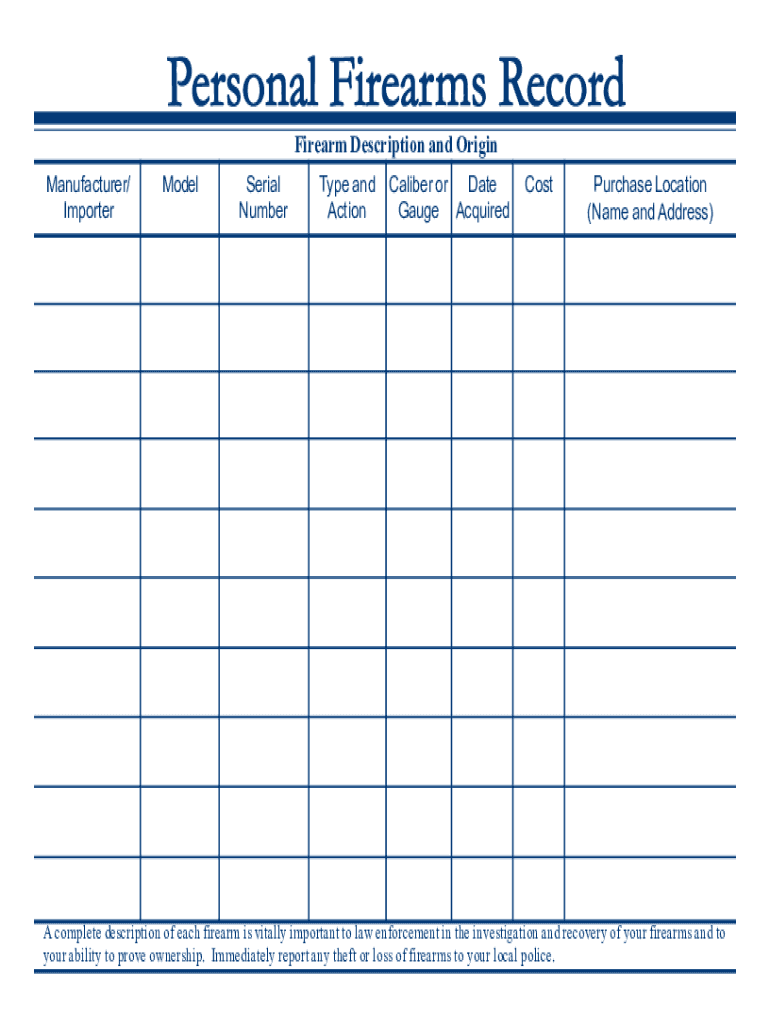
A printable gun inventory sheet serves as a crucial tool for firearm owners to catalog their firearms effectively. This form typically includes fields for the make, model, caliber, serial number, purchase date, and value, allowing owners to maintain an organized record. By documenting this information, owners can aid law enforcement in case of theft or loss, facilitate insurance claims, and ensure compliance with firearm-related laws.
Essential Components of a Firearm Inventory Sheet
- Make and Model: Clearly identifying each firearm allows for easy reference.
- Caliber and Type: This includes handguns, rifles, or shotguns to categorize the inventory correctly.
- Serial Numbers: Unique identifiers help trace ownership and verify legal acquisition.
- Date of Purchase: Knowing when each firearm was acquired is vital for tracking warranty or legal obligations.
- Value: Documenting the purchase price and current estimated value is essential for insurance and resale considerations.
Steps for Using a Printable Gun Inventory Sheet
- Download the Sheet: Obtain a free printable gun inventory sheet from a reliable source.
- Fill Out Details: Enter accurate information for each firearm, including all essential components.
- Store Securely: Keep the completed inventory in a safe place, ideally away from the firearms themselves, to prevent unauthorized access.
- Maintain Updates: Regularly review and update the inventory upon acquiring new firearms or selling existing ones.
Importance of Maintaining an Updated Firearm Inventory
An updated inventory is not only beneficial for personal tracking but plays a significant role in legal circumstances. For example:
- Insurance Claims: In the event of loss through theft or disaster, having a complete record helps expedite the claims process.
- Law Enforcement: An accurate inventory aids police investigations and increases chances of recovery.
- Legal Compliance: Many states require documentation of firearm ownership, making it crucial for owners to maintain their records.
Best Practices for Managing Your Firearm Inventory
- Regular Audits: Conduct periodic reviews of your firearm inventory to ensure accuracy and completeness.
- Electronic Backups: Consider creating a digital version of your inventory to safeguard against physical loss or damage.
- Discretion and Security: Ensure access to the inventory sheet is limited to trusted individuals, maintaining privacy and security.
Potential Variants of Gun Inventory Sheets
Gun inventory sheets can vary widely based on user needs:
- Standard Forms: Basic templates that cover essential firearm information.
- Detailed Variants: Sheets that include sections for additional accessories, cases, and ammunition inventories.
- Digital Formats: Online spreadsheets or apps that facilitate easy data entry and updates.
Real-World Applications and Scenarios
- Individual Owners: Use to track personal collections for insurance and legal purposes.
- Collectors: Helps in managing multiple firearms, especially for collectors and enthusiasts.
- Business Owners: Firearm dealers can utilize inventory sheets for compliance and sales tracking.
Common Mistakes to Avoid
- Inaccurate Entries: Ensure all information is correct to prevent complications during insurance claims or legal inquiries.
- Neglecting Updates: Failing to update the inventory regularly can lead to lost information, especially after sales or new acquisitions.
- Improper Storage: Keep the inventory in a secure location to prevent unauthorized access or loss.
By employing a printable gun inventory sheet, firearm owners can maintain a valuable and effective record of their collection, enhancing safety, security, and compliance with applicable laws.


