
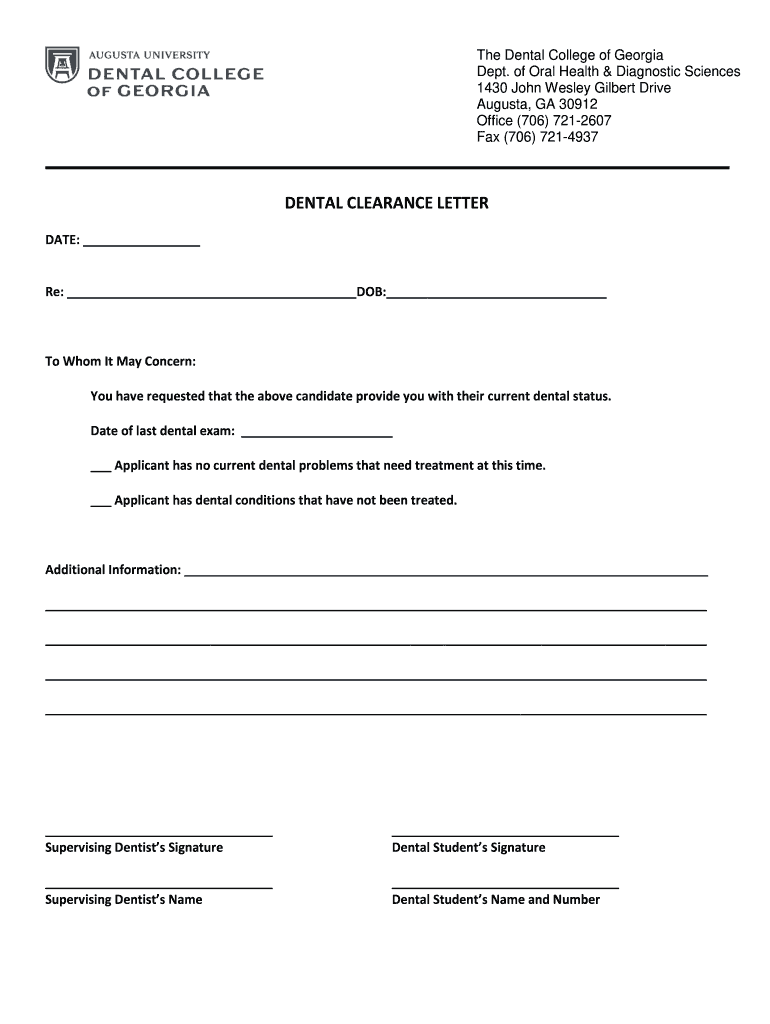







Definition and Meaning of the Dental Clearance Form
The dental clearance form is a vital document that verifies an individual's dental health status, especially in relation to upcoming surgical procedures. This form is typically required by healthcare providers to ensure that patients do not have any unresolved dental issues that could complicate surgery or other medical treatments. It serves as a safeguard for both the patient and the medical team, helping to minimize risks associated with anesthesia and post-operative care.
The document outlines crucial details regarding the patient's dental health, including:
- The date of the last dental examination.
- Any untreated dental conditions.
- Recommendations for further dental work if necessary.
A dental clearance letter, which accompanies the form, is usually signed by a licensed dentist, confirming that the patient is fit for the procedure. This letter provides an official statement about the patient's current dental status and any additional treatments required before clearing the patient for surgery.
How to Complete the Dental Clearance Form
Completing a dental clearance form involves several important steps to ensure accuracy and compliance with medical requirements. It typically requires collaboration between the patient and their dentist.
-
Gather Personal Information:
- Full name, date of birth, and contact details of the patient.
- Medical history relevant to dental procedures (allergies, existing health conditions).
-
Dental Examination Details:
- The date of the last dental exam should be documented.
- Note any findings from the examination, including areas of concern.
-
Declare Untreated Conditions:
- Indicate whether there are any untreated dental issues such as cavities, gum disease, or infections.
- Document any recommended treatments that need to be completed prior to the clearance.
-
Signature of the Supervising Dentist:
- An essential part of the form is the dentist's signature, which verifies their professional assessment and recommendations regarding the patient's dental health and suitability for surgery.
-
Submission Instructions:
- Include directions for submitting the form to the designated healthcare provider (whether online, by mail, or in person).
Additional Considerations
- Ensure all information is current and accurately reflects the patient's dental status.
- Discuss the form with the dentist beforehand to clarify any needs or questions that may arise during completion.
Who Typically Uses the Dental Clearance Form
The dental clearance form is commonly utilized by various groups, particularly in medical and surgical settings. Typical users include:
- Patients undergoing surgery: Individuals who require surgical procedures, such as orthopedic or cardiac surgeries, often need this clearance to ensure they are in good dental health.
- Healthcare Providers: Surgeons and anesthesiologists use this form to assess potential risks associated with dental conditions before proceeding with surgery.
- Dentists: They issue the form following a thorough examination of their patients, certifying that the patients are free from dental issues that may compromise their health during surgical procedures.
- Insurance Companies: Some insurers may require documentation of dental clearances as part of their coverage determination process for surgical procedures.


Important Components of the Dental Clearance Form
The dental clearance form contains several key components that ensure its effectiveness in communicating a patient’s dental health status. These elements include:
-
Patient Information Section:
- Full name and demographic details.
- Medical history relevant to dental health.
-
Dental Examination Summary:
- Findings from the most recent dental check-up.
- Annotations regarding the patient’s oral health status, including any treatments needed.
-
Dentist’s Certification:
- Signature and contact information of the supervising dentist.
- Date of certification to confirm the recency of the examination.
-
Recommendations (if applicable):
- Suggested follow-up treatments or actions required before further medical procedures can be undertaken.
Accurate and complete components foster transparency and trust in the healthcare process, aiding in pre-operative preparedness.
Steps to Obtain the Dental Clearance Form
Obtaining a dental clearance form involves a straightforward process. Here are practical steps to follow:
-
Consult with Your Dentist:
- Schedule an appointment with your dentist to discuss your health condition and any upcoming procedures that may require clearance.
-
Undergo a Dental Examination:
- During the appointment, the dentist will conduct a comprehensive dental evaluation and provide recommendations based on your oral health status.
-
Request the Clearance Form:
- After the examination, request your dentist to complete the dental clearance form. They will usually provide this document during your visit or send it electronically if needed.
-
Fill Out Required Sections:
- Complete any personal and medical information sections on the form, adhering closely to any instructions provided by your dentist.
-
Receive Final Approval:
- Once your dentist endorses the form, ensure you have the latest version and all necessary signs before submission to your medical facility.
Following these steps will ensure you have the proper documentation required in a timely manner, aiding in a smoother medical process.
Legal Use of the Dental Clearance Form
The legal implications of the dental clearance form are significant, as it serves a critical role within the healthcare framework. This document helps mitigate legal risks by ensuring that all parties are aware of the patient's dental status before undertaking invasive procedures. Key legal aspects include:
-
Informed Consent:
- Patients are informed of their dental health, enabling them to understand potential risks associated with their upcoming surgery.
-
Documentation:
- Record-keeping of the patient's dental clearance can serve as legal evidence in case complications arise post-surgery. This may help defend against liability claims related to dental issues during surgery.
-
Professional Accountability:
- By signing the clearance form, dentists affirm their professional responsibility to perform thorough evaluations, directly linking their expertise to the patient’s safety.
Health practices that possess legal frameworks around the dental clearance form help safeguard both patients' rights and healthcare providers' responsibilities. This ensures a higher standard of care and compliance across all involved parties.




