







Comprehensive Overview of Fire Truck Inspection Checklist PDF
Definition and Purpose of the Fire Truck Inspection Checklist PDF
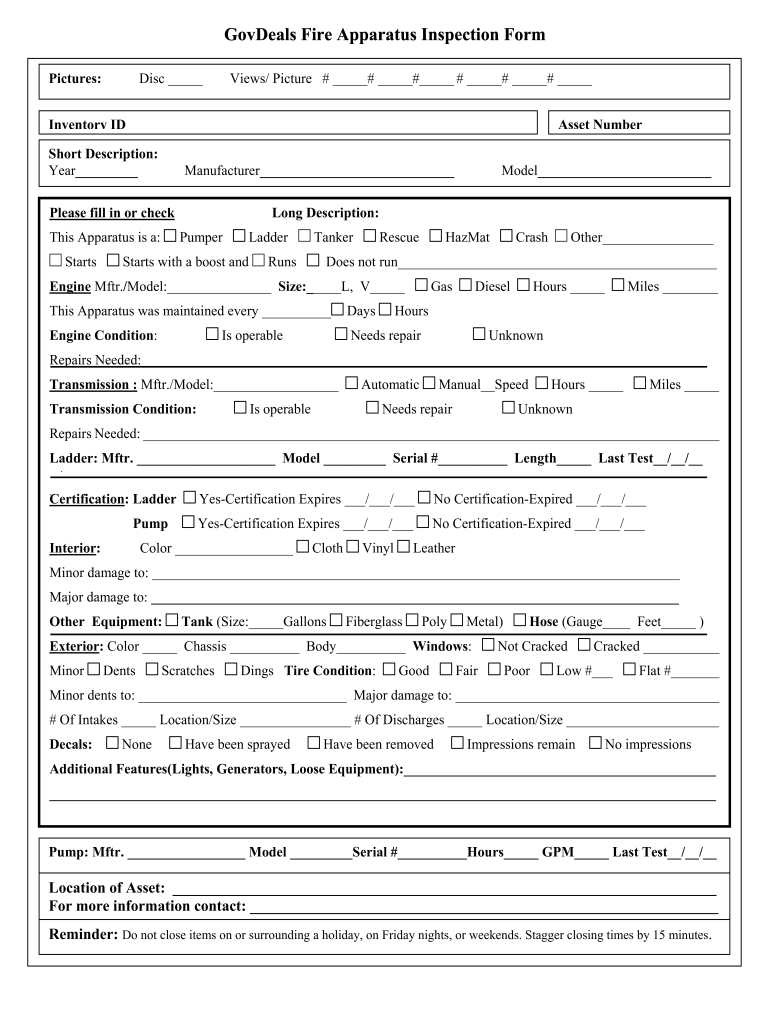
The fire truck inspection checklist PDF is a vital document used by fire departments to ensure that their vehicles are functioning safely and effectively. This form assesses various operational components of fire trucks, including but not limited to:
- Apparatus Specifications: Details regarding the model, make, and type of fire apparatus.
- Maintenance History: A record of previous repairs, servicing, and routine maintenance activities.
- Condition Reports: Evaluations of engine, transmission, and overall vehicle state, highlighting any operational issues.
- Compliance with Standards: Inspection procedures that ensure vehicles meet state and federal regulations.
This checklist serves as both a maintenance tool and a safety measure, enabling firefighters to address potential issues before they become problematic in emergency situations.
Components of a Fire Truck Inspection Checklist
A comprehensive fire truck inspection checklist includes numerous critical components to ensure detailed evaluations. Typical sections might encompass:
- Engine Performance: Check the engine oil level, coolant levels, and any signs of leakage.
- Braking System: Inspect brake fluid levels, pedal response, and the condition of brake pads.
- Electrical Systems: Evaluate battery health, lighting systems, and sirens.
- Safety Equipment: Verify the presence and function of fire extinguishers, hoses, axes, and medical equipment.
- Tire Condition: Examine tire pressure, tread depth, and any visible damages.
- Body and Structure: Inspect the tank, pump, and overall structural integrity, looking for rust or physical damage.
Consistent evaluation of these components aims to maintain high operational standards, ensuring that fire trucks perform reliably under the pressures of emergency response.
Steps to Execute an Effective Fire Truck Inspection
Conducting a thorough fire truck inspection involves several sequential steps to ensure every aspect of the vehicle is monitored and maintained. The following outline provides a clear process:
- Preparation: Gather the inspection checklist PDF, and ensure necessary tools and equipment are at hand.
- Initial Overview: Conduct a visual inspection of the vehicle's exterior, noting any clear damages.
- Detailed Inspection: Methodically follow the checklist to assess every aspect, documenting findings meticulously.
- Maintenance Action: Address any issues immediately or schedule repairs based on urgency.
- Record Keeping: Keep complete records of inspections, findings, and performed maintenance in a dedicated file.
- Review: Regularly evaluate the inspection process for efficiency, adapting checklists as needed to incorporate new regulations or technology.
This systematic approach enhances reliability and ensures that the fire apparatus is in optimal condition.
Importance of Regular Fire Truck Inspections
Regular inspections through the fire truck inspection checklist are essential for several reasons:
- Safety Assurance: Frequent checks reduce the risk of failure during critical response situations.
- Regulatory Compliance: Regular inspections ensure adherence to legal standards and prevent penalties.
- Budget Efficiency: Proactive maintenance can help avoid costly repairs by identifying issues before they escalate.
- Crew Readiness: Ensures that the equipment, tools, and vehicles are always ready and capable of performing in emergencies.
Establishing a routine inspection schedule promotes safety, efficiency, and peace of mind for fire department personnel.
Who Uses the Fire Truck Inspection Checklist?
The primary users of the fire truck inspection checklist include:
- Fire Department Staff: Personnel responsible for maintaining apparatus readiness and safety.
- Fire Chiefs & Officers: Management-level individuals who oversee compliance and operational readiness.
- Mechanics and Technicians: Specialists engaged in servicing and repairing fire apparatus, utilizing the checklist for diagnostics.
These individuals ensure the vehicles remain safe and effective for critical firefighting tasks.
Additional Resources Related to Fire Truck Inspections
Several supplementary materials support the fire truck inspection process, offering further guidance and best practices, such as:
- Fire Truck Monthly Inspection Checklist: A detailed list for monthly assessments to ensure ongoing vehicle compliance.
- Fire Department Truck Check Sheet: A customized checklist tailored to specific departmental needs and recommendations.
- Printable Fire Apparatus Inspection Checklist: Easily accessible versions that can be printed for on-site usage.
- Documentation Templates: Standardized forms that facilitate recording inspection results systematically.
Utilizing these additional resources can enhance the thoroughness of the inspection process and ensure consistent documentation.
Key Considerations for Fire Truck Inspection Process
When conducting inspections, consider these aspects for maximizing effectiveness:
- Training: Ensure that all personnel conducting inspections are properly trained and understand the checklist items.
- Documentation: Keep meticulous records of all inspections and repairs for accountability and future reference.
- Equipment Updates: Remain informed about new technologies and standards that may prompt changes in inspection practices.
Continued education and adaptation to best practices in fire truck inspection contribute to optimal safety and performance.




