







Definition and Meaning
A Temporary Restraining Order (TRO) is a legal order issued by a court to temporarily protect an individual or entity from potential harm or harassment by another party. It is often a precursor to more permanent legal measures such as a Preliminary Injunction. This document serves as a short-term solution to prevent actions or behaviors that may cause irreparable harm until a full hearing can determine more lasting resolutions.
Contextual Significance
- Nature of Protection: TROs are typically used in cases of domestic violence, stalking, harassment, or disputes where an immediate threat exists.
- Duration: The order is temporary, typically lasting until a scheduled court hearing to decide on a longer-term injunction.
- Issuance: Applied for by the plaintiff and granted by a judge, often on short notice and without the defendant's presence (ex parte).
How to Use the Temporary Restraining Order PDF
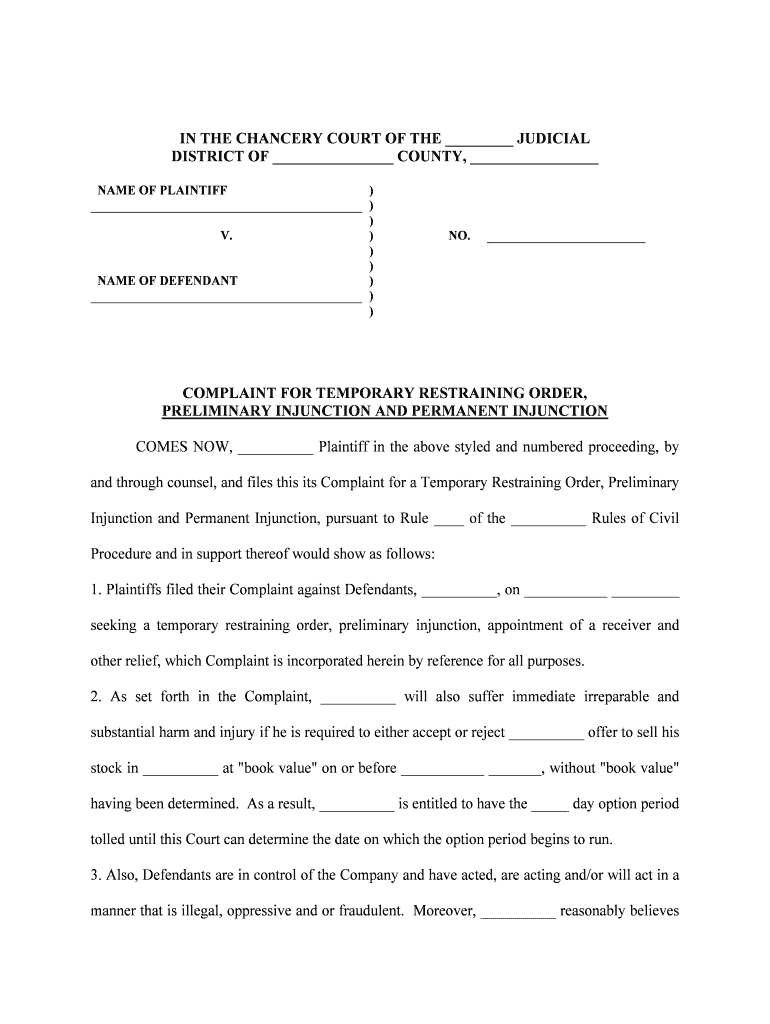
The Temporary Restraining Order PDF is a standardized format allowing individuals to request a TRO from a court. Using a PDF ensures consistency and that all necessary information is present for legal consideration.
Steps for Use
- Download the Form: Access the PDF from your state's judicial website or another reliable source like DocHub.
- Fill Out the Document: Include all relevant personal information, a description of the harm or threat, and details about the defendant.
- Detailed Allegations: Provide specific incidents that necessitate the request for a protection order.
- Legal Justification: Explain why a temporary restraining order is needed immediately, emphasizing any potential irreparable harm.
- Submit to the Court: File the completed document with the appropriate court for review by a judge.
How to Obtain the Temporary Restraining Order PDF
Access to the Temporary Restraining Order PDF is straightforward, and it can be acquired from a number of reliable sources for legal documents.
Access Points
- Judicial Websites: Most state courts provide downloadable forms on their official sites.
- Legal Platforms: Services like DocHub offer template libraries where these forms can be accessed and edited online.
- Legal Professionals: Attorneys and legal aid services often provide these forms as part of their assistance to clients in need.
Important Considerations
- Jurisdiction-Specific Forms: Ensure you download the PDF specific to the jurisdiction where you are filing for the TRO.
- Availability: Always check the availability and version of the form, as legal requirements may vary over time.
Steps to Complete the Temporary Restraining Order PDF
Filling out a Temporary Restraining Order PDF requires careful attention to ensure all necessary information is included and formatted correctly for the court’s review.
Detailed Steps
- Header Information: Fill in your name, contact information, and the name of the defendant against whom the order is sought.
- Relationship Description: Clearly state the relationship between you and the defendant.
- Incident Summary: Provide a detailed account of the incidents or threats that necessitate a TRO.
- Request Specifics: Clearly outline the restrictions or actions you are requesting the court to impose on the defendant.
- Additional Evidence: Attach any supporting documents or evidence, such as police reports or witness statements.
- Affidavit Section: Read and sign the affidavit confirming the truthfulness of your statements.
- Legal Counsel: Consult with an attorney for guidance, though not mandatory, it is advisable to ensure the request is effectively presented.
Why Should You Use the Temporary Restraining Order PDF
The Temporary Restraining Order PDF is a critical tool for individuals seeking immediate relief from potentially harmful situations.
Benefits
- Legal Protection: Provides immediate legal protection while awaiting further legal actions or hearings.
- Structured Process: Following the standardized PDF ensures compliance with court requirements, reducing the likelihood of errors or omissions.
- Documentation: Serves as formal documentation of the request, helping to establish a legal paper trail.
Who Typically Uses the Temporary Restraining Order PDF
The TRO is commonly used by individuals who feel threatened or at risk due to another person's actions but can also be issued in business contexts.


Common Users
- Individuals in Domestic Situations: Those facing domestic abuse or threatening behavior.
- Business Disputes: Companies looking to prevent theft of trade secrets or property by employees or competitors.
- Harassment Victims: Individuals facing harassment that threatens their safety or well-being.

Important Terms Related to Temporary Restraining Order PDF
Understanding key terminology related to TROs is crucial for comprehending their scope and implications.
Glossary of Terms
- Plaintiff: The person or party requesting the TRO.
- Defendant: The person or party against whom the TRO is sought.
- Ex Parte Hearing: A hearing conducted in the absence of the defendant, often employed for TROs due to the urgent nature.
- Preliminary Injunction: A longer-term order that follows a TRO, often granted after a full court hearing.
Legal Use of the Temporary Restraining Order PDF
Navigating the legalities of a Temporary Restraining Order involves understanding its legal basis and implications.
Legal Framework
- Basis: TROs are grounded in the principle of preventing harm or maintaining the status quo until a more permanent decision is reached.
- Court Jurisdiction: Because TROs deal with safety and immediate threats, they are generally handled by local courts familiar with the jurisdiction's legal context.
- Compliance and Enforcement: Non-compliance can result in legal consequences for the defendant, including arrest or additional charges.




