




01. Edit your bill of car sale online
Type text, add images, blackout confidential details, add comments, highlights and more.

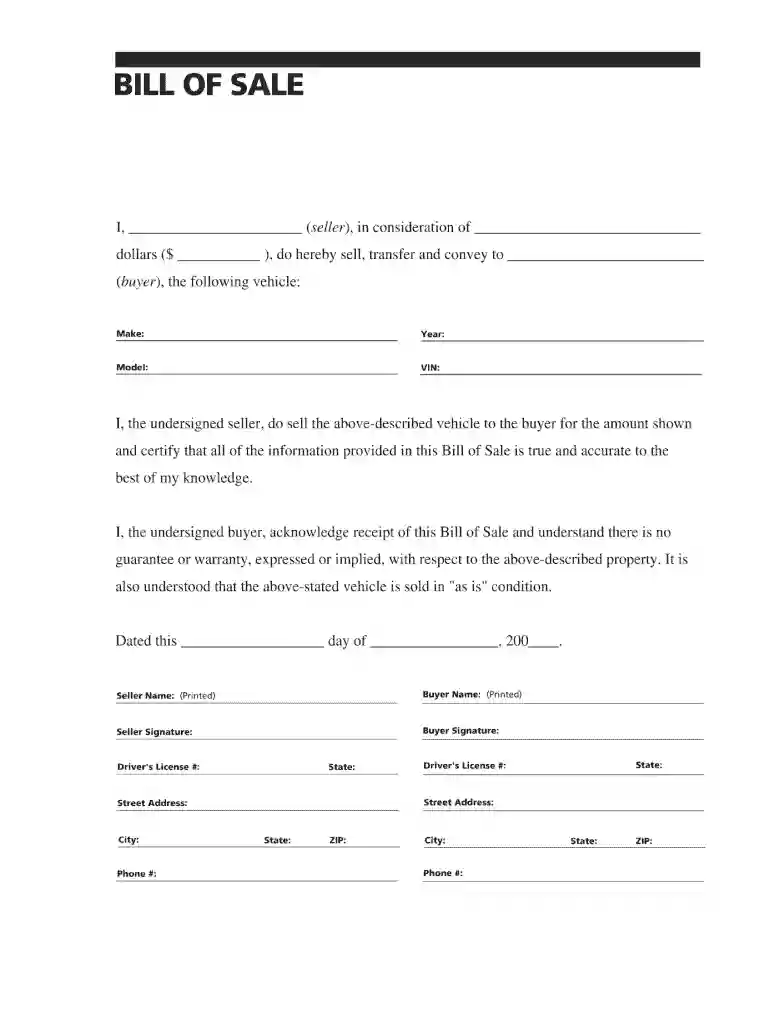
Type text, add images, blackout confidential details, add comments, highlights and more.

Draw your signature, type it, upload its image, or use your mobile device as a signature pad.

Send bill of sale for vehicle via email, link, or fax. You can also download it, export it or print it out.

Start using our platform today to easily create and manage your printable bill of sale for car!
At DocHub, your data security is our priority. We follow HIPAA, SOC2, GDPR, and other standards, so you can work on your documents with confidence.



Upon receipt of payment as provided above, The Seller agrees to provide the following documents to Buyer on the sale date: Certificate of Title (includingRead more
This document describes certain basic requirements established by each U.S. state regarding consumer protection laws commonly known as Lemon Laws.Read more
This Bill of Sale was prepared by me. Under the pains of penalties of perjury, I declare that the statements herein contained are true and correct to theRead more


