







Definition and Purpose of the Form
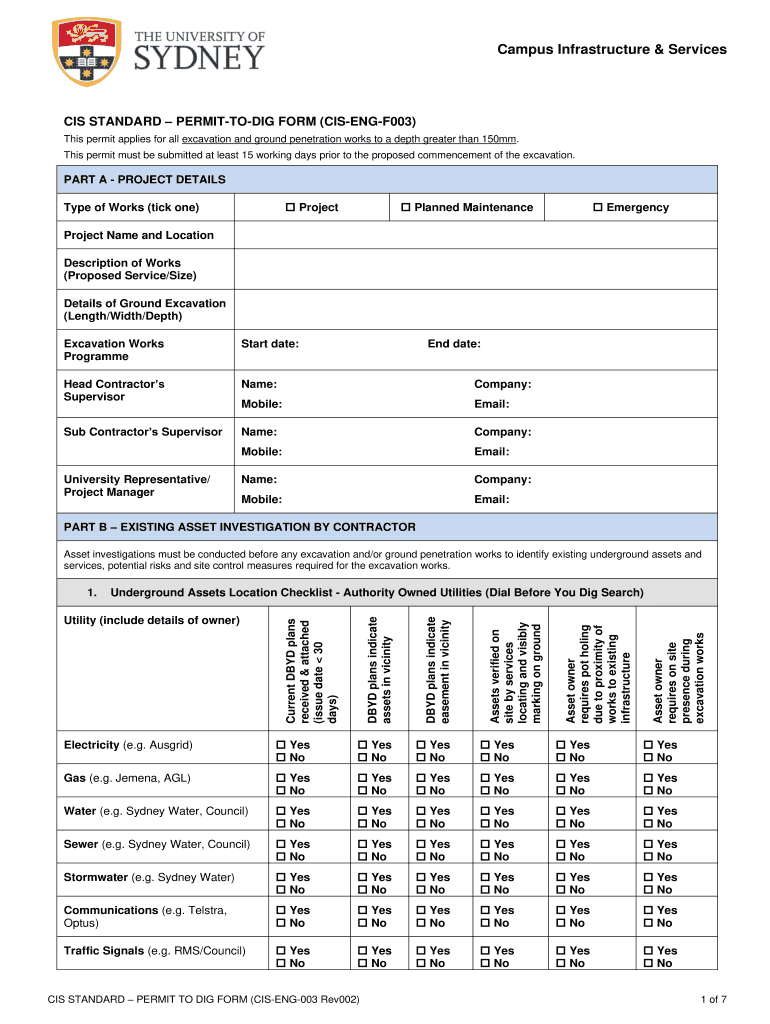
The "Contractors - The University of Sydney" form is an essential document used to manage contractors' activities on campus, particularly for tasks involving ground penetration or excavation. It ensures all necessary approvals and safety measures are in place before any work begins. This form also serves as a record of the project details and compliance with the university's policies and safety regulations.
Use in University Operations
The form is routinely utilized by contractors working on infrastructure projects within the University of Sydney. It assists in coordinating between contractors and university departments, ensuring that work is completed efficiently and safely. This document is crucial for tasks such as renovations, repairs, and new constructions where adherence to safety protocols and asset preservation is paramount.
How to Use the Form for Effective Project Management
To make effective use of the form, contractors must understand its sections and the required information. They should coordinate with the university's project management team to comprehensively fill out the form, detailing the scope of work, safety measures, and any potential risks involved. Collaboration is vital to ensure all parts of the form are accurately completed.
Step-by-Step Guidance for Completion
- Project Details: Begin by outlining the project's scope, objectives, and timeline.
- Asset Investigations: Provide results from surveys and tests carried out to identify existing underground utilities and structures.
- Hazard Identification: List potential hazards and planned mitigation strategies.
- Site Controls and Safety Measures: Detail the safety protocols and onsite control measures that will be implemented.
- Surface Reinstatement Plans: Include plans for restoring the worksite to its original condition post-completion.
Obtaining the Form
Contractors can obtain the "Contractors - The University of Sydney" form through the university's project management office or download it from authorized online portals. It's advisable to request this document well ahead of scheduled work to allow ample time for completion and submission.
Submission Procedures
- In-Person: Submit the completed form to the designated office within the university.
- Online: Many prefer the convenience of submitting the form electronically through the university's official contractor management system.
- Via Email: Email a signed PDF copy to the relevant university department overseeing the project.
Steps to Completing the Form Accurately
Completing the form requires attention to detail and accuracy. Ensure that all sections are filled out according to instructions, as incomplete forms could delay project approval. Collaborate with stakeholders to verify information, especially when inputting technical data related to excavation and asset management.
Checklist for Form Completion
- Verify all project and contractor details.
- Ensure asset investigation and risk assessments are comprehensive and up-to-date.
- Cross-check that all safety protocols align with university standards.
- Obtain all required signatures from relevant parties to validate the document.
Who Typically Utilizes This Form
This form is commonly used by contractors, project managers, and university staff involved in oversight and regulatory compliance. It serves as a critical tool for maintaining safety and operational standards during construction and renovation efforts on the university campus.
Types of Projects Involved
- New constructions and major renovations.
- Routine maintenance involving ground penetration.
- Utility installation and modifications requiring excavation.
Key Elements of the Form
The form includes several key components that contractors must pay attention to. These include the project details, required attachments like risk assessments, and formal certifications ensuring compliance with health and safety regulations.
Sections of the Form
- Project Overview: Details about the contractor, project scope, duration, and contact information.
- Safety and Environmental Measures: Guidelines and procedures contractors must follow to comply with environmental regulations.
- Signatures and Approval Chains: The form must be signed by authorized representatives from the contractor, the project management office, and, if required, relevant university departments.
Legal Implications and Responsibilities
Adherence to the form's requirements is not just procedural; it has legal implications. Failure to comply can result in penalties, halt project progress, and affect the contractor’s future agreements with the university.
Compliance and Enforcement
- Contractors are obligated to follow all stipulated guidelines and report adherence to safety laws.
- Non-compliance may result in fines, project suspension, or termination of the contract.
Examples of Effective Use of the Form
A successful scenario involved an infrastructure project where the form streamlined communication between the university and the contractor. Through proper documentation, the project mitigated potential damage to underground assets and completed on time with no compliance breaches.
Real-World Scenarios
An underground utility expansion project used the form to synchronize efforts between the university's utilities department and external contractors, ensuring no disruption in campus activities during construction. The detailed safety measures outlined in the form played a crucial role in maintaining campus safety during the execution of these projects.




