
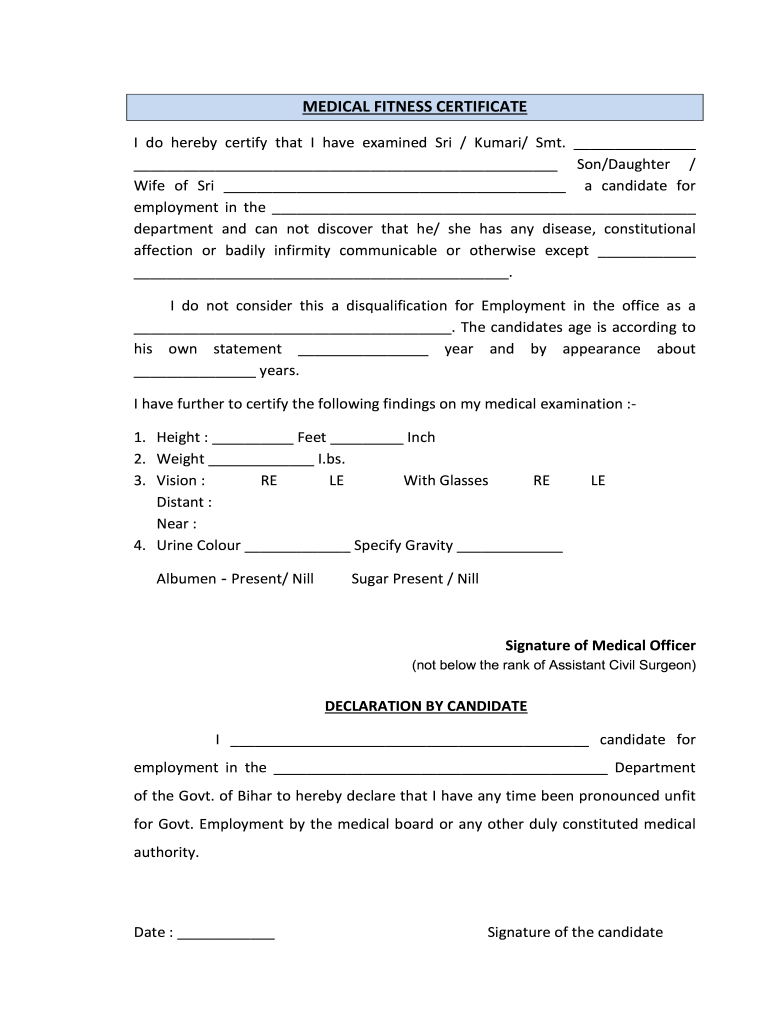







Definition and Importance of a Medical Fitness Certificate
A medical fitness certificate is a crucial document that attests to an individual's health and fitness status, particularly in relation to employment. It serves as proof that a candidate is medically fit to undertake specific job responsibilities, confirming the absence of medical conditions that could impede job performance. This certificate is particularly significant in sectors where physical health directly impacts job safety and efficiency, such as healthcare, transportation, and manufacturing.
Relevance for Employment
- Health Assessment: This document is often required during the hiring process to assess whether a candidate meets the physical requirements of a job.
- Legal Protection: Employers utilize it to mitigate risks associated with hiring individuals who may pose a health hazard to themselves or others in the workplace.
- Compliance: Specific jobs regulated by state or federal laws may mandate a medical fitness certificate as part of the hiring process.
How to Obtain a Medical Fitness Certificate
Acquiring a medical fitness certificate involves a straightforward process typically conducted by licensed healthcare providers. The steps are generally consistent across various healthcare settings:
- Schedule an Appointment: Contact a healthcare professional or clinic that specializes in occupational health assessments.
- Undergo Medical Evaluation: The examination may include physical tests, health history reviews, and possibly lab tests, depending on the specific job requirements.
- Receive Documentation: Once the evaluation is complete, the healthcare provider will issue a medical fitness certificate if the individual meets the necessary fitness criteria.
Considerations During the Evaluation
- Scope of Examination: The extent of the medical examination may vary based on job requirements; for example, positions involving heavy machinery may necessitate comprehensive cardiovascular and musculoskeletal evaluations.
- Confidentiality: Information disclosed during the examination is typically confidential and should only be shared with relevant employers in compliance with healthcare privacy regulations.
Key Elements of a Medical Fitness Certificate
A comprehensive medical fitness certificate should contain specific information to validate the health status of the individual and provide clarity on their medical fitness. Crucial elements typically include:
- Personal Information: Name, age, and contact details of the individual.
- Identifying Information of the Issuer: Name, qualifications, and contact details of the healthcare provider issuing the certificate.
- Medical Assessment Findings: Detailed notes on the individual's health status, including any significant medical conditions noted during the evaluation.
- Fitness Declaration: A clear statement regarding the individual's fitness for work, including any limitations that may apply.
- Date of Issuance: The date on which the certificate is issued, which is crucial for employment timelines.
Format Standards
- Format of Medical Fitness Certificate: While there may be variations across states, maintaining a professional format that includes all essential details is vital. A standard medical fitness certificate typically resembles a formal letterhead document.
Legal Use of the Medical Fitness Certificate
The medical fitness certificate is legally binding and can play a critical role in employment practices. Employers often require a certified document to ensure compliance with workplace safety standards and regulations.
Compliance with Employment Laws
- Federal Regulations: Employers must ensure that their practices regarding medical fitness evaluations do not discriminate against candidates based on disabilities as per the Americans with Disabilities Act (ADA).
- State-Specific Regulations: Various states may have different requirements regarding medical fitness evaluations, and it is important for employers to be aware of specific state laws governing this process.
Examples of Utilizing the Medical Fitness Certificate
Medical fitness certificates are used in multiple scenarios across various industries. Here are some practical examples:
- Healthcare: Hospitals often require medical fitness certificates from potential employees to ensure that they are fit for physically demanding roles.
- Transport Industries: Drivers for commercial transportation must present a medical fitness certificate to ensure they are not only physically fit but also free from conditions that may affect driving capabilities.
- Construction: Workers in the construction industry may need to provide a fitness certificate to confirm their ability to perform rigorous physical tasks and operate heavy machinery.
Specific Situations Requiring Certificates
- Job Applications: Candidates may present their fitness certificates during job applications for positions that have critical health requirements.
- Annual Health Reassessments: Some companies conduct annual health assessments and require updated medical fitness certificates to demonstrate ongoing fitness for job roles.
Important Terms Related to the Medical Fitness Certificate
Understanding essential terminology related to medical fitness certificates can further clarify their usage and necessity. Key terms include:
- Occupational Health Assessment: An evaluation process to determine an employee's fitness for a specific type of work.
- Physical Examination: A thorough check conducted by a healthcare provider assessing an individual's physical state.
- Fit for Duty: A declaration indicating that an individual can perform their job responsibilities without health risks.
Related Documentation
- Medical Certificate Format: Variations and formats may exist, tailored for different sectors, ensuring clarity in fitness qualifications.
- Fitness Medical Form: A related document that may accompany the certificate, detailing specific health tests performed during the evaluation.
Conclusion
A medical fitness certificate is an essential document in many employment scenarios. By understanding its definition, importance, and application, individuals and employers can ensure that health considerations are appropriately addressed within the workplace context. Knowledge of the process to acquire a certificate, key elements it must contain, and the legal implications related to its use are critical for both job candidates and employers alike.




