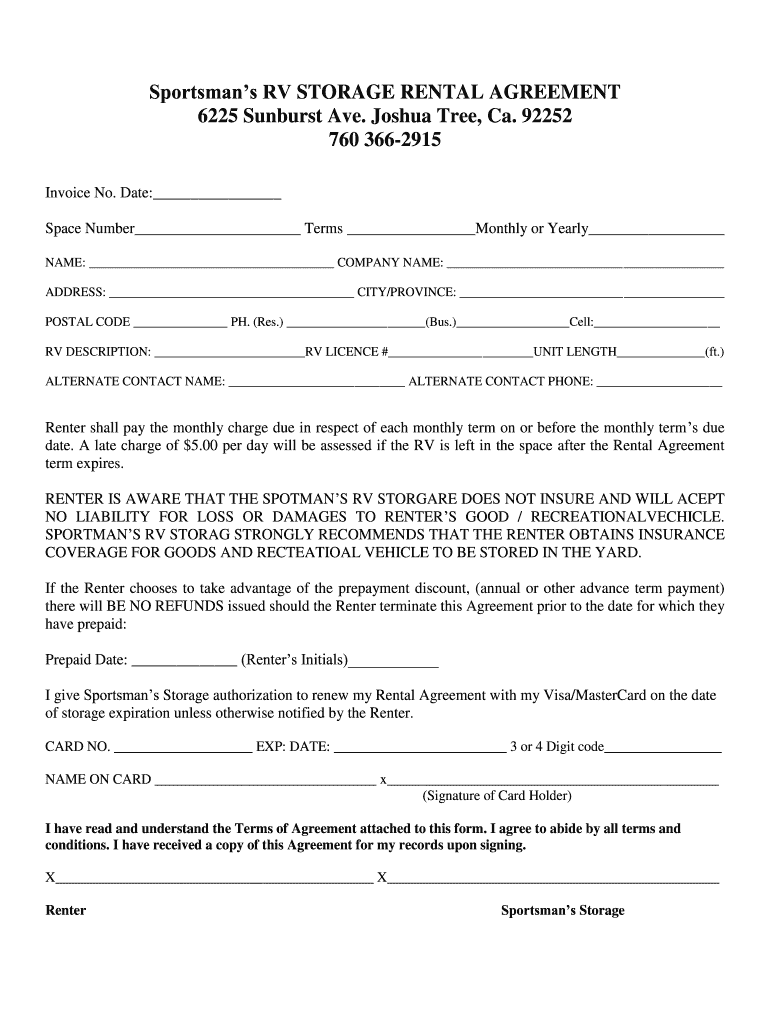







Definition & Meaning
An RV storage agreement template is a legally binding document that outlines the terms and conditions under which a storage facility rents space for recreational vehicles (RVs) to a customer. This document is essential for ensuring both parties understand their rights and responsibilities throughout the storage rental period. The agreement typically covers various aspects such as:
- Payment obligations: Details regarding rental costs, payment methods, and late fees.
- Renter's responsibilities: Requirements for maintaining the property and the stored vehicle, including insurance and upkeep.
- Security measures: Information about facility security, access controls, and liability for theft or damage.
- Access hours: Specifies when the renter can access their RV.
- Termination conditions: Procedures for ending the rental agreement, including notice periods and grounds for termination.
Understanding the elements of an RV storage agreement is crucial for both renters and storage facility operators to mitigate risks and manage expectations effectively.
Key Elements of the RV Storage Agreement Template
An effective RV storage agreement template contains several critical components aimed at protecting both the storage provider and the renter. These elements include:
- Parties Involved: Clearly define who the agreement is between, typically the storage facility ('Lessor') and the customer ('Lessee').
- Description of Storage Space: Outline specifics about the storage unit, such as its size and location within the facility.
- Rental Terms: Include the length of the rental period, payment schedules, and any renewal terms.
- Liability Clauses: Specify the extent of liability for both parties regarding theft, damage, or loss of the RV.
- Insurance Requirements: State what insurance, if any, the renter must carry and that the storage facility is not responsible for damage unless explicitly agreed upon.
These components form the backbone of an RV storage agreement and ensure that the interests of both parties are adequately protected.
How to Use the RV Storage Agreement Template
To effectively utilize an RV storage agreement template, follow these steps:
- Download a Template: Obtain a well-structured and legally compliant RV storage agreement template, which may be available for free or at a nominal cost.
- Fill in the Information: Provide the necessary details, including names of the parties involved, the description of the RV, and rental terms.
- Review Key Terms: Carefully read through all sections, ensuring that they reflect your understanding and agreement about payments, responsibilities, and liabilities.
- Seek Legal Advice if Necessary: Consult with a legal professional to confirm that the agreement meets state regulations and adequately protects your interests.
- Signature and Date: Once both parties are in agreement, sign and date the document to make it legally binding.
This step-by-step approach ensures that the RV storage agreement is tailored to meet specific needs while adhering to legal requirements.
Important Terms Related to the RV Storage Agreement Template
Familiarizing yourself with key terminology related to RV storage agreements enhances comprehension and fosters better communication. Some important terms include:
- Lessor: The entity or individual offering the storage space for rent.
- Lessee: The individual or entity renting the storage space for their RV.
- Termination Clause: A section detailing how either party can terminate the agreement and the notice required.
- Indemnification: A provision outlining one party's obligation to compensate the other for certain losses or damages.
- Default: Situations where one party fails to meet their obligations under the agreement, potentially leading to legal action.
Understanding these terms helps ensure a smoother transaction and minimizes the potential for disputes or misunderstandings.
Examples of Using the RV Storage Agreement Template
Examples help clarify how the RV storage agreement template functions in real-world scenarios. Consider the following situations:
- Seasonal RV Storage: A customer may need to store their RV during the winter months. The agreement will stipulate that access to the vehicle is limited to specific times for maintenance.
- Long-Term Lease: A storage facility may provide a discount for renters who commit to a long-term lease of six months or more. The template should reflect this incentive in the payment structure.
- Insurance Clauses: If a renter has extensive insurance coverage on their RV, the template can include clauses that absolve the storage facility from liability for damage occurring while stored.
These examples illustrate how specific clauses in the RV storage agreement template address various scenarios and help to create a clear understanding between the lessor and lessee.
State-Specific Rules for the RV Storage Agreement Template
State laws can significantly impact the provisions included in an RV storage agreement template. It is essential to be aware of these variations, as they affect liability, insurance requirements, and the enforceability of certain terms. For instance:
- California: Laws here often mandate that storage companies provide written notice before disposing of abandoned vehicles, which should be included in the agreement.
- Texas: Requires that payments be explicitly detailed and that acknowledgment of these terms is clear to prevent miscommunication.
- Florida: The law may require storage facilities to provide additional insurance options to renters.
Familiarity with state-specific rules helps ensure compliance and reduces the risk of legal issues arising from misunderstandings or omissions in the agreement.
Legal Use of the RV Storage Agreement Template
To ensure that an RV storage agreement template is legally valid, it must comply with federal and state laws governing rental agreements. Key considerations include:
- Compliance with Local Laws: Ensure that the agreement adheres to local regulations regarding RV storage.
- Clear Language: Use precise and unambiguous language to avoid disputes over terms.
- Proper Execution: Both parties must sign the agreement, and it is advisable to have witnesses or notarization in some jurisdictions.
- Record Keeping: Keep a signed copy for personal records and provide a copy to the lessee.
Adhering to these legal principles will help create an enforceable and respectful contractual relationship between the parties involved.
Steps to Complete the RV Storage Agreement Template
Filling out an RV storage agreement template correctly is key to ensuring clarity and preventing future disputes. Follow these steps:
- Select the Appropriate Template: Choose a template that fits your specific needs and complies with local regulations.
- Detailed Entry: Enter complete information, including the names and addresses of both parties, the location of the storage unit, and specifics about the vehicle.
- Payment Specifics: Clearly outline rental fees, payment due dates, and any late fees applicable.
- Review and Edit: Carefully review each section for accuracy and clarity; any ambiguity can lead to misunderstandings later.
- Signatures: After both parties are satisfied, signed copies should be distributed, with one retained by each party.
Completing these steps can help ensure the agreement is practical and legally binding, mitigating potential disputes in the future.