
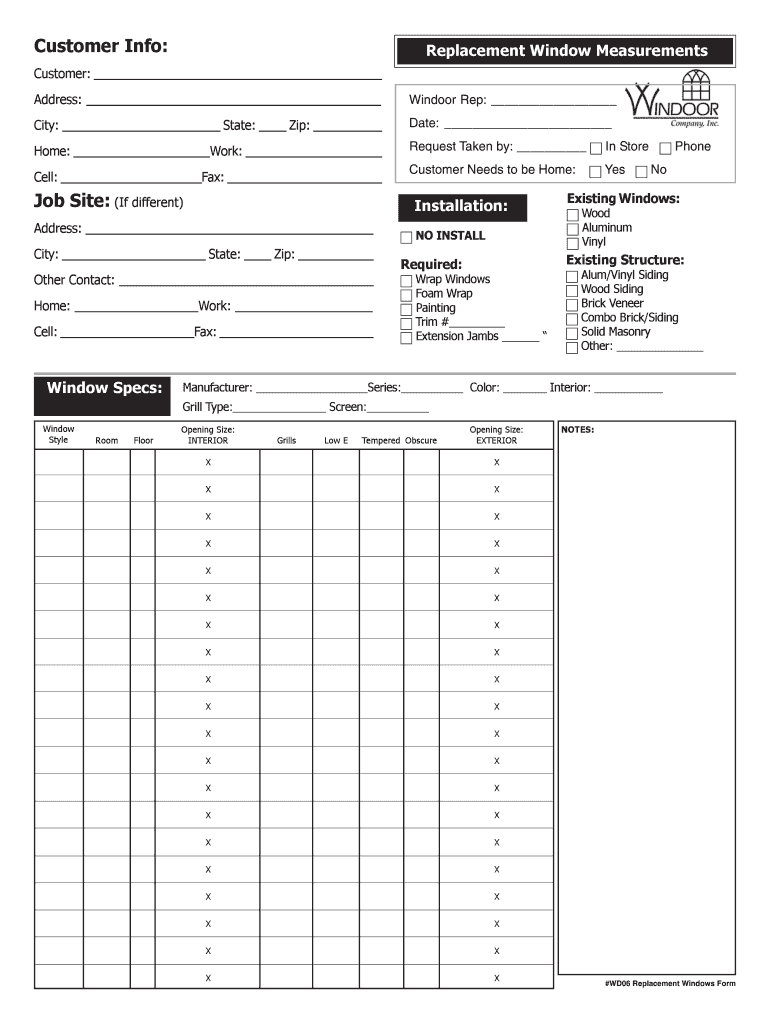







Definition and Meaning of the Window Measurement Template
A window measurement template is a structured form used for accurately measuring window dimensions to ensure the proper fit for replacement windows and window treatments. This template typically includes designated areas to record measurements such as width, height, and depth, along with space for additional notes on various factors, such as window style and configuration. Proper documentation through a measurement template helps avoid errors during the ordering and installation processes.
Importance of Accurate Measurements
- Precision: Accurate measurements are crucial for ensuring that the windows fit properly, improving both aesthetics and energy efficiency.
- Cost-Effectiveness: By providing precise measurements from the beginning, potential costs associated with incorrect window sizing and adjustments can be minimized.
- Streamlining Installation: Well-documented measurements assist contractors in the installation process, facilitating smoother workflows and reducing installation time.
How to Use the Window Measurement Template
Using a window measurement template involves several important steps to achieve accurate results. This process can vary slightly based on whether the template is designed for replacement windows or window treatments.
Steps for Window Measurement
-
Choose the Right Template: Select a window measurement template suitable for your specific project, such as a replacement window measurement worksheet or a window treatment measuring template.
-
Gather Necessary Tools: Use a tape measure, pencil, and a level. Ensure you have someone to assist in complex measurements if needed.
-
Measuring Width and Height:
- For width, measure the distance at the top, middle, and bottom of the window opening. Record the smallest measurement.
- For height, measure from the top of the window opening to the sill at both sides, again noting the smallest dimension.
-
Depth Measurement: Measure the depth of the window frame to ensure the new window fits within it.
-
Record Additional Details: Include window style, type of trim, and any obstructions that may affect installation.
Checking and Verifying Measurements
- Double-Check: Always measure twice to confirm accuracy.
- Record Consistently: Using a standard format on the template will help avoid confusion later on.
Key Elements of the Window Measurement Template
When working with a window measurement template, certain key elements are essential to ensure that all required information is captured efficiently.
Essential Components of the Template
- Header Information: Includes customer details, project address, and date.
- Window Measurements: Specific sections to input measurements for width, height, and depth.
- Window Styles and Types: Areas to specify the style of window being measured (e.g., double-hung, sliding, casement).
- Notes and Observations: Space for additional remarks about the window conditions or special installation requirements.
These elements contribute to a comprehensive understanding of the project and help streamline communication among contractors and clients.
Examples of Using the Window Measurement Template
Utilizing specific examples illustrates the practical application of the window measurement template in various scenarios.
Case Study: Residential Window Replacement
A homeowner planning to replace windows in their living room can use the measurement template as follows:
- Initial Measurements: The homeowner uses the template to measure the existing windows and documents the specific sizes.
- Guided Observations: They note the window type and quality of the frame to inform choices regarding energy-efficient options.
- Final Review: After completing the template, the measurements are reviewed with a contractor, ensuring that price quotes are based on accurate data.
Application: Window Treatments
An interior designer evaluating a client’s home for new blinds may utilize the measurement template to gather:
- Height and Width: Precise measurements of each window for ordering blinds that fit correctly.
- Style Preferences: Notations on the client’s aesthetic preferences, which directly influence the ordering process.
These examples highlight the versatility of the window measurement template in both construction and design contexts.
Steps to Complete the Window Measurement Template
Completing a window measurement template requires careful attention to details and methodical documentation.
Step-by-Step Completion Process
-
Enter Project Information: Fill in the header with project details, including customer contact information and address.
-
Measure Each Window: Systematically work through the areas of the house, measuring each window’s width, height, and depth using the template.
-
Fill in Measurements: Record each measurement in the designated fields, ensuring clarity and precision.
-
Categorize Window Types: For each window, use the corresponding section to categorize its style.
-
Final Comments: Add any specific installation notes that might be important for contractors, such as obstructions or special requirements.
Completing these steps meticulously increases the likelihood of a successful window installation or treatment process.




