Definition & Meaning of Party Wall Agreement
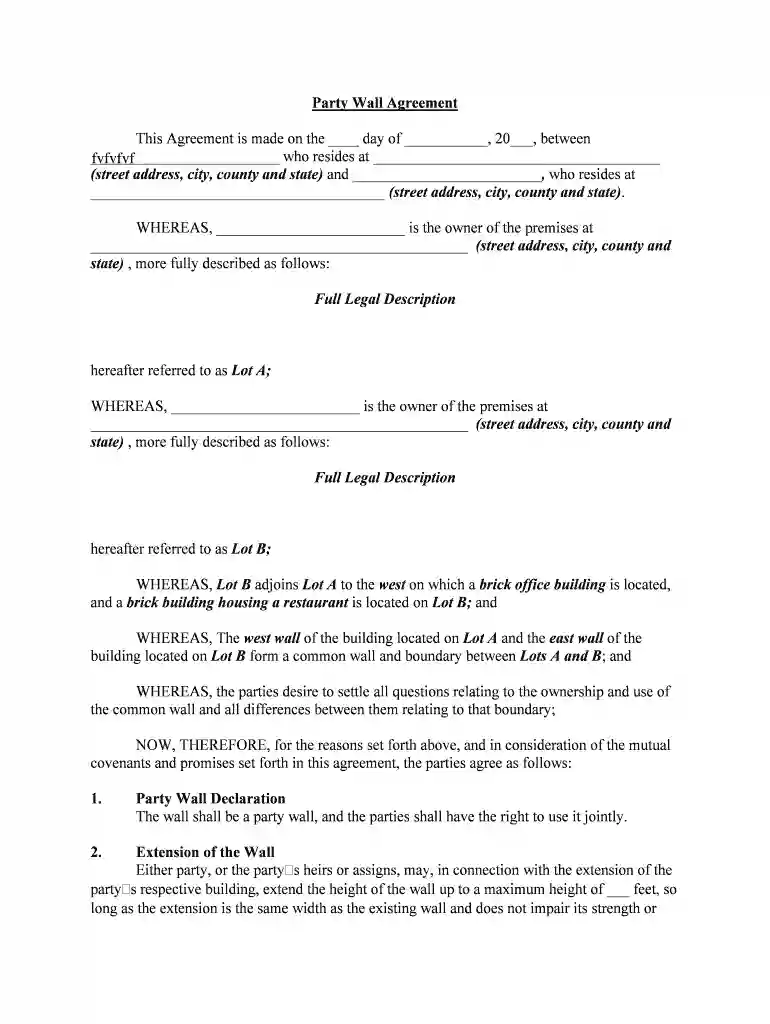
A party wall agreement is a legal document that outlines the rights and responsibilities of property owners who share a common wall. This agreement is particularly relevant for adjacent properties, such as townhouses or semi-detached homes. It sets forth clear terms regarding joint use of the wall, repair obligations, and potential alterations or extensions that may impact the structure.
- Common Wall Definition: A common wall is a wall that forms part of two separate adjacent buildings. The party wall agreement serves to address concerns between the property owners regarding maintenance, renovations, and responsibilities in case of damage.
- Why It’s Important: Establishing a party wall agreement can prevent disputes that may arise from construction projects or maintenance work. It helps define expectations, minimizes conflict, and establishes a clear line of communication between property owners.
Key Elements of a Party Wall Agreement
A properly crafted party wall agreement includes several essential elements that should be clearly defined to ensure understanding and compliance by all parties involved.
- Description of the Property: Details about the properties involved, including addresses and ownership information.
- Shared Rights and Responsibilities: It should specify what each owner is entitled to do concerning the wall, such as making repairs or renovations.
- Repair Obligations: Outline who is responsible for what part of the wall and any financial implications associated with repairs or alterations.
- Dispute Resolution Process: Procedures for handling disagreements or conflicts that may arise, including arbitration or mediation processes.
- Binding Effects: Clarification on how the agreement applies to future property owners, ensuring that the terms remain enforceable even if the property changes hands.
Steps to Complete the Party Wall Agreement
Filling out a party wall agreement requires careful consideration and adherence to specific steps to ensure legality and completeness.
- Identify the Property Owners: Start by listing the names and addresses of all property owners affected by the shared wall.
- Describe the Wall's Location: Clearly specify where the common wall is located in relation to each property.
- Outline Responsibilities: Define the responsibilities of each property owner regarding maintenance and repairs.
- Include an Extension Clause: If applicable, address how future modifications or extensions will be handled.
- Seek Legal Guidance: Consider consulting with an attorney to ensure compliance with state laws and that the agreement covers all necessary aspects.
- Obtain Signatures: All property owners involved in the agreement must sign to make it legally binding.
- Keep Records: Retain copies of the signed agreement for future reference.
Legal Use of the Party Wall Agreement
A party wall agreement is legally binding and recognized under property law. It serves as a protective measure for both parties and can be enforced in court if necessary.
- ESIGN Act Compliance: If the agreement is signed electronically, it must comply with the ESIGN Act, ensuring that e-signatures are legally recognized.
- State Specific Regulations: Each state may have unique laws governing the creation and enforcement of party wall agreements, which is crucial to understand before finalizing any document.
- Dispute Resolution: The agreement often provides stipulations for resolving disputes, making it a vital tool in mitigating conflict between neighbors.
Examples of Using the Party Wall Agreement
Understanding practical applications can clarify the importance of a party wall agreement. Common scenarios involving the use of such agreements include:
- Home Renovations: If one property owner intends to renovate their side of a shared wall, a party wall agreement sets guidelines for the construction process, noise levels, and timelines, protecting both parties’ interests.
- Damage Repair: In the event of accidental damage to the party wall, the agreement helps to define which party is responsible for repairs and covers costs that may be incurred.
- Future Developments: When planning future extensions that may affect the shared wall, this agreement can aid in establishing rights related to permissions for accessing the wall and the potential impact of these developments on the existing structure.
Important Terms Related to Party Wall Agreement
Becoming familiar with key terms associated with party wall agreements can facilitate clearer communication and understanding between property owners.
- Party Wall: A shared wall between two or more properties.
- Adjoining Owners: Individuals who own properties that share a boundary or common wall.
- Tackiness: A reduction in the quality of life due to disruptive construction works; understanding this helps in setting forth clauses in the agreement that cater to maintenance of peace during works.
- Notice of Proposed Work: A formal notification by one party to the other regarding intended work affecting the party wall. This notice is crucial to keeping all parties informed.
Understanding these components and implications of a party wall agreement can significantly enhance the collaboration between property owners, mitigate disputes, and streamline any renovation plans related to a common wall.