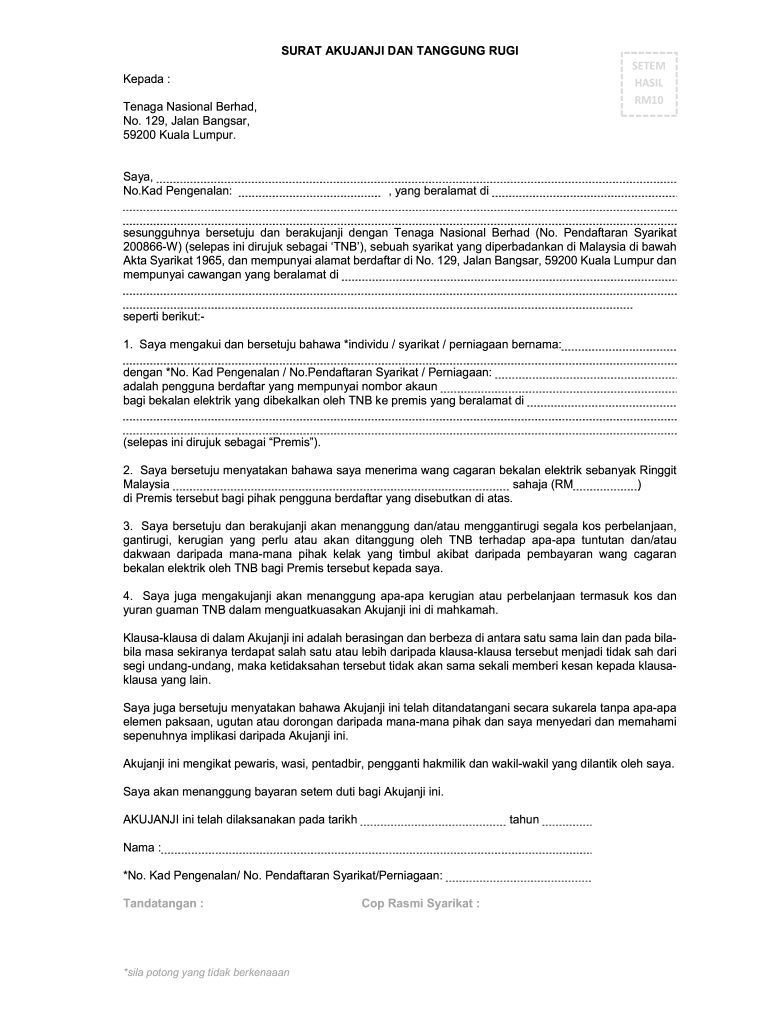







Definition and Meaning of Surat Akujanji dan Tanggung Rugi TNB
The "surat akujanji dan tanggung rugi tnb" is a formal document used in Malaysia, specifically relating to Tenaga Nasional Berhad (TNB), which is the primary electricity utility provider. This document serves as an agreement where the individual or business acknowledges responsibility for a deposit related to electricity supply. In it, the signer also agrees to cover any claims or costs arising from that deposit, such as legal fees if enforcement becomes necessary. It is crucial to understand that this document is legally binding, meaning it obliges the signer to fulfill their commitments outlined within.
The terms "surat akujanji" and "tanggung rugi" can be translated as "letter of undertaking" and "indemnity," respectively, reinforcing the nature of this agreement — it involves an acknowledgment of responsibility and a commitment to compensate for any related liabilities.
How to Use the Surat Akujanji dan Tanggung Rugi TNB
Using the surat akujanji dan tanggung rugi tnb involves several key steps to ensure proper completion and submission. This document is typically required when setting up an electricity supply account with TNB.
-
Read the Terms: Before signing, it is essential to understand the terms and implications outlined in the document. This includes recognizing any potential liabilities.
-
Fill in Personal Details: The signer must provide their personal details, including name, address, and identity card number, if applicable.
-
Include Deposit Amount: Specify the amount of deposit required by TNB, ensuring that it aligns with TNB’s guidelines.
-
Sign the Document: The agreement must be signed voluntarily by the individual or an authorized representative if it’s a business entity.
-
Submit the Document: Once signed, the surat akujanji dan tanggung rugi tnb should be submitted to the nearest TNB office or through their online portal.
Understanding these steps is crucial for ensuring a smooth application process with TNB and avoiding any potential issues related to electricity supply.
Key Elements of the Surat Akujanji dan Tanggung Rugi TNB
There are several key elements that are integral to the surat akujanji dan tanggung rugi tnb. Recognizing these components helps in understanding the obligations and responsibilities of the signer.
-
Signatory Details: The document should clearly state the name and details of the signatory. If the signatory is a corporate representative, their position within the company must be included.
-
Deposit Amount: The precise amount agreed upon as a security deposit for the electricity supply service.
-
Responsibility Clause: A statement that indicates the signer's responsibility for any costs incurred due to breach of contract or potential claims that may arise.
-
Legal Acknowledgment: A paragraph acknowledging that the signer fully understands the agreement and its implications, which may include legal recourse if necessary.
-
Sign and Date: Signatures of all parties involved need to be collected, along with the date of signing for record-keeping purposes.
Important Terms Related to Surat Akujanji dan Tanggung Rugi TNB
Understanding the terminology associated with the surat akujanji dan tanggung rugi tnb is essential for correct usage and interpretation. Here are several key terms related to this form:
-
Deposit: A sum of money required to secure services, which in this case pertains to electricity supply from TNB.
-
Indemnity: A commitment by the signer to compensate TNB for losses incurred as a result of their actions or inactions related to the electricity supply.
-
Liability: The legal responsibility that the signer agrees to assume as part of the contract, including any associated costs.
-
Commitment: The obligation that binds the signer to honor the agreement made in the surat akujanji.
Steps to Complete the Surat Akujanji dan Tanggung Rugi TNB
Completing the surat akujanji dan tanggung rugi tnb is a systematic process that requires careful attention to detail. Here are the steps one should follow:
-
Obtain the Form: Acquire the surat akujanji dan tanggung rugi from TNB offices or their official website.
-
Provide Necessary Information: Input all required fields, including personal information, issue dates, and deposit amounts.
-
Review the Terms: Thoroughly read the terms and conditions to ensure understanding and compliance, allowing for any clarifications if needed.
-
Signature: Ensure that the document is signed in the appropriate section by the individual or authorized representatives to make it legally binding.
-
Date the Form: Clearly indicate the date of signing to establish a timeline for the agreement.
-
Submit the Document: Deliver the completed form to TNB, either online or at a designated office, following the specified submission guidelines.
By adhering to these steps, signers can ensure that their surat akujanji dan tanggung rugi tnb is filled out correctly and efficiently.
Legal Use of the Surat Akujanji dan Tanggung Rugi TNB
The surat akujanji dan tanggung rugi tnb is legally significant, as it serves as a binding contract between TNB and the customer. Its legal use includes;
-
Establishment of Rights: The document lays the foundation for the signer's rights regarding the electricity supply, ensuring TNB can legally enforce the agreement in case of defaults.
-
Indemnification: The signer acknowledges their liability for any losses or costs that may occur due to inadequate compliance or breach of contractual obligations.
-
Legal Enforcement: The surat akujanji can be used as evidence in legal disputes should either party fail to honor the terms outlined in the document. It upholds the interests of both TNB and the customer in any legal situation.
When properly utilized, this document can protect both the utility provider and the consumer in their transactions and obligations towards each other.
Examples of Using the Surat Akujanji dan Tanggung Rugi TNB
Understanding practical scenarios can help clarify how the surat akujanji dan tanggung rugi tnb functions in different contexts. Here are a few examples:
-
Residential Use: A homeowner applying for electricity supply will need to fill out and submit the surat akujanji along with the required deposit to establish their account with TNB.
-
Business Applications: A new café opening in a commercial area must complete the surat akujanji and commit to associated charges to ensure ongoing electricity service for operational needs.
-
Changes in Responsibility: If a homeowner sells their property, the new owner must sign a new surat akujanji and assume responsibility for any existing deposit and liabilities, thus maintaining TNB's standards.
These examples illustrate the versatility and necessity of the surat akujanji dan tanggung rugi tnb in various situations related to electricity supply.