Improve your output with US Property Law Forms

Document administration takes up to half of your office hours. With DocHub, it is easy to reclaim your time and effort and boost your team's productivity. Get US Property Law Forms category and investigate all templates related to your everyday workflows.

Easily use US Property Law Forms:

  1. Open US Property Law Forms and utilize Preview to get the appropriate form.
  2. Click on Get Form to start working on it.
  3. Wait for your form to open in our online editor and start modifying it.
  4. Add new fillable fields, icons, and pictures, change pages, and many more.
  5. Complete your file or prepare it for other contributors.
  6. Download or share the form by link, email attachment, or invite.

Boost your everyday document administration using our US Property Law Forms. Get your free DocHub account right now to explore all forms.


Video Guide on US Property Law Forms management

video background

Commonly Asked Questions about US Property Law Forms

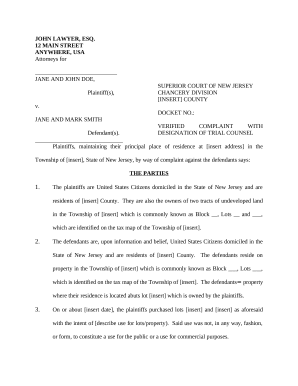
Property law in the United States is complex and multifaceted, but these laws pertain specifically to three distinct types of property. Both state and federal laws exist to protect real property, personal property, and intellectual property.
Property is anything (items or attributes/tangible or intangible) that can be owned by a person or entity. Property is the most complete right to something; the owner can possess, use, transfer or dispose of it.
360 Legal Forms can take care of all of your personal, business, and real estate needs. Enjoy 24/7 access to our full library of forms created by lawyers. to sign too. Sign online and allow other parties to do the same.
Real Property (Land Law) Overview Real property refers to land, including the land itself and any structures, fixtures, and rights associated with it. Land, in its general usage, includes not only the surface of the earth but also everything of a permanent nature over or under it, including structures and minerals.
Property that exists in physical form is tangible property; like houses, apples, and cellphones. Property which cannot be physically held is considered intangible property; like copyrights, trademarks, or the goodwill of a company. Copyrights, trademarks, trade secrets, and patents are also intellectual property.
There are three main types of real estate properties: vacant land, residential properties, and commercial properties.
Some examples include individual contract clauses, licensing agreements, complaints, and interrogatories. Sample documents can be found in a number of places including law firm collections or knowledge management systems, and paid databases such as Lexis and Westlaw.
There are four basic properties: commutative, associative, distributive, and identity.