Create your Employee termination Canada Form from scratch

Start Building Now
Title decoration

Here's how it works

01. Start with a blank Employee termination Canada Form
Open the blank document in the editor, set the document view, and add extra pages if applicable.
02. Add and configure fillable fields
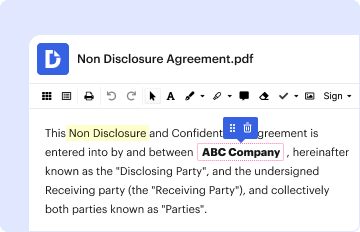
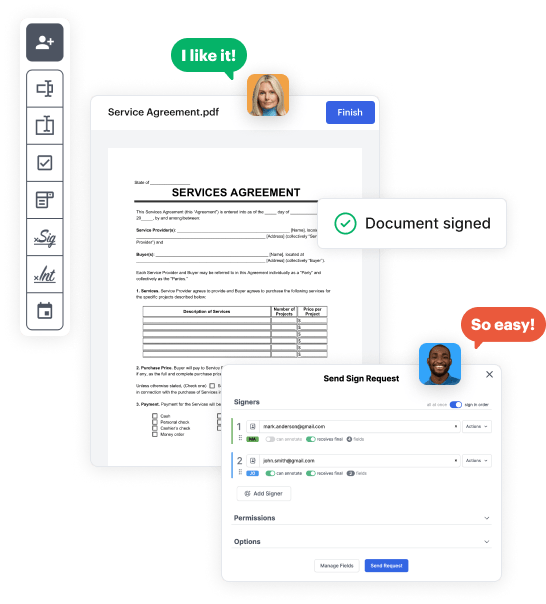
Use the top toolbar to insert fields like text and signature boxes, radio buttons, checkboxes, and more. Assign users to fields.
03. Distribute your form
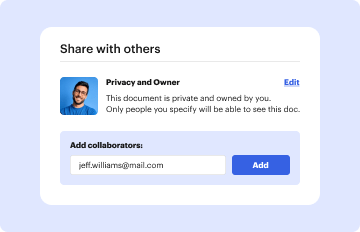
Share your Employee termination Canada Form in seconds via email or a link. You can also download it, export it, or print it out.

A detailed guide on how to design your Employee termination Canada Form online
Form edit decoration

Step 1: Start with DocHub's free trial.

Go to the DocHub website and register for the free trial. This gives you access to every feature you’ll require to build your Employee termination Canada Form with no upfront cost.

Step 2: Access your dashboard.

Sign in to your DocHub account and go to the dashboard.

Step 3: Initiate a new document.

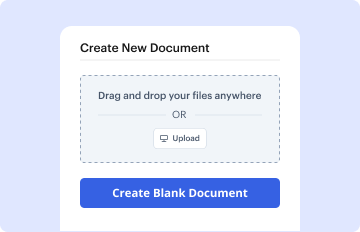
Click New Document in your dashboard, and choose Create Blank Document to design your Employee termination Canada Form from scratch.

Step 4: Utilize editing tools.

Add different fields such as text boxes, radio buttons, icons, signatures, etc. Organize these elements to match the layout of your document and assign them to recipients if needed.

Step 5: Organize the form layout.

Rearrange your document effortlessly by adding, repositioning, deleting, or merging pages with just a few clicks.

Step 6: Create the Employee termination Canada Form template.

Transform your freshly crafted form into a template if you need to send multiple copies of the same document multiple times.

Step 7: Save, export, or distribute the form.

Send the form via email, distribute a public link, or even post it online if you wish to collect responses from more recipients.

be ready to get more

Build your Employee termination Canada Form in minutes

Start creating now

Got questions?

We have answers to the most popular questions from our customers. If you can't find an answer to your question, please contact us.
Contact us
New hire paperwork is the set of forms that employers must complete when hiring a new employee. In Canada, these forms include TD1 forms, Personal Tax Credits Return and the new employees SIN.
The most common types of employment forms to complete are: W-4 form (or W-9 for contractors) I-9 Employment Eligibility Verification form. State Tax Withholding form.
provide the employee with a minimum of 2 weeks written notice. For an employee who has completed at least 3 years of service, the minimum notice requirement is equivalent to 1 week per completed year of employment, up to a maximum of 8 weeks of notice, or. pay the employee their regular wages in lieu of notice.
Upon termination, employers must process the final payment and pay it by the next pay date, issue the Record of Employment (ROE) to the employee, and report the termination to the authorities. If therere any outstanding payments from unpaid time off or bonuses, they too must be paid by the next pay date.
An employer must provide an employee with at least two weeks written notice of their intention to terminate the employment of an employee. In lieu of written notice, the employer must pay two weeks wages at the regular rate to the employee.
be ready to get more

Build your Employee termination Canada Form in minutes

Start creating now

Related Q&A to Employee termination Canada Form

All U.S. employers must properly complete Form I-9 for every individual they hire for employment in the United States. This includes citizens and noncitizens.
What is Canadian new hire paperwork? New hire paperwork is the set of forms that employers must complete when hiring a new employee. In Canada, these forms include TD1 forms, Personal Tax Credits Return and the new employees SIN.
If you want to work in Canada, you may need a TRV or an eTA. A Temporary Resident Visa (TRV) is an official document issued by an officer that is placed in your passport to show that you meet the general requirements for admission to Canada as a temporary resident.

Additional resources on building your forms