
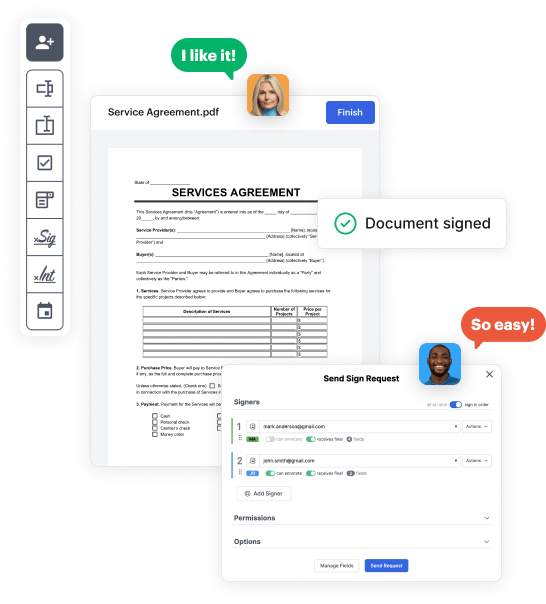
Create your Rental Payment Form from scratch

Start Building Now
Title decoration

Here's how it works

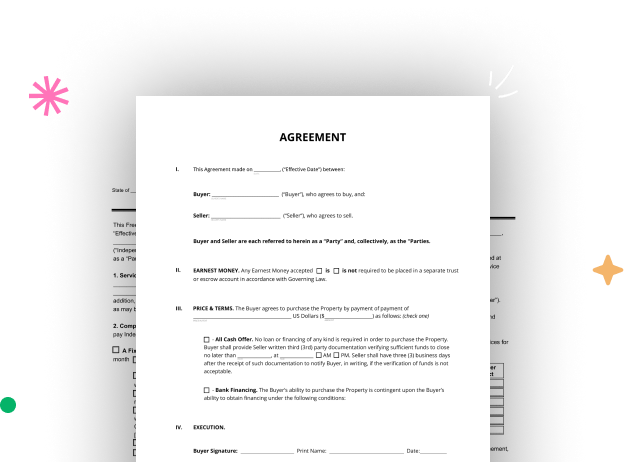
01. Start with a blank Rental Payment Form
Open the blank document in the editor, set the document view, and add extra pages if applicable.
02. Add and configure fillable fields
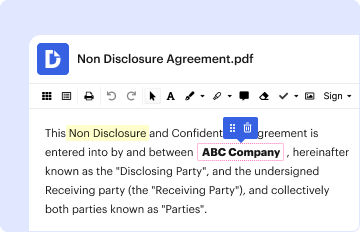
Use the top toolbar to insert fields like text and signature boxes, radio buttons, checkboxes, and more. Assign users to fields.
03. Distribute your form
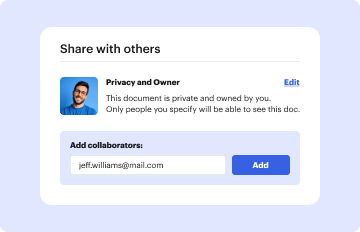
Share your Rental Payment Form in seconds via email or a link. You can also download it, export it, or print it out.

A quick guide on how to build a professional-looking Rental Payment Form

Form edit decoration

Step 1: Log in to DocHub to begin creating your Rental Payment Form.

First, log in to your DocHub account. If you don't have one, you can simply sign up for free.

Step 2: Go to the dashboard.

Once logged in, navigate to your dashboard. This is your main hub for all document-focused tasks.

Step 3: Initiate new document creation.

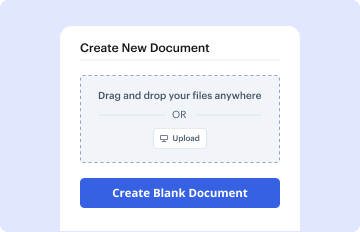
In your dashboard, choose New Document in the upper left corner. Pick Create Blank Document to create the Rental Payment Form from a blank slate.

Step 4: Incorporate form fillable areas.

Add numerous fields like text boxes, photos, signature fields, and other elements to your form and designate these fields to certain users as necessary.

Step 5: Customize your form.

Personalize your template by adding instructions or any other essential information utilizing the text tool.

Step 6: Go over and refine the content of the document.

Thoroughly check your created Rental Payment Form for any errors or essential adjustments. Utilize DocHub's editing tools to enhance your form.

Step 7: Share or download the form.

After finalizing, save your file. You may choose to retain it within DocHub, transfer it to various storage options, or forward it via a link or email.


be ready to get more

Build your Rental Payment Form in minutes

Start creating now

Got questions?

We have answers to the most popular questions from our customers. If you can't find an answer to your question, please contact us.
Contact us
To create a ledger, start by identifying the columns you will need. These may include tenant name, date of payment, amount paid, rent owed, and any late fees or penalties. Use headings for each column and ensure they are clearly labeled. Once your columns are identified, populate the rows with the appropriate data.
Include the date and rental period of the payment, the property address, the tenants full name, and the person receiving the payment. Include the payment amount, the method of payment, the remaining lease balance (if applicable), and any other information that may be important, like late fees.
A Rent Ledger is a detailed account or record-keeping tool that tracks rent payments made by a tenant. It operates similarly to a traditional financial ledger, where each payment is recorded with details such as the payment date, amount paid, and any outstanding balances.
This document can vary in form, from a simple handwritten ledger to a sophisticated digital record automatically updated through financial management software like Stessa.
The receipt should include: Your contact information. Name of the tenant who made the payment. The total amount paid. The rental property location. The rental period covered by the payment. The payment method (cash, check, e-transfer). The date payment was received.
be ready to get more

Build your Rental Payment Form in minutes

Start creating now

Related Q&A to Rental Payment Form

A rent ledger is an essential tool for landlords and property managers to keep track of rent payments made by tenants. It is a detailed record of all rent payments, including the date the rent was paid, the amount paid, the payment method, and any late fees or additional charges.
In the letter, include the following information on a business letterhead: Your tenants name. Rental property address. Rent price. The purpose of the letter. Confirmation that your tenant has paid rent on time. Your contact information.
Lessees would simply record a debit to rent expense and a credit to cash, reflecting the expense for using the leased asset and the payment made within the same period.

Additional resources on building your forms