
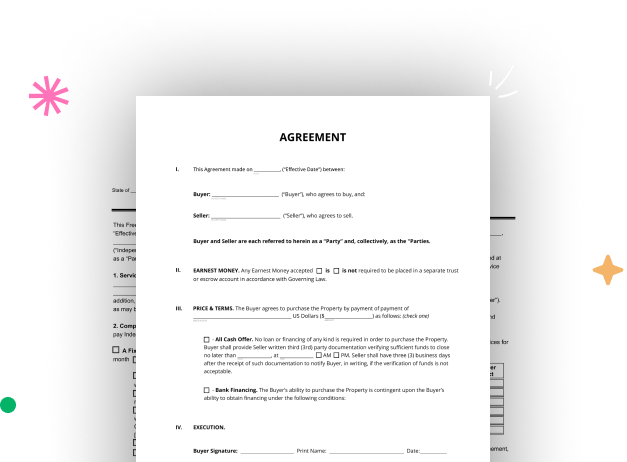
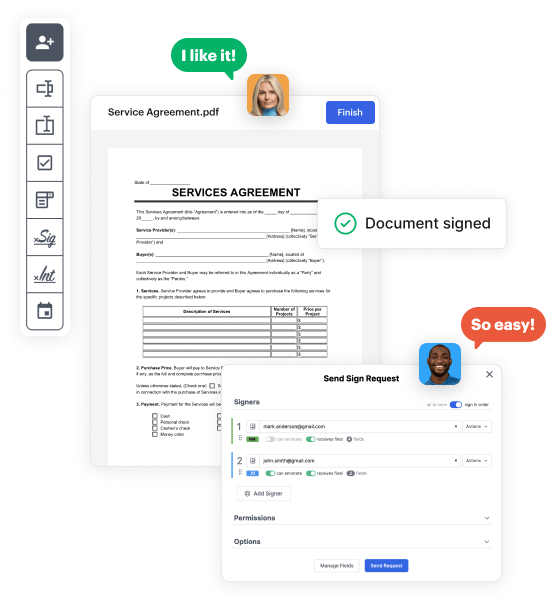
Create your Legal Property Form from scratch

Start Building Now
Title decoration

Here's how it works

01. Start with a blank Legal Property Form
Open the blank document in the editor, set the document view, and add extra pages if applicable.
02. Add and configure fillable fields
Use the top toolbar to insert fields like text and signature boxes, radio buttons, checkboxes, and more. Assign users to fields.
03. Distribute your form
Share your Legal Property Form in seconds via email or a link. You can also download it, export it, or print it out.

A brief tutorial on how to set up a polished Legal Property Form

Form edit decoration

Step 1: Log in to DocHub to create your Legal Property Form.

First, log in to your DocHub account. If you don't have one, you can simply sign up for free.

Step 2: Navigate to the dashboard.

Once signed in, go to your dashboard. This is your main hub for all document-based tasks.

Step 3: Launch new document creation.

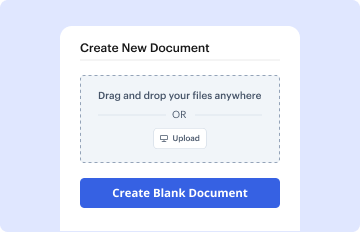
In your dashboard, click on New Document in the upper left corner. Pick Create Blank Document to build the Legal Property Form from a blank slate.

Step 4: Add template fillable areas.

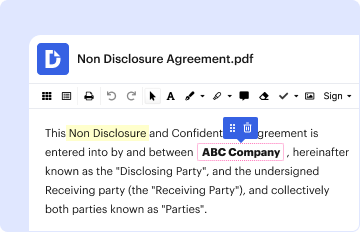
Add various items like text boxes, photos, signature fields, and other fields to your template and designate these fields to particular users as required.

Step 5: Configure your template.

Personalize your document by incorporating directions or any other crucial details leveraging the text feature.

Step 6: Double-check and adjust the form.

Meticulously examine your created Legal Property Form for any mistakes or essential adjustments. Take advantage of DocHub's editing tools to fine-tune your template.

Step 7: Send out or export the template.

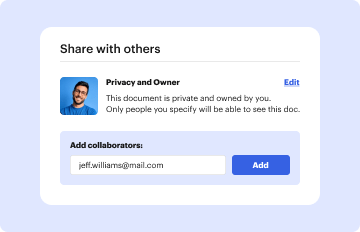
After finalizing, save your file. You may select to retain it within DocHub, export it to various storage services, or send it via a link or email.


be ready to get more

Build your Legal Property Form in minutes

Start creating now

Got questions?

We have answers to the most popular questions from our customers. If you can't find an answer to your question, please contact us.
Contact us
Legal forms address substantive matters, such as forms for contracts, wills, and leases. Pleading and practice forms provide language used in pleadings and motions filed with a court in litigation. These supply language for complaints, answers, motions to dismiss, and other motions.
Legal documents, such as contracts and agreements, are mutual promises between two or more parties. They can be seen everywhere from business deals and employee contracts to residential leases and settlement agreements.
What Are the Steps to Transfer a Deed Yourself? Retrieve your original deed. Get the appropriate deed form. Draft the deed. Sign the deed before a notary. Record the deed with the county recorder. Obtain the new original deed.
Important points to include in a legal document. Party details. List the names, numbers, addresses (email or physical), and any other relevant information of all parties involved. Background information. Motion. Roles and responsibilities. BdocHubes or contingencies. Dates and signatures.
Free Legal Documents, Forms and Contracts Print or download your customized legal document in 5-10 minutes.Create and customize the right documents for your personal or professional life.
be ready to get more

Build your Legal Property Form in minutes

Start creating now

Related Q&A to Legal Property Form

A legally binding document is one in which each party promises to obey or carry out an obligation. Both parties must fulfil the terms of the offer, consideration, and exchange.
Heres how to write a legal document in 10 simple steps: Plan Out the Document Before You Begin. Write with Clear and Concise Language. Ensure the Correct Use of Grammar. Be as Accurate as Possible. Make Information Accessible. Ensure All Necessary Information Is Included. Always Use an Active Voice.
Some examples include individual contract clauses, licensing agreements, complaints, and interrogatories. Sample documents can be found in a number of places including law firm collections or knowledge management systems, and paid databases such as Lexis and Westlaw.

Additional resources on building your forms