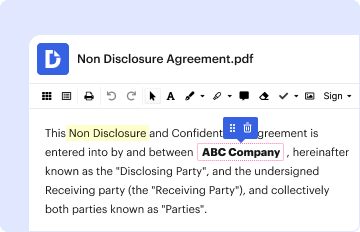
Create your Child Protection Legal Form from scratch

Start Building Now
Title decoration

Here's how it works

01. Start with a blank Child Protection Legal Form
Open the blank document in the editor, set the document view, and add extra pages if applicable.
02. Add and configure fillable fields
Use the top toolbar to insert fields like text and signature boxes, radio buttons, checkboxes, and more. Assign users to fields.
03. Distribute your form
Share your Child Protection Legal Form in seconds via email or a link. You can also download it, export it, or print it out.

A simple guide on how to create a polished Child Protection Legal Form
Form edit decoration

Step 1: Log in to DocHub to create your Child Protection Legal Form.

First, sign in to your DocHub account. If you don't have one, you can easily register for free.

Step 2: Navigate to the dashboard.

Once signed in, head to your dashboard. This is your central hub for all document-centric operations.

Step 3: Initiate new document creation.

In your dashboard, choose New Document in the upper left corner. Pick Create Blank Document to create the Child Protection Legal Form from scratch.

Step 4: Add template elements.

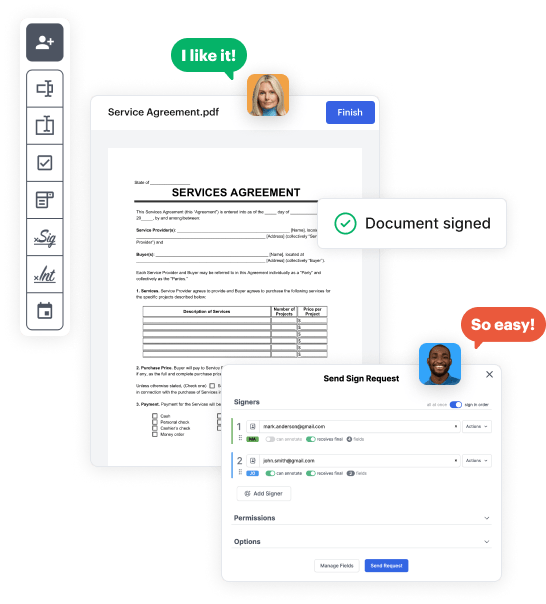
Add various items like text boxes, photos, signature fields, and other elements to your template and designate these fields to particular recipients as needed.

Step 5: Personalize your template.

Customize your document by inserting guidelines or any other essential details utilizing the text feature.

Step 6: Double-check and adjust the form.

Attentively go over your created Child Protection Legal Form for any mistakes or required adjustments. Make use of DocHub's editing capabilities to fine-tune your template.

Step 7: Send out or download the template.

After finalizing, save your copy. You can opt to save it within DocHub, export it to various storage services, or forward it via a link or email.

be ready to get more

Build your Child Protection Legal Form in minutes

Start creating now

Got questions?

We have answers to the most popular questions from our customers. If you can't find an answer to your question, please contact us.
Contact us
The goal of a CHIPS case is to provide a child with support, so the child is safe and gets needed education, medical care, and, if needed, mental health care. Protection and services are provided by the county agency and the childs family working together to develop a plan aimed at keeping the child safe.
The Minnesota Forward Fund CHIPS Act program provides state funding to match federal funds made available in the Chips and Science Act, Public Law 7-167, for businesses in the semiconductor research, development, and manufacturing sector.
Child protection procedures (as described in Part 3) are initiated when police, social work or health professionals determine that a child may have been abused or may be at risk of docHub harm. Child protection involves: immediate action, if necessary, to prevent docHub harm to a child.
CPS workers do not have the authority to remove a child out of the home unless the parents either agree to such removal or they obtain a court order.
Under the Missouri Child Protection Orders Act, Sections 455.500 through 455.538, RSMo, a person may seek an order of protection on behalf of a child (person under 17 years of age unless otherwise emancipated) who has been the victim of child abuse, sexual assault, or stalking.
be ready to get more

Build your Child Protection Legal Form in minutes

Start creating now

Related Q&A to Child Protection Legal Form

A Child in Need of Protection or Services (CHIPS) matter is a court action occurring in juvenile court involving children removed (or at risk of being removed) from their parents or custodians care by the county social services agency due to allegations of abuse or neglect.
The childs name is placed on the register in order to: alert all practitioners working with a child to their risk of harm; confirm that a care and support protection plan for the protection of the child is in place and must be complied with; that a social worker and a core group of practitioners are working with the
The act includes $39 billion in subsidies for chip manufacturing on U.S. soil along with 25% investment tax credits for costs of manufacturing equipment, and $13 billion for semiconductor research and workforce training, with the dual aim of strengthening American supply chain resilience and countering China.

Additional resources on building your forms