






Definition & Purpose of Form 1120-C
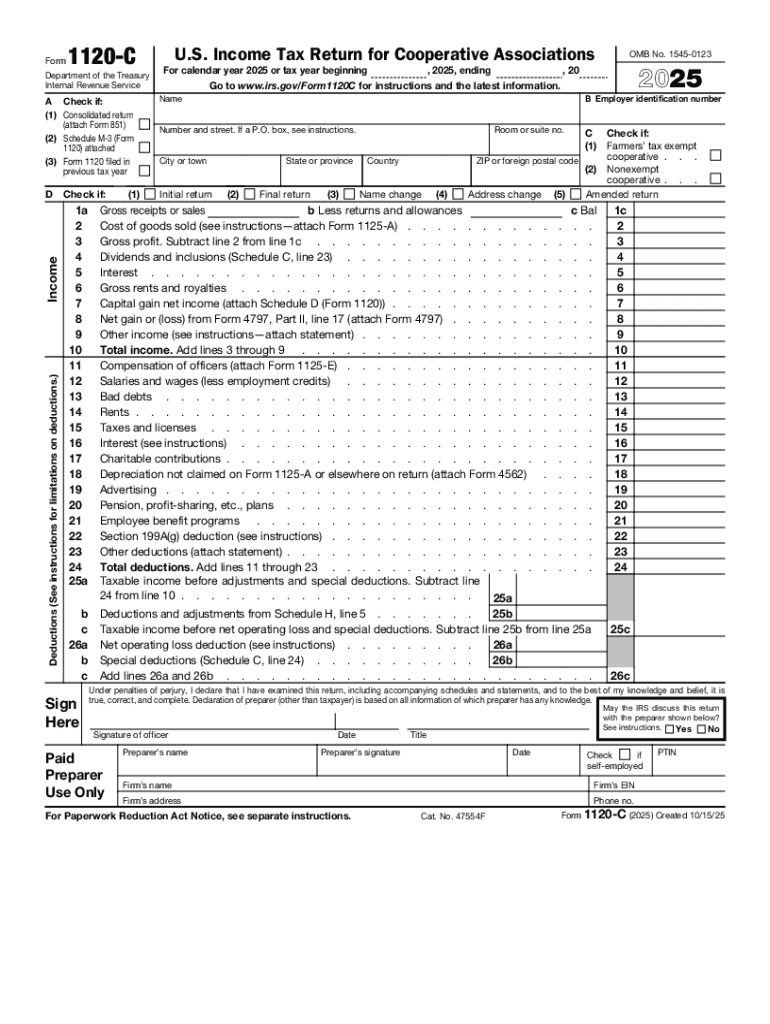
Form 1120-C, known as the U.S. Income Tax Return for Cooperative Associations, is primarily used by corporations operating as cooperatives to report income, gains, losses, deductions, credits, and to figure out tax liability. As a legal requirement, it must be filed by agricultural and other cooperative organizations conducting business in the United States, under the guidelines provided by the IRS.
Key Cooperative Features
- Member-driven Organization: Co-ops return earnings to its members in the form of patronage dividends.
- Tax Obligations: Unlike traditional corporations, cooperatives must consider these earnings when calculating taxable income.
The cooperative's unique structure affects how taxation is applied, distinguishing Form 1120-C from other corporate tax returns.
Steps to Complete Form 1120-C
Preparing Form 1120-C involves multiple components to ensure accuracy in reflecting a cooperative's financial situation. Here is a simplified breakdown of the process:
- Gather Financial Records: Collect all income and expense documentation, including member contributions and receipts.
- Calculate Total Income: Sum up all forms of income, ensuring patronage and non-patronage sources are clearly separated.
- Determine Deductions: Identify eligible deductions. Note: Patronage dividends are typically deductible.
- Compute Tax Liabilities: Calculate applicable taxes after deductions.
- Verify Details & Submit: Review all information for completeness before submission.
Important Considerations
- Record Keeping: Maintain clarity in distinguishing between patronage and non-patronage sourced income.
- Consult IRS Instructions: Follow IRS guidelines through every step to prevent errors.
Eligibility Criteria for Using Form 1120-C
Not all corporations can file Form 1120-C. Understanding the eligibility criteria eliminates confusion and ensures compliance:
- Co-operative Requirements: Must operate on a cooperative basis by distributing profits to members based on their business with the organization.
- Legal Incorporation: Must be legally recognized as a cooperative within the United States.

Specific Eligibility Example
Agricultural cooperatives that distribute earnings derived from patronage are typical candidates. Retail cooperatives may also qualify if their operational structure aligns with IRS definitions.
IRS Guidelines & Requirements
The IRS provides extensive guidelines that affect the preparation and submission of Form 1120-C. Key aspects include:
- Documentation: Ensure all transactional records involving cooperative and member interactions are documented.
- Adherence to IRC Sections: Follow the Internal Revenue Code concerning parts relevant to co-operative operations, especially concerning income categorization.
Unique IRS Instructions
Carefully following these guidelines can help cooperative organizations capitalize on available tax deductions and avoid penalties associated with incorrect filings.
Important Terms Related to Form 1120-C
Understanding specific terminology within the Form 1120-C context is pivotal for clarity:
- Patronage Dividends: Earnings distributed back to cooperative members, derived from their business with the co-op.
- Non-Patronage Income: Income that is not related to members’ business activities, such as investment income.
Expanded Glossary
- Cooperative Basis: Operating for the mutual benefit of its members, distributing proceeds accordingly.
- Patronage Refund: Similar to dividends but adjusted to reflect the individual activity level of members within the cooperative.
Filing Deadlines & Important Dates
Timely filing is crucial for compliance:
- Annual Deadline: Typically the 15th day of the fourth month after the coop’s tax year ends.
- Extension Provisions: File Form 7004 for an extension if additional preparation time is needed.
Avoiding Late Penalties
Adhering to these deadlines ensures a cooperative remains in good standing with the IRS, avoiding penalties for late submissions which can accumulate if ignored.
Submission Methods: Digital vs. Paper
Choosing the appropriate submission method ensures the process is smooth and error-free:
- Digital Filing: Use approved e-filing services for a fast, efficient method, ensuring immediate confirmation of receipt.
- Paper Filing: Traditional mail submission remains possible but is slower and lacks immediate verification.
Benefits of Digital Filing
Incorporating the use of platforms like DocHub can streamline document handling, especially when managing forms requiring complex data inputs like Form 1120-C.
Penalties for Non-Compliance
Failure to file Form 1120-C or filing inaccurately leads to:
- Monetary Fines: Costs increase with time, calculated based on total tax due.
- Increased Scrutiny: Persistent non-compliance may trigger audits or further regulatory attention from the IRS.
Example Scenario
A cooperative missing the deadline due to oversight faces fines that add financial stress and administrative burden, emphasizing the importance of organized record-keeping and planning.
Key Takeaways
Understanding Form 1120-C involves recognizing its role in cooperative tax reporting, adherence to eligibility criteria, and being diligent with filing processes to optimize tax efficiency and compliance within cooperative associations.