





Definition and Meaning
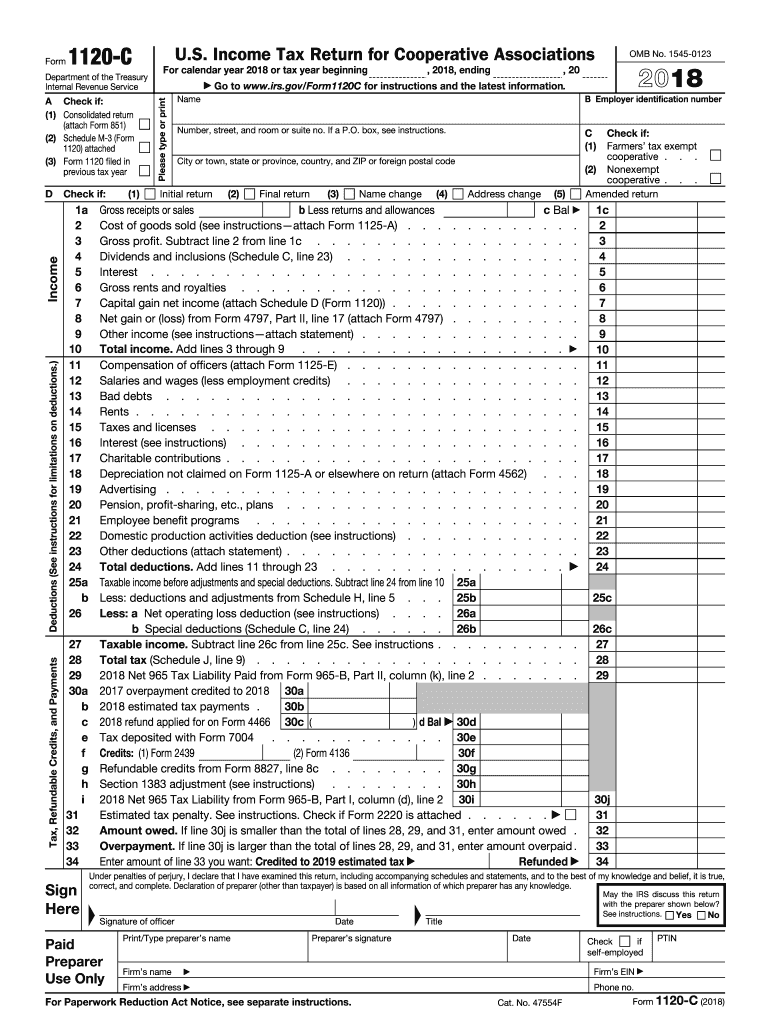
Form 1120 for the year 2018 is the U.S. Corporation Income Tax Return. This form is used primarily by corporations to report their income, gains, losses, deductions, and credits, to calculate their tax liability and indicate any taxes owed or refunds due. It serves as the annual report for a corporation's income tax returns and must be filed with the Internal Revenue Service (IRS) each year.
Corporations that operate in the United States and are recognized as separate legal entities are required to use this form, including C corporations and certain entities that elect to be taxed as corporations. This includes both domestic and foreign corporations that are running a business within the U.S.
Steps to Complete the Form
-
Basic Information: Start by providing your corporation's name, address, and employer identification number (EIN). Ensure all entries are accurate to prevent processing delays.
-
Income Statement: Report the corporation's total income, including gross receipts or sales, cost of goods sold, and business income. Line items will typically include dividends, capital gains, interest income, and other specified income sources.
-
Deductions: Identify and calculate allowable deductions, like those for salaries and wages, operating expenses, depreciation, and any other qualifying deductions. Ensure you comply with IRS guidelines for each deduction type.
-
Tax and Payments: Determine the corporation's tax liability using applicable tax rates. Also, account for any estimated tax payments made during the year, credits, and other adjustments.
-
Signature and Filing: An authorized officer of the corporation must sign and date the form upon completion. Make sure to review all parts of the return for accuracy before submission.
Corporations should carefully read the IRS instructions for Form 1120 to ensure accuracy and completeness.
Required Documents
-
Financial Statements: Include balance sheets, income statements, and statements of cash flows.
-
Supporting Schedules and Attachments: For any claimed deductions, credits, or reported income, align them with schedules such as Schedule E for compensation of officers or Schedule J for tax computation.
-
Previous Tax Returns: If applicable, have prior year returns available for comparison and verification.
IRS Guidelines
The IRS provides detailed instructions for filling out Form 1120 that must be adhered to avoid errors and potential penalties. These guidelines explain each section of the form and common mistakes to avoid.
Important Instructions
- Reconciliation: Ensure that the reported income reconciles with the corporation's accounting records.
- Mandatory E-Filing: Corporations with assets of $10 million or more are required to e-file Form 1120. Others may elect to file paper returns but are encouraged to e-file.
Filing Deadlines and Important Dates
The deadline for filing Form 1120 for the 2018 tax year was typically April 15, 2019. If this date falls on a weekend or holiday, the deadline is extended to the next business day. Corporations can request a six-month extension by filing Form 7004, which would have extended the due date to October 15, 2019.
Software Compatibility
For ease of preparation and submission, corporations can use tax preparation software like TurboTax or QuickBooks. These software solutions offer guided steps through the process of completing Form 1120, ensuring compliance with IRS rules through built-in checks and e-file capabilities. Always check that the software version used supports the 2018 tax year for accurate form preparation.
Penalties for Non-Compliance
Failing to file Form 1120 or filing it inaccurately can lead to penalties imposed by the IRS. The penalty for late filing is typically 5% of the unpaid tax per month, not exceeding 25% of the unpaid tax amount. In addition, if there's a failure to furnish correct information returns, a separate penalty may be applied.
To mitigate these consequences, accurate and timely filing is essential. Corporations should seek the assistance of a tax professional if needed.
Business Entity Types
Form 1120 is applicable to various entity structures including, but not limited to:
- C Corporations: All domestic corporations, except special types such as S corporations.
- Foreign Corporations: Engaged in a U.S. trade or business.
- LLCs: That elect to be taxed as C corporations.
These entities must meet the requirement to file Form 1120, except where specific exemptions apply.
Key Elements of the Form
-
Part I - Income: This part includes all the corporation's income, reported in various categories like dividend income or capital gains.
-
Part II - Tax and Payments: Determines the corporation's tax liability, considering estimated taxes and applicable credits.
-
Schedules: Additional details about different components on the form, such as Officer Compensation (Schedule E) or Dividends Received (Schedule C).
Each section must be completed with accuracy, referencing the IRS guide where necessary. Proper organization and understanding of corporate finances are critical in executing this step effectively.
Ensuring comprehension of these aspects and applying them to real-world scenarios will help facilitate an error-free tax return process for the corporation.




