






Definition and Purpose of IRS Form 1120-C
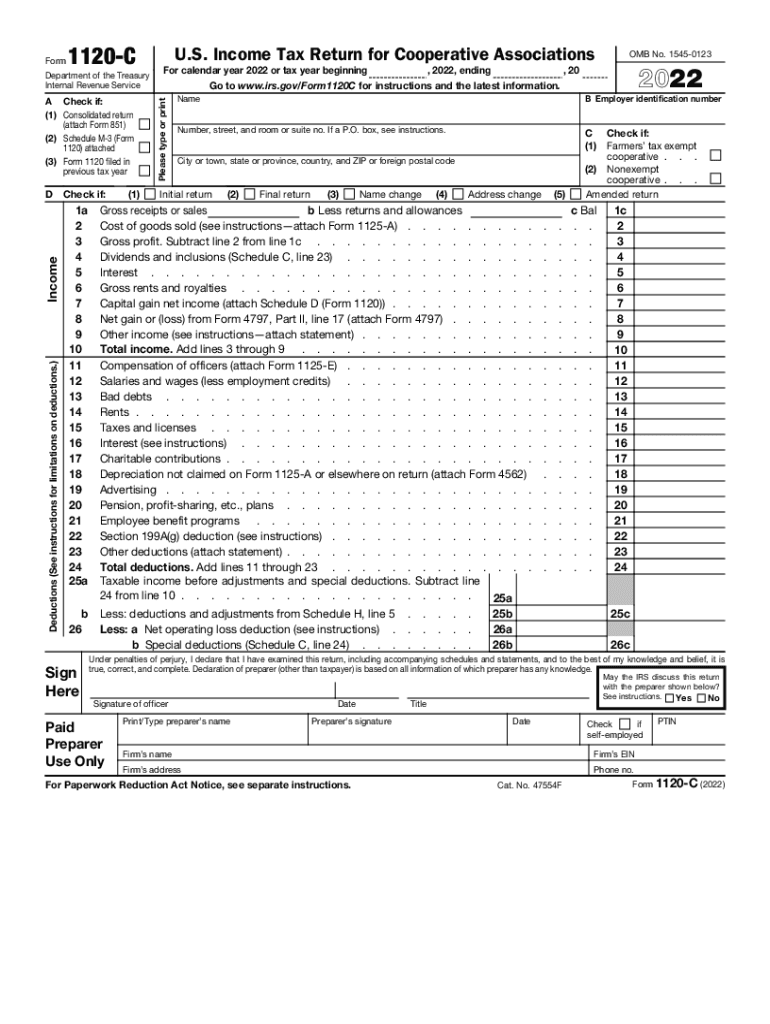
The IRS Form 1120-C, also known as the "U.S. Income Tax Return for Cooperative Associations," is utilized by cooperative organizations to report their income, deductions, and tax liability. This form is integral to ensuring that cooperatives fulfill their federal tax obligations accurately. It requires information about gross receipts, various deductions, taxable income calculations, and other financial details pertinent to the operations of a cooperative.
Key Elements of IRS Form 1120-C
Form 1120-C includes several critical elements that cooperatives need to complete:
- Gross Receipts Section: This portion requires the reporting of all income before any deductions are applied.
- Deductions: Cooperatives must itemize their allowable deductions, which may include business expenses, depreciation, and other relevant costs.
- Taxable Income Calculations: Using the figures provided in the earlier sections, the form guides cooperatives in calculating their taxable income.
- Dividends and Patronage Income: Cooperatives are asked to report distributions made to members or patrons.
These elements ensure that every financial aspect of a cooperative's operations is accurately documented for tax purposes.
Steps to Complete the IRS Form 1120-C
- Gather Necessary Documents: Before completing the form, ensure you have all relevant financial records, including income statements, balance sheets, and records of dividends paid.
- Complete Identification Information: Fill in the name, address, and EIN for the cooperative.
- Report Income: Enter all sources of income under the gross receipts section.
- Detail Deductions: List all eligible deductions accurately.
- Calculate Taxable Income: Follow the instructions to determine the cooperative's taxable income.
- Attach Schedules and Documentation: Include any required schedules or supplementary documents.
- Review and Submit: Double-check the form for completeness before submission.
Submission Methods: Online, Mail, or E-Filing
There are several ways to submit Form 1120-C:
- Electronic Filing (E-File): This is often the fastest and most efficient method, allowing for quicker processing.
- Mail: Cooperatives can mail a physical copy of the completed form to the IRS service center designated for their state.
- In-Person: Alternatively, documents can be dropped off at an IRS office, though this is less common.
Each method has its benefits, and cooperatives should choose based on their preferences for speed and convenience.
Filing Deadlines and Important Dates
Form 1120-C is due on the 15th day of the fourth month following the end of the cooperative's tax year. For most organizations that follow a calendar year, this would typically mean an April 15th deadline. Extensions can be filed if additional time is necessary, but this must be done before the regular deadline to avoid late filing penalties.
Software Compatibility and Tools for Filing
Several tax software options support the completion of Form 1120-C:
- TurboTax and QuickBooks: These popular tools offer guided steps to help with accurate form completion.
- DocHub: For cooperatives requiring a collaborative document environment, platforms like DocHub facilitate editing and teamwork in real-time.
- Direct IRS Systems: The IRS also accepts direct submissions through its website, particularly for those familiar with tax forms.
Utilizing these software tools can streamline the filing process, ensuring accuracy and completeness.
Compliance and Penalties for Non-Compliance
Failure to file Form 1120-C or submitting inaccurate information can lead to penalties:
- Late Filing Penalties: These are incurred when the form is submitted past the due date without an approved extension.
- Accuracy-Related Penalties: These apply if there are substantial inaccuracies or omissions in reported financial information.
- Interest on Unpaid Taxes: Any unpaid taxes will accrue interest until they are fully paid.
Cooperatives should prioritize compliance to avoid these potential penalties.
Cooperative Associations and Eligible Business Types
IRS Form 1120-C is specifically designed for cooperative associations. Eligible types include:
- Agricultural Cooperatives: Organizations engaged in farm-related activities.
- Worker Cooperatives: Businesses owned and self-managed by their workers.
- Purchasing Cooperatives: Groups that procure goods and services for their members.
These cooperatives benefit from the form's tailored design, which accounts for their unique financial structures and tax considerations.