






Definition & Meaning
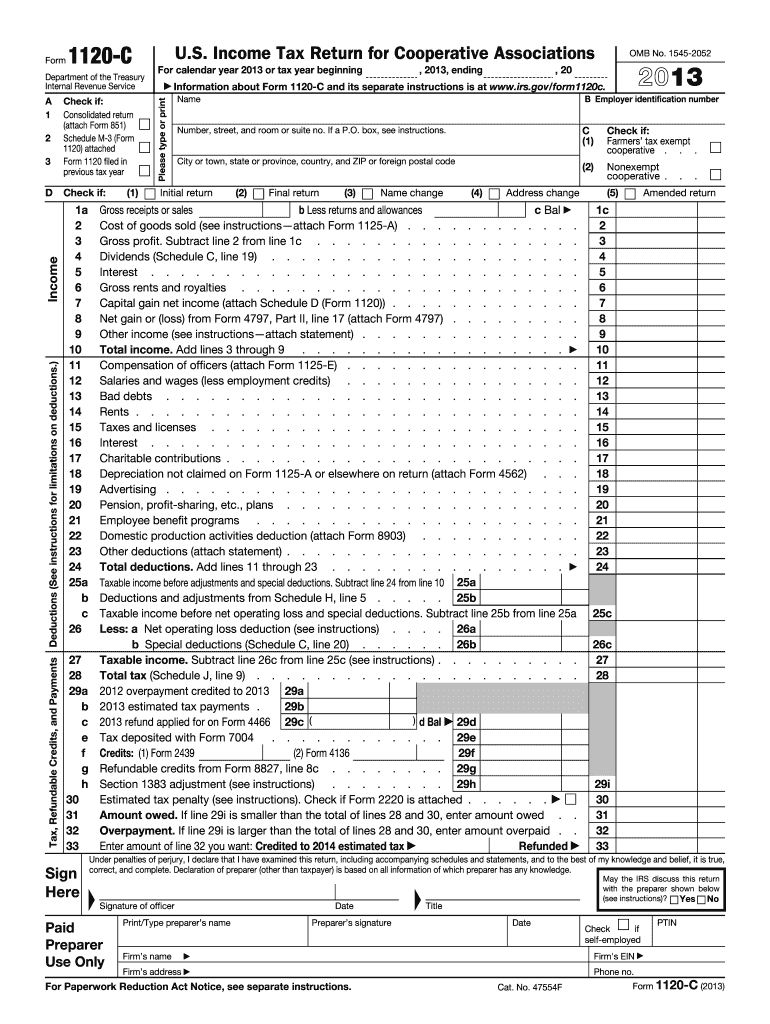
Form 1120-C, officially known as the U.S. Income Tax Return for Cooperative Associations, is a tax document used by cooperative associations to report income, deductions, and credits. Specifically designed for the tax year 2013, this form helps collect detailed financial data necessary for determining taxable income and calculating the appropriate tax due. The structure of Form 1120-C reflects the unique financial transactions typical of cooperative organizations, such as gross receipts from patronage activities and distributions made to members.
How to Use the 2013 Form 1120-C
Using the 2013 Form 1120-C involves several critical steps. Cooperative associations must begin by gathering essential financial records relevant to the tax year 2013. The form requires detailed entries related to gross receipts, cost of goods sold, and other operating income. It also incorporates specific schedules for various deductions and credits applicable to cooperatives. Upon completion, the organization must verify that all entries are accurate, as this ensures compliance with IRS regulations and prevents potential legal issues.
Steps to Complete the 2013 Form 1120-C
- Gather Financial Documentation: Collect records of all income, expenses, and deductions for the tax year.
- Complete Income and Deductions Sections: Calculate and report gross receipts, including patronage dividends.
- Fill Out Schedules: Use additional schedules for specific deductions, credits, and any special income categories.
- Calculate Taxable Income: Deduct expenses from total income to arrive at taxable income.
- Review and Sign: Ensure all information is correct before signing and dating the form.
Important Points to Consider
- Make sure to complete each applicable schedule fully.
- Ensure any third-party preparer information is included to avoid processing delays.
- Understand key tax provisions that impact cooperative taxation.
Key Elements of the 2013 Form 1120-C
- Income Reporting: Captures all sources of revenue, including patronage and non-patronage income.
- Deductions: Details on allowable deductions that reduce taxable income.
- Schedules: Specific sections for different income types and specific cooperative-related deductions.
- Signatures: Section for authorized signatories to confirm the accuracy of the provided data.
Critical Schedules
- Schedule C for dividends and special deductions.
- Schedule J for tax computation and payment.
Legal Use of the 2013 Form 1120-C
Legal compliance with the 2013 Form 1120-C requires cooperative associations to report their financial information accurately and timely to the IRS. The form ensures that cooperatives adhere to federal tax obligations, reflecting correct taxable income and applicable credits. All information submitted must abide by IRS guidelines, as failure to do so could result in penalties or audit actions.
Filing Deadlines / Important Dates
- Original Deadline: March 15, 2014, for organizations with a calendar year-end.
- Extended Deadline: If a valid extension is filed, the due date is extended to September 15, 2014.
Considerations for Deadlines
- Extensions must be filed using Form 7004.
- Late filing incurs penalties unless a reasonable cause is established.
Required Documents
- Prior Year Tax Returns: For historical context and carryover calculations.
- Financial Statements: Comprehensive balance sheets and income statements.
- Supporting Schedules: Documentation for all deductions and credits claimed.
Compliance Documentation
- Any relevant third-party documentation for deductions or exemptions.
- Minutes from board meetings highlighting financial decisions affecting tax reporting.
Penalties for Non-Compliance
Failure to file Form 1120-C or filing with inaccurate information can lead to penalties, including fines and interest on unpaid taxes. Non-compliance with the IRS due to missed deadlines may lead to increased scrutiny and potential audits, necessitating accurate record-keeping and timely filing. All cooperative associations must adhere strictly to IRS regulations to maintain good financial standing and avoid penalties.
Software Compatibility
For cooperatives using software such as TurboTax or QuickBooks, these platforms offer support for Form 1120-C, providing options for electronic submission. These tools help automate calculations, ensuring the accuracy of the figures reported and improving the efficiency of the filing process. They also assist in managing the complexities of cooperative-specific tax situations, such as patronage and non-patronage income.
Benefits of Digital Filing
- Reduces processing time compared to paper submissions.
- Integrates with existing financial systems for easy data import.
- Facilitates collaboration among team members handling tax preparation.