






Definition and Importance of Form 1065
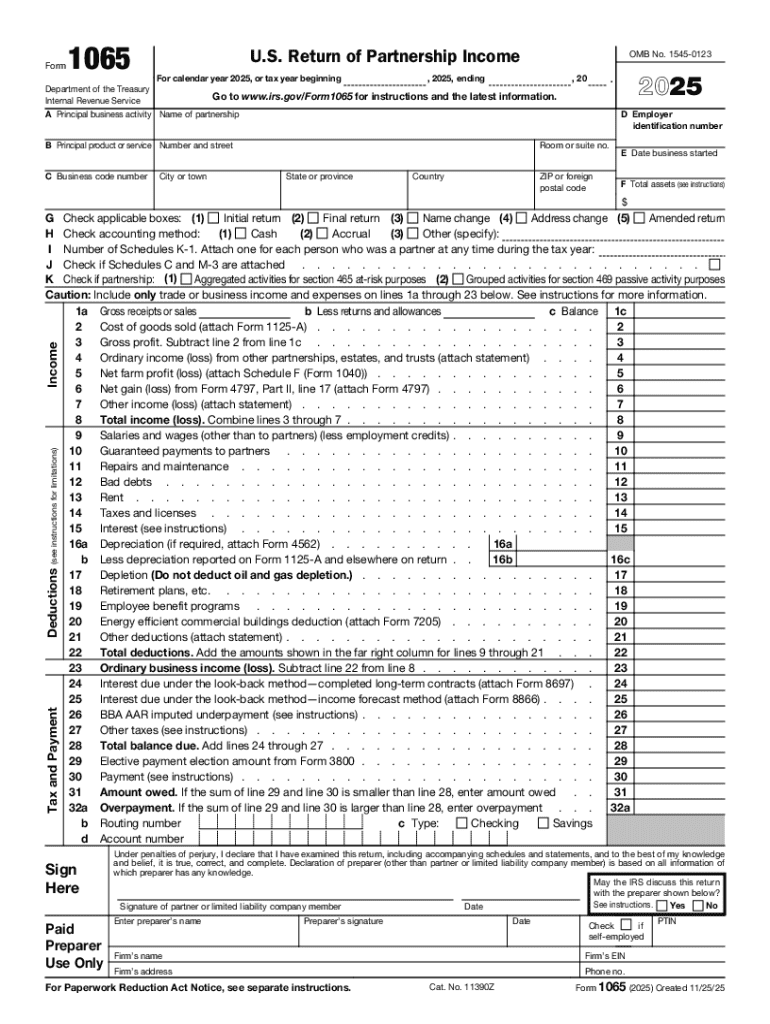
Form 1065, officially titled "U.S. Return of Partnership Income," is a crucial tax form utilized by partnerships to report their financial information to the IRS. This form is essential for capturing a partnership's income, deductions, and credits. Partnerships, unlike corporations, do not pay income taxes; instead, profits and losses pass through to the partners. Each partner then reports their share of the partnership's income or loss on their individual tax return.
Responsibilities for Filing
- Business Structure Requirements: Only partnerships must file Form 1065. Partnerships encompass general partnerships, limited partnerships, and limited liability partnerships (LLPs).
- Information Reported: The form includes details about the business, including income, deductions, and financial activities. Partners must ensure all sections are accurately completed to avoid penalties.
Steps to Complete Form 1065
Completing Form 1065 involves several critical steps. A comprehensive understanding and careful attention to detail ensure the process runs smoothly, reducing mistakes and the likelihood of IRS audits.
Detailed Procedure
- Collect Necessary Information: Gather details about the partnership's income, expenses, and business activities for the tax year.
- Fill Basic Information: Enter the partnership's name, address, and Employer Identification Number (EIN).
- Complete Income and Deductions Sections: Document your total income and list any deductions to determine the partnership's taxable income.
- Attachment of Schedules: Ensure you attach Schedule K-1 for each partner, which delineates each partner's share of income, credits, and deductions.
- Review and Submit: Thoroughly review the form for accuracy and completeness before submission to the IRS by the deadline.
Filing Deadlines and Important Dates
Meeting filing deadlines is crucial to avoiding penalties. Understanding the specific deadlines associated with Form 1065 ensures compliance.
Key Dates
- Annual Deadline: Generally due by the 15th day of the third month following the end of the partnership's tax year (e.g., March 15 for calendar year taxpayers).
- Extensions: Partnerships can file Form 7004 to extend the deadline by six months.
Who Typically Uses Form 1065
Not all business entities use Form 1065. Understanding who must file, and under what circumstances, is essential for compliance.
Entity Types
- General Partnerships: Businesses where two or more individuals share profits, losses, and responsibilities.
- Limited Partnerships: Partnerships with one or more general partners managing the business and limited partners contributing capital without active management roles.
- Limited Liability Partnerships (LLPs): Partnerships providing limited liability to all partners, protecting personal assets from business debts.
Legal Use and IRS Guidelines
Legal compliance is paramount when submitting Form 1065. Failure to adhere to IRS guidelines can result in fines or other legal ramifications.
Compliance Tips
- Accuracy: Ensure all information is complete and correct. Misreporting or omissions can trigger audits.
- Record Retention: Maintain records supporting the entries on Form 1065 for at least three years.
- Timely Filing: Avoid penalties with timely submission.
Form Submission Methods
Federal tax forms can be submitted in various ways. Knowing your options helps streamline the filing process.
Options for Submission
- Electronic Filing: Most partnerships can e-file Form 1065 using IRS-approved software. This method is secure and efficient.
- Mail: Paper forms are still accepted, but processing takes longer. Confirm the correct IRS mailing address to prevent delays.
- In-Person: Less common, but available at specific IRS locations.
Penalties for Non-Compliance
Failure to comply with IRS regulations concerning Form 1065 can lead to financial penalties.
Key Penalties
- Late Filing: Partnerships face penalties for not filing Form 1065 by the deadline, currently $210 per month, per partner, for each month late.
- Errors: Incorrect or incomplete submission may also incur fines. Regular reviews and audits can help avoid this.
Software Compatibility with Form 1065
Modern tax filing often involves digital tools, and understanding software compatibility ensures smooth operations for partnerships.
Compatible Software Systems
- TurboTax: Offers specialized support for partnerships completing Form 1065.
- QuickBooks: Provides integrations to help track financials and prepare documents for tax submission.
Understanding the implications and procedures surrounding Form 1065 is essential for any partnership in the U.S., ensuring accurate reporting of their income and activities to the IRS.