



01. Edit your form 1065 2020 online
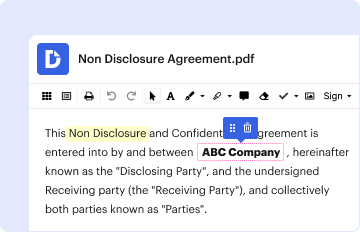
Type text, add images, blackout confidential details, add comments, highlights and more.

Type text, add images, blackout confidential details, add comments, highlights and more.

Draw your signature, type it, upload its image, or use your mobile device as a signature pad.

Send 2020 form 1065 via email, link, or fax. You can also download it, export it or print it out.
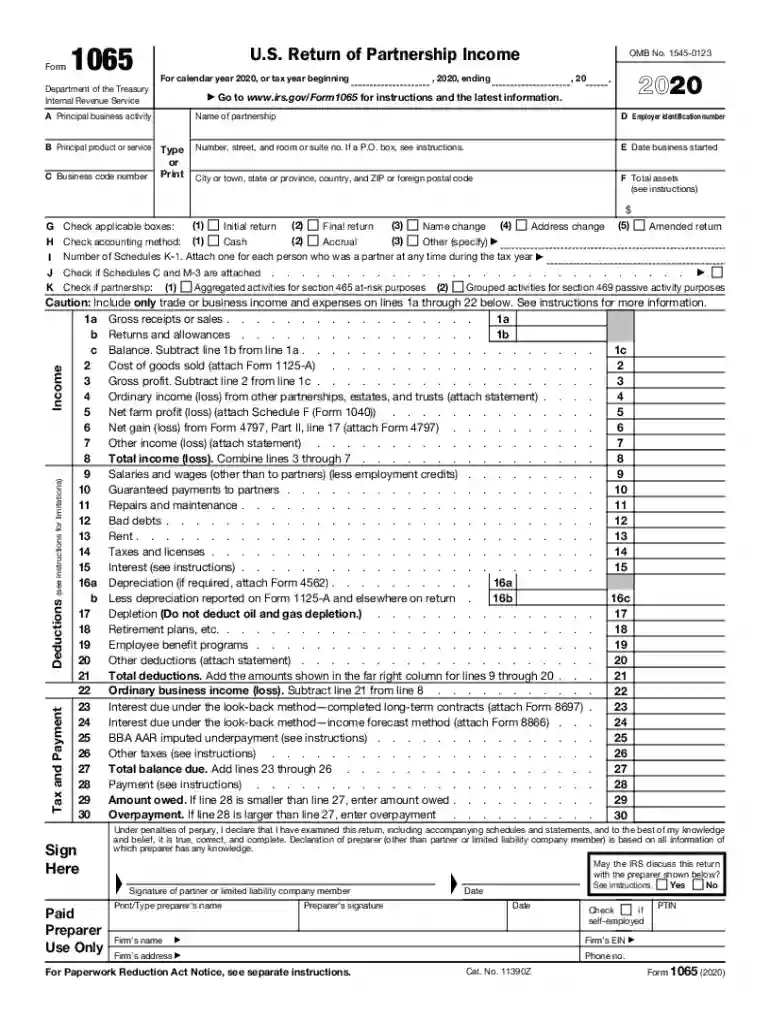
Form 1065, officially known as the "U.S. Return of Partnership Income," is used by partnerships in the United States to report income, deductions, gains, losses, credits, and other critical financial data. This form is essential for partnerships to communicate their financial operations to the Internal Revenue Service (IRS) and ensure compliance with federal tax regulations. It plays a pivotal role in detailing the distribution of income or losses among partners as outlined in the partnership agreement.
Form 1065 comprises several sections that collect essential information about the partnership:
Filing Form 1065 requires careful attention to detail and accurate data entry. Below are the primary steps involved:
Timely filing of Form 1065 is crucial to avoid penalties. Key deadlines include:
Form 1065 must be filed by partnerships, including limited liability companies (LLCs) classified as partnerships for tax purposes. Entities with more than one owner that conduct business, trade, or engage in any other profitable activity should typically file this form. This includes general partnerships, limited partnerships, and multi-member LLCs.


The IRS provides comprehensive guidelines to ensure proper compliance and filing of Form 1065:
Non-compliance with Form 1065 requirements can result in significant penalties:
Partnerships have the option to file Form 1065 electronically or via paper, providing flexibility based on their preferences and technical capabilities.
While Form 1065 is a federal requirement, different states may impose additional filing obligations or variations. Partnerships must check with state tax authorities for specific requirements and additional forms that might be necessary.
Filing Form 1065 accurately and comprehensively is vital for partnerships to remain compliant with federal tax laws, promote transparency in financial reporting, and ensure equitable distribution of income among partners.
We've got more versions of the form 1065 2020 form. Select the right form 1065 2020 version from the list and start editing it straight away!
| Versions | Form popularity | Fillable & printable |
|---|---|---|
| 2025 | 4.6 Satisfied (56 Votes) | |
| 2024 | 4.3 Satisfied (48 Votes) | |
| 2023 | 4.4 Satisfied (52 Votes) | |
| 2022 | 4.9 Satisfied (24 Votes) | |
| 2021 | 4.8 Satisfied (81 Votes) | |
| 2020 | 4.3 Satisfied (145 Votes) | |
| 2019 | 4.4 Satisfied (171 Votes) | |
| 2018 | 4.3 Satisfied (138 Votes) | |
| 2017 | 4.3 Satisfied (233 Votes) | |
| 2016 | 4.4 Satisfied (678 Votes) | |
| 2015 | 4.2 Satisfied (57 Votes) | |
| 2014 | 4.1 Satisfied (30 Votes) | |
| 2013 | 4.3 Satisfied (36 Votes) | |
| 2012 | 4.2 Satisfied (30 Votes) | |
| 2011 | 4 Satisfied (42 Votes) |
At DocHub, your data security is our priority. We follow HIPAA, SOC2, GDPR, and other standards, so you can work on your documents with confidence.





by CM Edwards 1936 The determination is often quite important. The second method, the net income per form 1065, may force one partner to assume a larger percentage of the taxable.Read more
Nov 25, 2025 G Check applicable boxes: (1). Initial return (2). Final return (3). Name change (4). Address change (5). Amended return.Read more
Jul 13, 2016 Partnerships compute and report the filing fee on Form NJ-1065. DUE DATE. Returns are due on the 15th day of the fourth month after the end ofRead more


