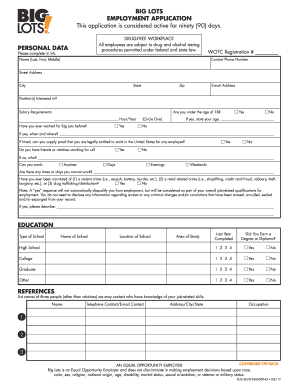
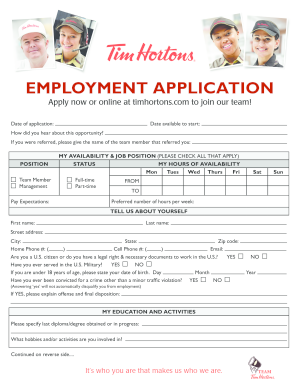
First resume Canada Forms

Easily browse First resume Canada Forms and handle your documents within your DocHub account. Streamline your frequent document workflows, adjust and complete documents online, and securely share them with others.

Get and manage First resume Canada Forms online

Speed up your form management with our First resume Canada Forms online library with ready-made document templates that meet your requirements. Access the document template, modify it, complete it, and share it with your contributors without breaking a sweat. Begin working more effectively with the forms.

The best way to use our First resume Canada Forms:

  1. Open our First resume Canada Forms and search for the form you need.
  2. Preview your document to ensure it’s what you want, and click on Get Form to start working on it.
  3. Alter, add new text, or highlight important information with DocHub features.
  4. Complete your form and preserve the changes.
  5. Download or share your form template with other people.

Discover all of the possibilities for your online file administration with our First resume Canada Forms. Get a free free DocHub profile right now!

Video Guide on First resume Canada Forms management

video background

Commonly Asked Questions about First resume Canada Forms

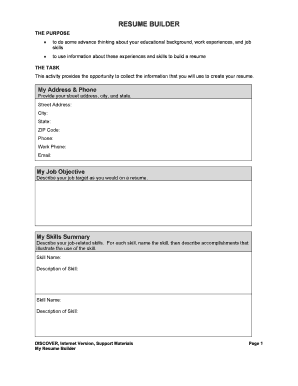
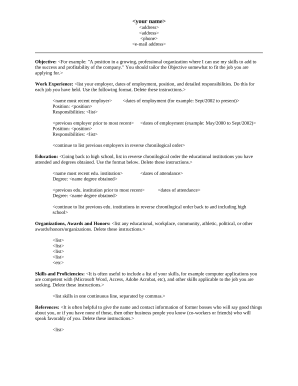
How to Write Your First Job Resume Pick the right resume template. Write down your contact information (correctly) Include a resume objective. List your education (in detail) Instead of work experience, focus on Highlight your skills. Mention optional sections. Stick to the one-page limit.
How to create a resume in a Canadian format Complete a resume header. Creating a resume header in a Canadian format is similar to the format for a U.S. resume header. Write a professional summary. Describe your professional experience. List your skills. Provide your educational background.
TIP: Reverse chronological order of job history is the most common Canadian resume format. Functional order is another option that prioritizes skills over employment history. Work history takes up the bulk of your resume.
Use a standard font size (10 or 12 points, in a font style such as Times New Roman, Arial, or Calibri).
The differences between a CV and a resum arent carved in stone. In fact, in Canada and the United States, the terms are often used interchangeably. Generally speaking though, if what you are trying to foreground is your knowledge of a field, you want to lean more towards a CV.
The most popular resume format in Canada is the reverse-chronological format (which is also called the chronological format). Its so widely used that its expected by most recruiters. The chronological format puts your most recent work experiences first and then goes back in time.
The chronological resume format (or reverse chronological resume format) is the most popular. This layout emphasizes your most recent work experience first. Using this format is super straightforwardlist your experience, starting with your most recent position, and work backward.
Length Keep your resume between one and two pages long. Longer resumes often go unread, while resumes less than a full page can indicate inexperience. Font Your font should be consistent throughout your resume. You should use at most two fonts: one for headings and one for content.