




01. Edit your eviction notice bc template online
Type text, add images, blackout confidential details, add comments, highlights and more.

Type text, add images, blackout confidential details, add comments, highlights and more.

Draw your signature, type it, upload its image, or use your mobile device as a signature pad.

Send eviction notice bc form via email, link, or fax. You can also download it, export it or print it out.
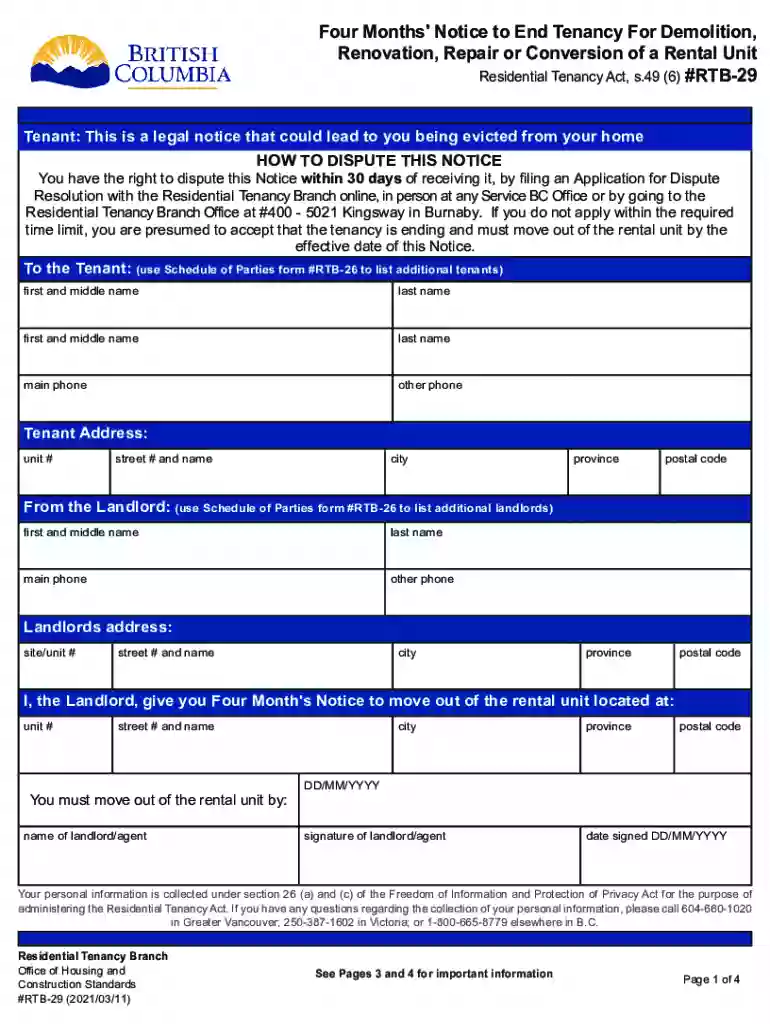
An end of tenancy notice template for British Columbia serves as a formal document used by landlords to inform tenants of the termination of their rental agreement. This notice is essential for complying with local laws governing tenant-landlord relationships. It comes into play when landlords decide to reclaim their rental unit, whether due to personal reasons like selling the property or for renovations.
The template typically includes essential details, such as:
Understanding this template helps ensure both parties adhere to legal requirements while facilitating a smoother transition for tenants moving out.
The end of tenancy notice template BC contains specific elements that make it legally binding and clear for both landlords and tenants. Notable components include:
These elements are vital to minimizing disputes and ensuring clarity throughout the end-of-tenancy process.
Filling out the end of tenancy notice template involves several straightforward steps to ensure accuracy and compliance:
This structured approach minimizes the risk of errors and prepares both parties for the transition.
A clear comprehension of specific terminologies associated with the end of tenancy notice template can prevent misunderstandings:
Understanding these terms enables both landlords and tenants to navigate the process effectively.
Using the end of tenancy notice template in BC must align with provincial rental laws to avoid potential legal challenges. Important aspects include:
Compliance with these requirements not only protects landlords legally but also respects tenant rights, fostering a fair housing environment.
Practical applications of the end of tenancy notice template can provide insight into its versatility and necessity:
These examples emphasize the practical importance of the template in various scenarios concerning tenant departures.
We've got more versions of the eviction notice bc template form. Select the right eviction notice bc template version from the list and start editing it straight away!
At DocHub, your data security is our priority. We follow HIPAA, SOC2, GDPR, and other standards, so you can work on your documents with confidence.
Your notice must include: Tenants full name(s). Rental home address. The date the tenancy will end (30 days from when you give the notice). About the TenantRead more
Security deposits should be returned within 30 days of the leases end with any interest earned on the funds during your tenancy. If your landlord does notRead more


