
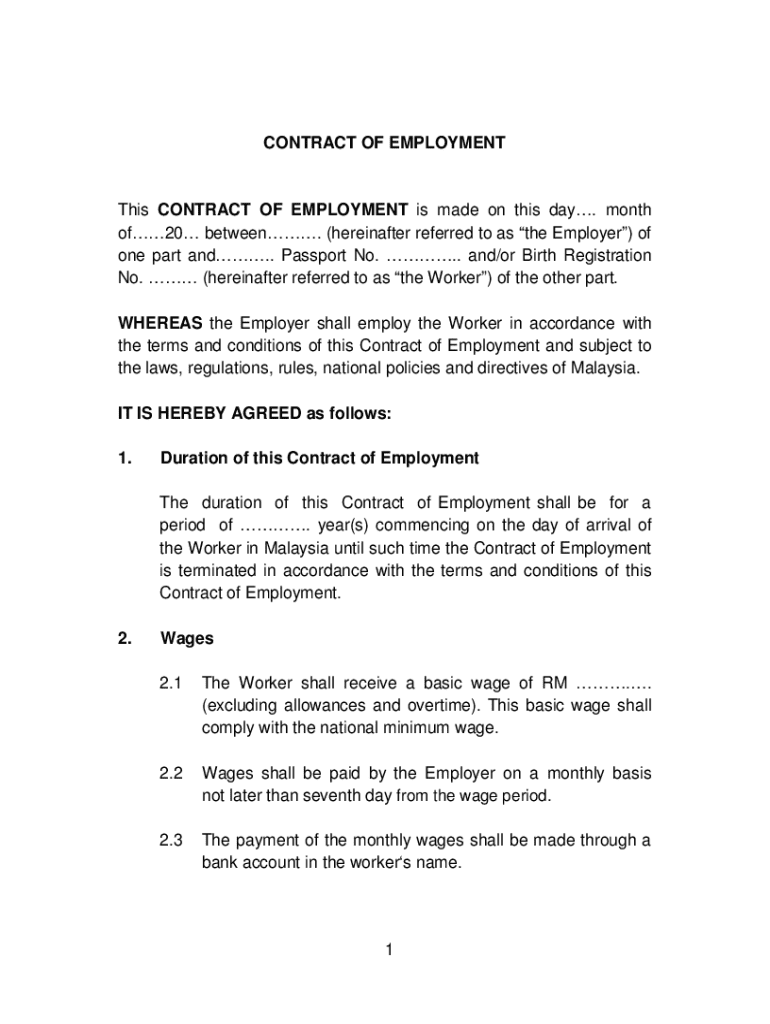







Definition and Purpose of the Contract of Employment - Standard Latest Doc
A "Contract of Employment - Standard Latest Doc" serves as a formal agreement between an employer and an employee, outlining the rights, responsibilities, and obligations of both parties. This document ensures that all employment terms are clearly defined and legally binding. It typically covers aspects such as job role, duration of employment, salary, working hours, benefits, and termination procedures. The contract's primary aim is to protect both the employer and the employee by providing clarity and preventing potential disputes.
Key Features
- Clarity and Specification: Clearly outlines job duties, expectations, and work conditions.
- Legal Compliance: Ensures adherence to U.S. labor laws, providing necessary protection and rights to employees.
- Mutual Agreement: Establishes a mutual understanding and agreement of terms between both parties involved.
Steps to Complete the Contract of Employment
Completing the Contract of Employment involves several sequential steps to ensure it is thorough and legally compliant.
-
Gather Necessary Information:
- Obtain details such as employee's full name, job title, salary, and start date.
-
Outline Terms and Conditions:
- Define roles, responsibilities, probation period, and work location.
-
Specify Compensation and Benefits:
- Clearly state salary, bonuses, health insurance, retirement plans, and other benefits.
-
Describe Working Hours and Leave Policies:
- Include details on standard hours, overtime, vacations, and other leave entitlements.
-
Include Termination and Dispute Resolution Clauses:
- Specify termination conditions and procedures for resolving disputes.
-
Finalize with Signatures:
- Ensure both parties sign and date the document to formalize the agreement.
Key Elements of the Contract of Employment
The contract consists of various critical components that define the employer-employee relationship.
Important Clauses
- Duties and Responsibilities: Clearly defined roles expected to be fulfilled by the employee.
- Confidentiality Agreement: Protection of sensitive company information.
- Non-Compete Clauses: Terms preventing employees from joining competitors immediately post-employment.
- Amendment Procedures: Guidelines for making future amendments to the contract.
Practical Scenarios
- Promotion Adjustments: Modifications for role changes or salary adjustments within the contract duration.
- Role-Specific Terms: Customization of the contract based on unique industry requirements.
Legal Use and Compliance
Contracts must adhere to specific legal frameworks to be considered binding in the U.S.
Compliance with U.S. Laws
- Adherence to labor laws such as the Fair Labor Standards Act (FLSA) is mandatory.
- Includes provisions to accommodate Americans with Disabilities Act (ADA) standards.
Legal Enforcement
- Contracts can be enforced in court if disputes arise, ensuring legal redress.
- Ensures legal protection for both employer and employee, offering a framework for resolving violations.
Who Typically Uses the Contract of Employment
The primary users of this contract are employers across various sectors and newly hired employees.


Employers
- Small to large businesses seeking to formalize employment relationships.
- Human Resources departments responsible for hiring and onboarding processes.
Employees
- Individuals being offered new employment roles or positions.
- Professionals seeking clarification and assurance of job security, benefits, and duties.
Important Terms Related to the Contract
Understanding key terms is crucial for interpreting the contract effectively.
Essential Vocabulary
- Probationary Period: Initial phase where job performance is evaluated.
- At-Will Employment: Employment relationship where termination can occur by either party without cause.
- Breach of Contract: Failure to comply with any terms outlined in the contract.
Digital vs. Paper Version of the Contract
In the modern workplace, contracts can be managed digitally or traditionally in paper form.
Digital Version
- Created using document management software like DocHub.
- Offers features like electronic signatures and secure online storage.
- Facilitates easy sharing and collaboration among multiple parties.
Paper Version
- Physical hard copy for traditional documentation needs.
- Necessary signatures obtained manually, stored in physical records.
- Generally used where digital infrastructure is unavailable.
Software Compatibility
Modern contract management solutions are compatible with various software for enhanced functionality.
Integration
- Compatible with platforms like Google Workspace for easy editing and storage.
- Streamline workflow integration with tools such as QuickBooks for payroll management.
- Supports various file formats, ensuring smooth transitions between digital tools.




