




01. Edit your sc vital records marriage certificate online
Type text, add images, blackout confidential details, add comments, highlights and more.

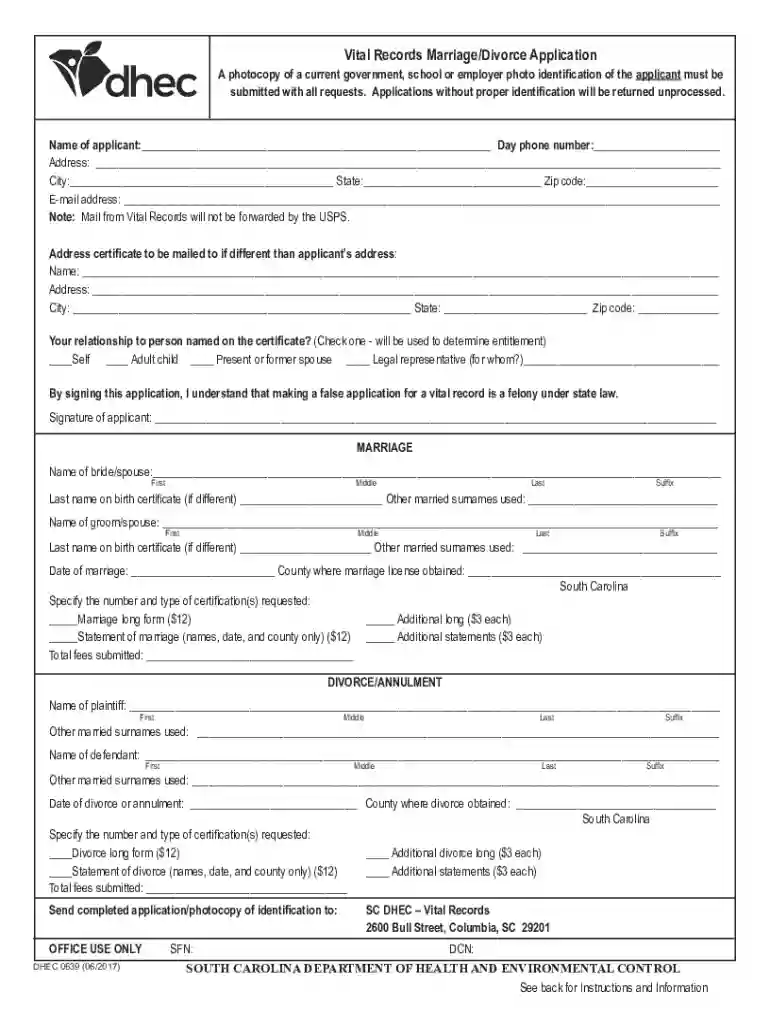
Type text, add images, blackout confidential details, add comments, highlights and more.

Draw your signature, type it, upload its image, or use your mobile device as a signature pad.

Send it via email, link, or fax. You can also download it, export it or print it out.
The Vital Records Marriage Divorce Application is a form used to request official documents related to marriage and divorce from the vital records office of a particular state. These documents serve as legal proof of marital status changes and are essential for various personal, legal, and administrative purposes. Understanding the details and requirements of this application ensures accurate and efficient processing of requests.
Documentation of marriages and divorces is critical for personal records, legal processes, and genealogical research. The application must provide comprehensive information to verify the identities of the involved individuals and uphold the integrity of the vital records system.
Most states allow applicants to access the Vital Records Marriage Divorce Application through online portals. These platforms provide a convenient way to download the necessary forms and guidelines, making the process straightforward for users anywhere with internet access.
Those without internet access can visit their local vital records office to obtain a physical copy of the form. In-person visits provide an opportunity to ask questions and ensure the form is filled out correctly.
Applicants can also request the form via mail by contacting the vital records office. This method is useful for those who prefer traditional communication, or when digital access is challenging due to privacy concerns or technological limitations.
Gather Personal Information: Collect all necessary personal details, including full names, addresses, and dates relating to the marriage or divorce.
Complete Identification Details: Provide required identification, such as a driver's license or passport, to verify the identity of applicant(s).
Specify Document Type: Clearly indicate if you require a marriage certificate, a divorce decree, or both.
Provide Payment Information: Check the acceptable payment modes and include fees, if applicable, using the correct method as instructed on the form.
Review and Submit: Double-check all entered information for accuracy and completeness, then submit the form through an available method—online, by mail, or in person.
Track Application: Retain copies of submission receipts and any correspondence related to the application for tracking and follow-up.
Critical details about the individual requesting the document, including contact information and the purpose for the request.
Precise information about the marriage or divorce, such as date and place, to ensure correct records are located and issued.
Each state may have unique requirements for processing these applications. Differences can include:
The application serves many legal purposes, such as changing a name after marriage or divorce, creating a legal claim to inheritance rights, or adjusting tax return information. Compliance with application processes ensures the legal validity and recognition of these documents in various proceedings.
These practical uses emphasize the importance of having accurate and accessible vital records, underscoring the necessity of a properly completed and submitted Vital Records Marriage Divorce Application.
We've got more versions of the sc vital records marriage certificate form. Select the right sc vital records marriage certificate version from the list and start editing it straight away!
At DocHub, your data security is our priority. We follow HIPAA, SOC2, GDPR, and other standards, so you can work on your documents with confidence.
Vital Statistics issues letters verifying if a marriage or divorce was recorded with the State of Texas based on the application for marriage or divorceRead more
May 12, 2026 Below is the official list of all candidates that filed for office. Candidates are listed in the order they will appear on the ballot.Read more


