




01. Edit your 1040 online online
Type text, add images, blackout confidential details, add comments, highlights and more.

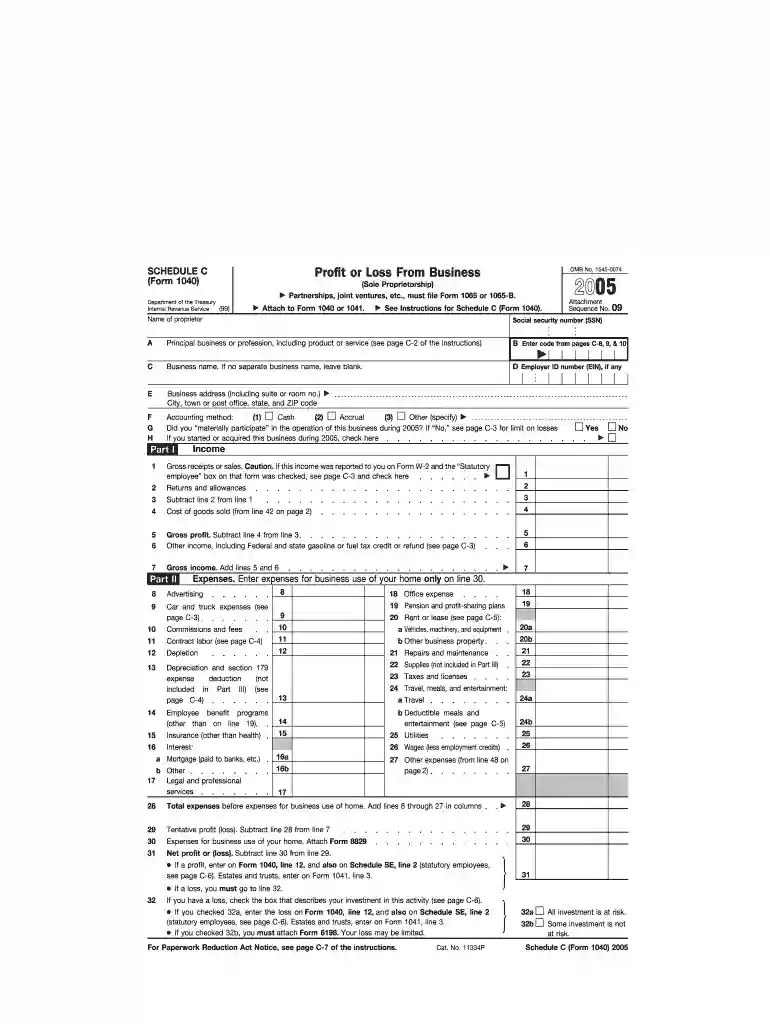
Type text, add images, blackout confidential details, add comments, highlights and more.

Draw your signature, type it, upload its image, or use your mobile device as a signature pad.

Send 2005 form 1040 via email, link, or fax. You can also download it, export it or print it out.
The 2005 Form 1040, often referred to simply as Form 1040, is a United States federal tax document used by individuals to file their annual income tax returns. This form captures a comprehensive picture of your financial activities for the year, including wages, interests, dividends, and other sources of income. It enables taxpayers to calculate their final tax liability or refund.
Filing your taxes accurately requires attention to detail. Here’s a step-by-step outline to guide you through the process of completing the 2005 Form 1040.
Gather Necessary Documents:
Report Income:
Claim Deductions & Credits:
Calculate Taxable Income:
Finalize Tax Liability:
Determine Refund or Payment:
Form 1040 is versatile, suiting a broad spectrum of taxpayers.
Use of the 2005 Form 1040 requires adherence to specific legal protocols and is governed by the IRS guidelines.
A freelance artist must report all sales, minus allowable business expenses, to determine net earnings. They might include a Schedule C alongside Form 1040 to itemize these details.
A family with two working adults must combine incomes and deductions possible for each. They need to pay special attention to joint filing benefits and consequences.
The Internal Revenue Service (IRS) is responsible for the issuance and regulation of Form 1040. The IRS provides publications and instructions to aid taxpayers in accurately completing their forms according to the law.
Filing the 2005 Form 1040 is essential for meeting legal tax obligations. It ensures proper documentation of income, allowing the IRS to assess the fairness and correctness of the taxes collected, and facilitates returns and refunds where applicable. Non-compliance can result in audits, penalties, or legal consequences.
We've got more versions of the 1040 online form. Select the right 1040 online version from the list and start editing it straight away!
| Versions | Form popularity | Fillable & printable |
|---|---|---|
| 2024 | 4.6 Satisfied (31 Votes) | |
| 2023 | 4.4 Satisfied (54 Votes) | |
| 2022 | 4.3 Satisfied (38 Votes) | |
| 2021 | 4.8 Satisfied (140 Votes) | |
| 2020 | 4.4 Satisfied (93 Votes) | |
| 2019 | 4.1 Satisfied (38 Votes) | |
| 2018 | 4.3 Satisfied (239 Votes) | |
| 2017 | 4.3 Satisfied (233 Votes) | |
| 2016 | 4.1 Satisfied (110 Votes) | |
| 2015 | 3.5 Satisfied (95 Votes) | |
| 2014 | 4.1 Satisfied (54 Votes) | |
| 2013 | 4 Satisfied (44 Votes) | |
| 2012 | 4 Satisfied (27 Votes) | |
| 2011 | 4.2 Satisfied (66 Votes) | |
| 2010 | 4 Satisfied (34 Votes) |
At DocHub, your data security is our priority. We follow HIPAA, SOC2, GDPR, and other standards, so you can work on your documents with confidence.
Form 1040, U.S. individual income tax return Description based on: 2005; title from title screen (viewed on July 18, 2006).Read more
Steve and Gretchen have the 2005 Form 1040 tax. $2,000. They enter $2,000 on line 52 of their Form package and instructions. They want to see if they qualify.Read more
If you did not get a W-2, see page 22. Form. Married filing separately. Enter spouses SSN above and full name here. 䊳. Cat. No. 11320B. Label. Form 1040 (2005).Read more


