






Definition and Purpose of Schedule C (Form 1040) 2010
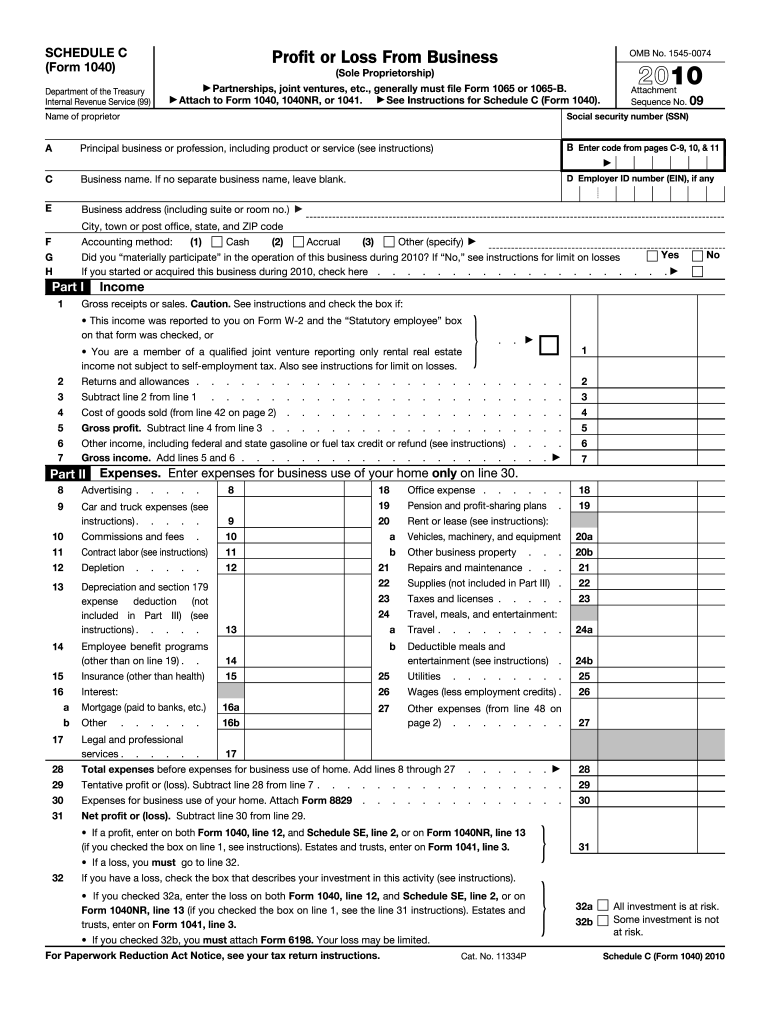
Schedule C (Form 1040) for the year 2010 is primarily used by sole proprietors to report their business income and expenses. This form is part of an individual’s federal tax return and helps in calculating the net profit or loss from their business activities. It includes sections for detailing income, expenses, cost of goods sold, and vehicle information. Properly completing this form ensures that taxpayers accurately report their business earnings to the Internal Revenue Service (IRS) and comply with tax obligations.
How to Use Schedule C to Report Profit or Loss
To effectively report profit or loss on Schedule C, sole proprietors need to gather comprehensive financial records from their business activities throughout the year. The form demands detailed information on:
- Gross Receipts or Sales: Total income generated from business operations.
- Expenses: Categorized into sections such as advertising costs, office expenses, legal fees, and utilities.
- Cost of Goods Sold: If applicable, this section accounts for the direct costs attributable to the production of the goods sold by the business.
- Car and Truck Expenses: This includes costs related to vehicles used for business purposes.
Step-by-Step Filing Process
- Collect Financial Documents: Assemble all revenue and expense records.
- Fill Out Personal Information: Provide taxpayer’s name, social security number, and business name.
- Complete Income Section: Enter gross income from business activities.
- Deduct Business Expenses: List and subtract allowable expenses to determine net income or loss.
- Calculate Net Profit or Loss: Subtract total expenses from total income to find profit or loss.
- Transfer Totals to Form 1040: Include the calculated profit or loss on your Form 1040 tax return.
Steps to Obtain Schedule C (Form 1040) 2010
Schedule C for 2010 is accessible online through the IRS website or available via tax preparation software. Alternately, taxpayers can request a physical copy from the IRS or visit local tax assistance centers.
Online Access
- Direct Download: Visit IRS.gov to download the form directly.
- Tax Software: Use programs like TurboTax or QuickBooks, which may offer versions of the form integrated into their platforms.
In-Person Access
- IRS Offices: Obtain a paper form by visiting an IRS office.
- Postal Service: Request a copy to be mailed through the IRS Forms Order Line.
Completing Schedule C: Detailed Instructions
Each section of Schedule C requires specific data entries to correctly report business activity. The detailed instructions provided by the IRS should be followed rigorously to ensure accurate reporting.
Essential Fields to Complete
- Part I — Income: Complete details of gross receipts and returns.
- Part II — Expenses: Break down and define each business-related expense.
- Part III — Cost of Goods Sold: Calculate beginning inventory, purchases, and ending inventory for businesses handling physical products.
- Part IV — Information on Your Vehicle: Report mileage and other vehicle-related expenses if claiming deductions.
- Part V — Other Expenses: List any additional expenses not covered in standard categories.
Legal Requirements and Compliance
Using Schedule C is a requirement for sole proprietors to meet federal tax reporting standards. Non-compliance may result in penalties or fines.
Key Compliance Points
- Accurate Reporting: Ensure all income and expenses are documented and reported.
- Records Retention: Maintain detailed records of all business transactions for at least three years, as they may be subject to IRS reviews or audits.
Business Entity Types Utilizing Schedule C
Schedule C is specifically designed for sole proprietors but may also apply to single-member Limited Liability Companies (LLCs) opting to be recognized in the same manner by the IRS.
Business Examples
- Freelancers and Consultants: Individuals providing services independently.
- Retail and Online Sellers: Business owners selling goods or products online.
IRS Guidelines for 2010 Schedule C
The IRS provides detailed instructions and examples to help taxpayers accurately complete the 2010 Schedule C. Understanding these guidelines aids in minimizing errors.
Support from IRS Publications
- IRS Publication 334: Offers guidance for small business taxation.
- IRS Instructions for Schedule C: Detailed directions and tips are included within the form’s instructions to avoid common mistakes and ensure compliance.
Required Documentation for Filing
To successfully complete Schedule C, gather all records of income and expenses, including receipts, invoices, bank statements, and mileage logs. These documents support entries made on the form and provide proof during audits.
Common Documents
- Receipts: Proof of purchases and expenses incurred.
- Invoices: Documentation of earned income.
- Bank Statements: Complete records of business transactions.