






Definition & Meaning
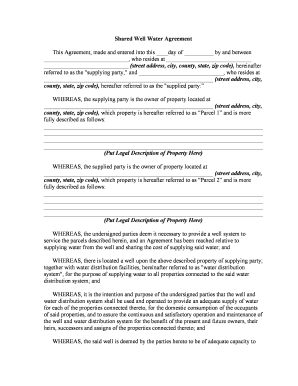
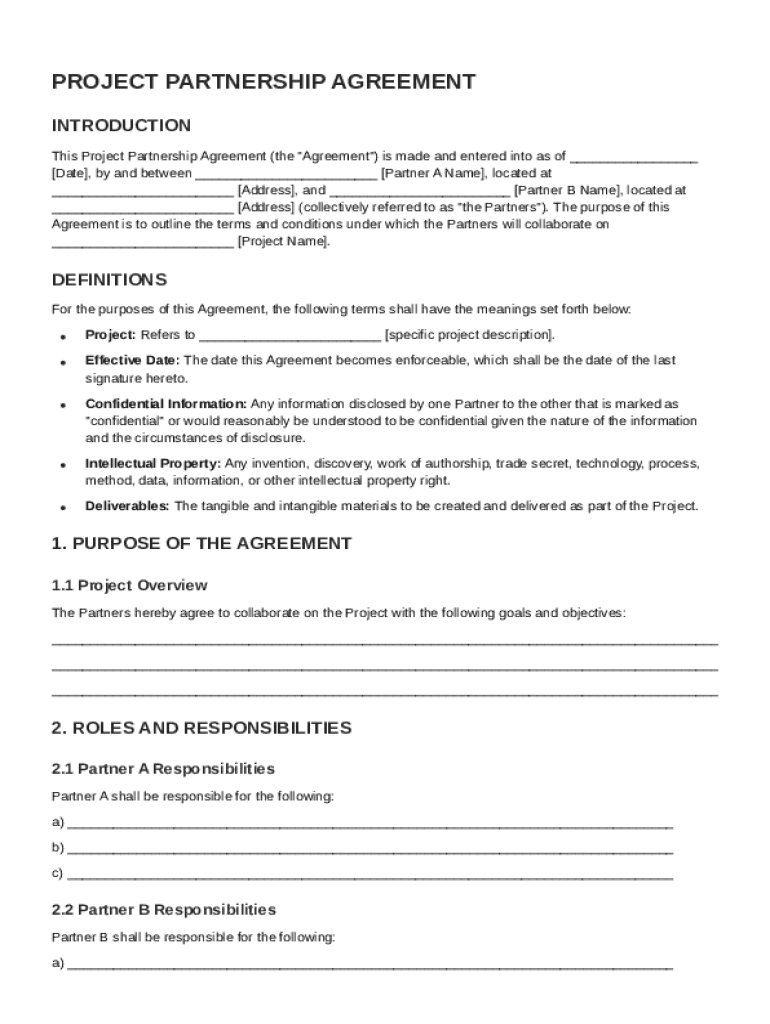
A Project Partnership Agreement Template is a structured document designed to outline the terms of collaboration between two or more parties working on a specific project. This legal document serves as a framework to define the roles, responsibilities, and contributions of each partner involved in the project. Key aspects covered in the agreement include financial contributions, intellectual property rights, confidentiality obligations, and dispute resolution mechanisms. By establishing clear guidelines, the template helps prevent misunderstandings and ensures that all parties are aligned on the project's objectives and execution strategies.
Key Components
- Roles and Responsibilities: Defines the specific duties and obligations of each partner.
- Financial Contributions: Outlines the financial commitments required from each party.
- Intellectual Property: Specifies ownership rights of any innovations, trademarks, or patents developed during the project.
- Confidentiality Obligations: Details how sensitive information must be handled and protected.
How to Use the Project Partnership Agreement Template
Utilizing a Project Partnership Agreement Template requires a systematic approach to ensure all elements are accurately captured and understood by all parties involved. The template provides a structured format for inputting specific project details and clauses agreed upon by partners.
Step-by-Step Instructions
- Identify the Parties: Clearly list all entities entering the partnership, including legal names and associated roles.
- Define Project Scope: Describe the project objectives, timelines, and any milestones.
- Establish Responsibilities: Detail the tasks and duties each partner is expected to perform.
- Financial Terms: Specify how expenses and profits will be shared.
- Review Legal Obligations: Ensure all clauses comply with relevant laws and standard practices.
Practical Scenarios
- For a technology startup collaborating with a software developer to create a new app, the template would outline the developer's responsibilities vs the startup's funding commitments.
- In construction projects, different contractors may use the agreement to delineate specific tasks such as design, supervision, and execution.
Important Terms Related to Project Partnership Agreement Template
Understanding the terminology within a Project Partnership Agreement is crucial for effective implementation and compliance. Several important legal and business terms frequently appear in these agreements.
Commonly Used Terms
- Joint Venture: A business arrangement where two or more parties collaborate for a specific project but maintain their separate legal identities.
- Indemnification: A clause that protects a party from any financial loss or legal liability.
- Non-Compete Clause: An agreement where a party agrees not to compete against the other party for a specified time frame or market.
Examples
- Confidentiality: Ensures sensitive information shared during the development of a proprietary technology is not disclosed to unauthorized parties.
- Dispute Resolution: Often includes mediation or arbitration before pursuing litigation.
Key Elements of the Project Partnership Agreement Template
The Project Partnership Agreement Template encapsulates critical elements that serve as the backbone of a successful partnership. Each element must be carefully considered and agreed upon by all involved parties.
Elements to Include
- Project Title and Description: Clearly labeled at the top of the document for reference.
- Duration: Defines the start and end dates of the partnership.
- Amendment Procedures: Details the process for modifying the agreement if necessary.
Nuances and Considerations
- Amendments may require additional negotiation sessions, especially if financial terms are involved.
- Duration must align with project goals and potential extensions to account for unexpected delays.
Legal Use of the Project Partnership Agreement Template
Using the Project Partnership Agreement Template requires careful attention to legal standards to ensure enforceability and compliance.
Legal Guidelines
- ESIGN Compliance: Agreements signed electronically must adhere to the ESIGN Act to be considered legally binding.
- Jurisdiction Clauses: Specify which state's laws govern the agreement.
Legal Scenarios
- Projects spanning multiple states might need legal counsel to align the agreement with varying state laws.
- International collaborations may require additional clauses for cross-border legal matters.
State-Specific Rules for the Project Partnership Agreement Template
Different states may impose unique requirements that affect how Project Partnership Agreement templates are drafted and enforced.
State Variations
- California: Often requires more detailed intellectual property rights clauses due to prevalent tech projects.
- New York: May demand specific disclosures related to partnership liabilities.
Example of Application
- A tech company in Texas collaborating with a startup in California needs to incorporate both Texas business regulations and California’s IP laws within their agreement.
Who Typically Uses the Project Partnership Agreement Template
This template is used by various entities seeking to formalize their collaboration on a project, ranging from businesses to non-profit organizations.


Typical Users
- Corporations: Engage in partnerships for joint product development.
- Non-Profits: Collaborate on community projects with government bodies.
- Small Businesses: Partner with other local enterprises for mutual benefit projects.
Use Cases
- An engineering firm partnering with a design company to construct an eco-friendly building.
- A university department collaborating with a tech company for a research project.
Digital vs. Paper Version
Deciding between a digital or paper version of the Project Partnership Agreement Template depends on convenience, security, and compliance requirements.
Advantages of Digital Versions
- Convenience: Easily share, edit, and store in cloud environments.
- Security: SSL encryption ensures secure transmission and storage.
Considerations for Paper Versions
- Security: Physical copies may be required in jurisdictions where digital signatures are not yet recognized.
- Accessibility: Beneficial in areas with limited internet access.