






Definition & Meaning
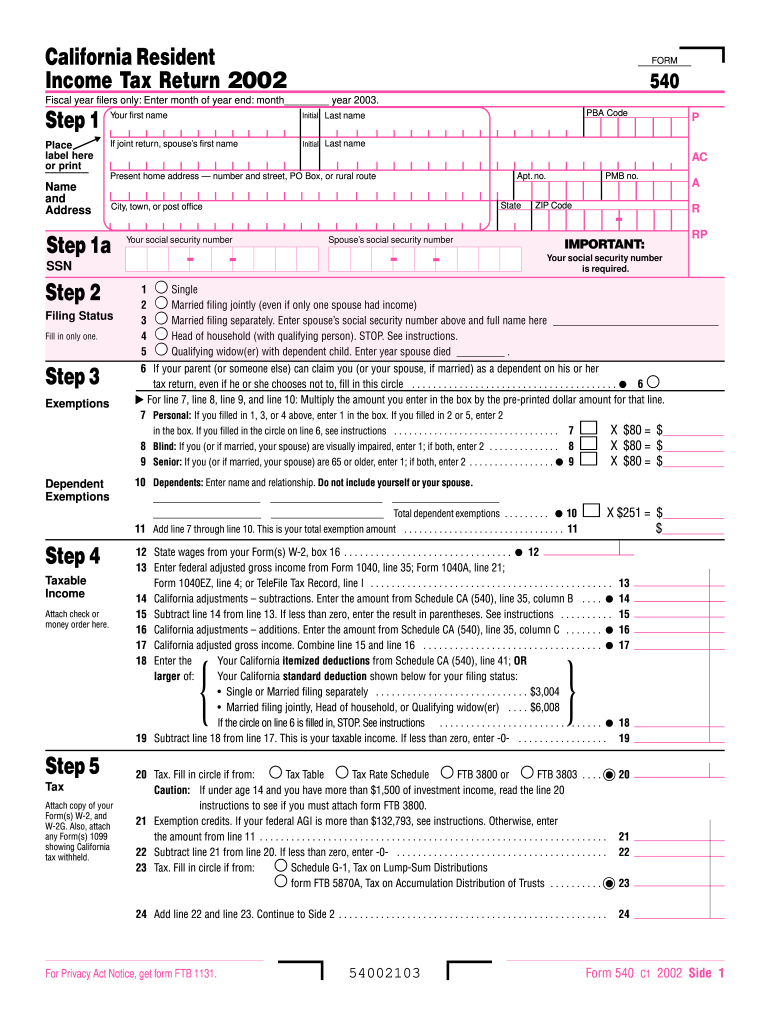
The 2002 Form 540 is the California Resident Income Tax Return form used for the fiscal year 2002. It is necessary for California residents to report their annual income, calculate their state income tax obligations, and determine whether they owe taxes or are due for a refund. This form includes various sections that require residents to detail their personal information, income sources, tax credits, and other relevant financial data.
How to Use the 2002 Form 540
To effectively use the 2002 Form 540, users must gather necessary personal and financial information, including W-2 forms, 1099 forms, and other income statements. The process involves filling out sections related to exemptions, filing status, taxable income, and tax credits. Each section guides users through calculating their total tax liability or refund. It is crucial to ensure all details are accurate and complete before submitting the form to avoid errors in tax calculations.
Steps to Complete the 2002 Form 540
- Gather Documents: Collect all necessary financial documents, including income statements and any relevant deductions or credits.
- Personal Information: Fill in your name, address, and Social Security Number.
- Filing Status: Indicate your appropriate filing status, such as single, married filing jointly, or head of household.
- Exemptions: Record applicable exemptions, which may include personal, dependent, or special exemptions.
- Income Reporting: Enter all sources of income, such as wages, investments, or other taxable earnings.
- Tax Calculations: Compute your tax obligations by following the provided instructions for calculating deductions and credits.
- Finalize and Sign: Double-check all sections for accuracy and completeness, then sign and date the form.
Key Elements of the 2002 Form 540
- Personal Information: This element requires basic identifying details and is crucial for linking your tax information with your identity.
- Filing Status: Determines the tax bracket and related deductions, significantly affecting the overall tax liability.
- Exemptions and Dependents: Accounts for personal exemptions and those for dependents, directly impacting the taxable income.
- Income Section: Mandatory reporting of wages and other income sources to establish taxable income.
- Credits and Deductions: Reduces total taxable income and subsequently affects the final tax due or refund amount.
State-specific Rules for the 2002 Form 540
California has its own set of income tax regulations, distinct from federal requirements. These state-specific rules often pertain to deductions, credits, and exemptions unavailable at the federal level. For instance, certain educational credits or environmentally friendly expense deductions may be exclusive to California state taxes. Additionally, state residency status can impact the form process, affecting both part-year and full-year California residents differently in terms of income declaration and tax liability.
Filing Deadlines / Important Dates
The standard deadline for submitting the 2002 Form 540 is April 15, 2003. If this date falls on a weekend or holiday, the deadline extends to the next business day. Taxpayers needing additional time may request an extension, usually granting six additional months to file. However, taxes owed are still due by the original filing deadline to avoid interest and penalties.
Form Submission Methods (Online / Mail / In-person)
- Online: Taxpayers can file electronically through authorized e-filing services, which the State of California recognizes as a secure and efficient submission method.
- Mail: Forms can also be mailed to the appropriate California Franchise Tax Board address. It is crucial to ensure the form is postmarked by the deadline.
- In-person: Submission at designated Franchise Tax Board offices may be an option, where officials can also assist with inquiries and ensure correct filing.
Penalties for Non-Compliance
Failing to submit the 2002 Form 540 by the deadline can result in penalties and interest on unpaid taxes. The California Franchise Tax Board imposes penalties based on the amount owed and the lateness of the payment. Additionally, intentional evasion or inaccuracies may result in further legal actions and higher fines. It is crucial for residents to ensure timely and accurate form submission to avoid these punitive measures.
Examples of Using the 2002 Form 540
A self-employed California resident would use the 2002 Form 540 to report income derived from freelancing or business ownership. They would detail revenues, claim business-related deductions, and calculate their overall tax liability. Similarly, a retiree might use the form to report retirement income, including pensions and Social Security, ensuring correct exemptions and credits are applied. Each case requires a detailed approach to accurately reflect income and applicable tax benefits.
Software Compatibility
The 2002 Form 540 can be completed using various tax preparation software like TurboTax or QuickBooks, which are compatible with California tax requirements. These programs offer step-by-step guidance, ensuring users complete the form accurately. They often feature error-checking algorithms that help prevent common mistakes, enhancing the accuracy of submissions. Using these digital solutions can streamline the entire tax process, offering an organized way to manage tax-related tasks.