
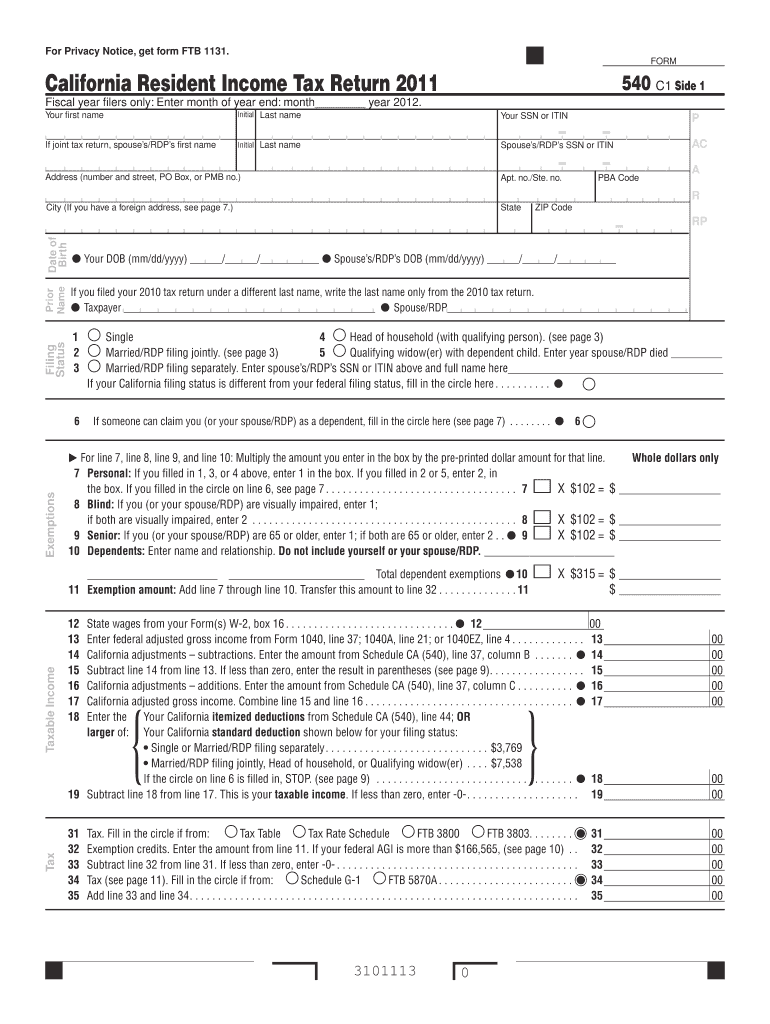







Definition and Purpose of 2016 Form 540 Instructions
The 2016 Form 540 instructions provide detailed guidance for California residents on completing the California Resident Income Tax Return, Form 540, for the tax year 2016. This document outlines essential information, including how to report income, claim deductions and credits, and calculate state tax obligations. It serves as a comprehensive resource to ensure accurate tax filing within the jurisdiction of California's tax laws. The instructions help taxpayers understand specific terms and requirements, aiding them in completing their tax returns without errors.
How to Use the 2016 Form 540 Instructions
To utilize the 2016 Form 540 instructions effectively, begin by reviewing the table of contents for an overview of different sections, such as income reporting, deductions, and credits. Each section provides step-by-step procedures for completing the related parts of the Form 540. Carefully follow these guidelines to ensure accurate data entry. For example, the income section will detail how to report various types of income, such as wages, dividends, and rental income, while the deductions section will explain eligibility and documentation requirements for claiming different types of deductions.
Step-by-step Completion Process
-
Gather Required Documents: Before starting the form, collect all necessary documents, including W-2s, 1099s, and receipts for deductible expenses.
-
Filing Status and Personal Information: Use the instructions to select the correct filing status and accurately complete the personal information section.
-
Income Reporting: Enter income details as outlined, ensuring that each type of income is reported in its designated section.
-
Deductions and Credits: Follow the instructions to claim qualifying deductions and tax credits, reviewing the eligibility criteria thoroughly.
-
Tax Calculation and Refund Options: Use the guidance to compute the total tax liability and determine if you are eligible for a refund.
Steps to Complete the 2016 Form 540 Instructions
Completing the 2016 Form 540 instructions involves a structured process:
-
Review Personal Information: Verify the accuracy of names, addresses, and Social Security numbers at the beginning of the form.
-
Determine Filing Status: Reference the definitions in the instructions to choose your correct filing status based on marital situation and household responsibilities.
-
Document Income Sources: Thoroughly list all income, consulting sections in the instructions that describe where to report each type, including exemptions and exclusions.
-
Apply Deductions and Credits: Calculate eligible deductions and credits; the instructions provide detailed lists and examples for common deductions like mortgage interest and educational credits.
-
Complete Tax Calculation: Following the detailed calculation instructions ensures accurate determination of taxable income and owed taxes.
-
Finalize and Submit: After reviewing for errors, use the instructions to determine submission options, including electronic filing, and retain copies for personal records.
Who Typically Uses the 2016 Form 540 Instructions
The 2016 Form 540 instructions are typically used by California residents required to file a state income tax return, including:
-
Employees: Regular employees who earn wages and salaries in California need the instructions for accurately reporting earned income and claiming applicable deductions.
-
Self-employed Individuals: Freelancers and business owners use the instructions to understand income declarations and deductions unique to self-employment income.
-
Retirees: Those receiving pensions or retirement distributions must consult the instructions to determine the tax implications of their income sources.
-
Students and Part-time Workers: Individuals with income from part-time employment or educational grants can find guidance on reporting such income accurately.

Required Documents for Completing 2016 Form 540
Completing the 2016 Form 540 requires various documents to substantiate income and deductions. Commonly required documents include:
-
W-2 Forms: Issued by employers to document wages and salaries.
-
1099 Forms: Used for reporting miscellaneous income, including interest, dividends, and independent contractor earnings.
-
Schedule C and SE: For self-employed individuals, to report business income and self-employment taxes.
-
Mortgage Interest Statements: For those claiming deductions on home loan interest.
-
Receipts for Charitable Contributions: Necessary for claiming deductions on charitable donations made throughout the year.
Key Elements of the 2016 Form 540 Instructions
The instructions for the 2016 Form 540 are structured to cover various crucial elements:
-
Filing Deadlines: Clear guidance on submission dates to avoid penalties.
-
Exemption Credits: Detailed descriptions of available credits for personal and dependent exemptions.
-
Adjustment Worksheets: Tools included in the instructions to help calculate adjustments to income and credits.
-
Penalty Information: Clarifications on potential penalties for late filing or inaccuracies, along with how to avoid them.
Form Submission Methods for 2016 Form 540
The 2016 Form 540 can be submitted using different methods:
-
Online Filing: The most efficient method, allowing direct submission to the California Franchise Tax Board's system.
-
Mail: Traditional paper filing requires mailing the completed form to the designated tax office address found in the instructions.
-
In-Person: Visit designated tax offices for assistance and direct submission, ensuring all information is verified.
Penalties for Non-Compliance with 2016 Form 540 Instructions
Failure to comply with the 2016 Form 540 instructions can result in significant penalties:
-
Late Filing Penalty: Assessed for returns filed past the submission deadline without an approved extension.
-
Underpayment Penalty: Imposed if estimated tax payments are inadequate compared to the actual tax liability calculated.
-
Accuracy Related Penalty: Levied for substantial understatements of tax due to errors or negligence.
Engaging with the Form 540 instructions thoroughly helps in understanding these penalties and taking precautions to avoid them.




