
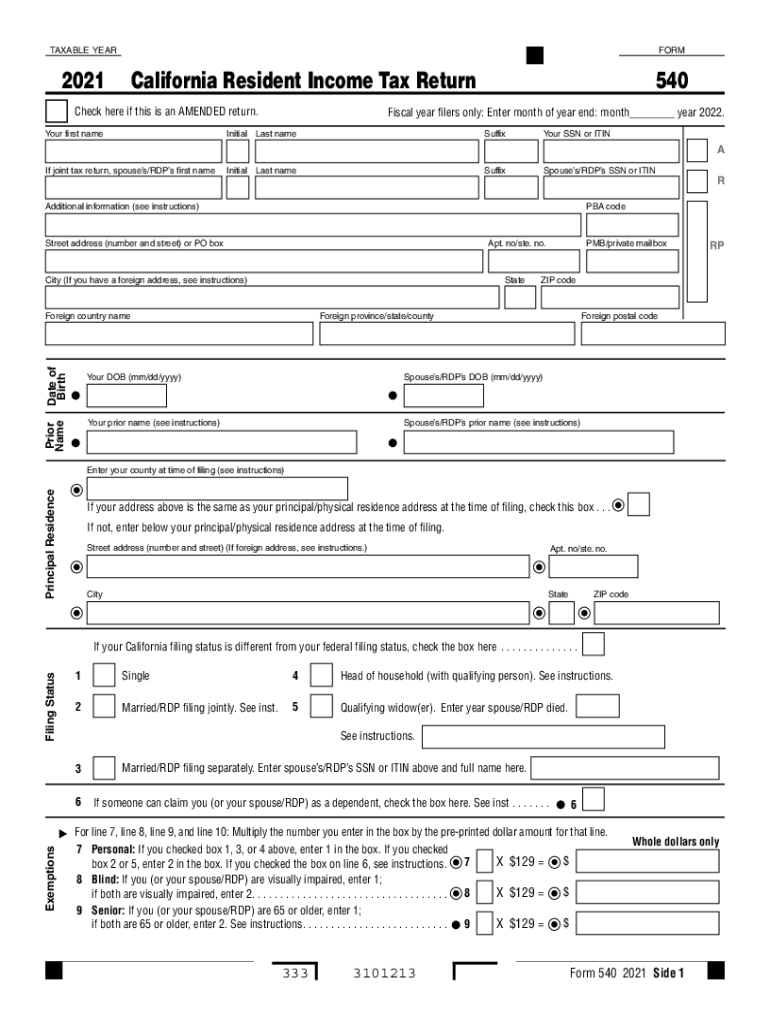







Definition and Purpose of Schedule CA
The Schedule CA is a supplemental form used by California residents to adjust their federal adjusted gross income (AGI) when filing their state tax returns. The primary aim is to align state-specific tax rules with federal tax regulations. This form plays a crucial role for taxpayers in identifying additions and subtractions to their federal AGI to calculate their California taxable income accurately.
Key Components of Schedule CA
- Additions: Items not taxed federally but are taxable in California, such as certain types of interest income.
- Subtractions: Items taxed federally but are tax-exempt or treated differently in California, like certain types of bond interest.
- Column A: Federal amounts directly from your federal tax return.
- Column B: Additions to your federal AGI for California tax purposes.
- Column C: Subtractions from your federal AGI to adjust for California-specific rules.
How to Use the Schedule CA
The Schedule CA is filled out alongside the California Form 540. It includes reporting income, deductions, credits, and any adjustments needed to convert the federal AGI to the state AGI.
- Copy Federal Figures: Start by copying pertinent figures from your federal tax return into Column A.
- Identification of Adjustments: Review each line item to determine necessary additions (Column B) or subtractions (Column C).
- Calculate Adjusted Income: Perform additions and subtractions to establish the California taxable income.
- Attach Schedule to Form 540: After completing, attach the Schedule CA to the California tax return for submission.
Examples of Adjustments
- Student Loan Interest: Deductible federally but may differ under California law.
- Interest from U.S. Obligations: Not taxable in California.
Key Elements of Schedule CA
Understanding the various fields in the form is essential for accurate completion:
- Section 1 — Income Adjustments: Lists potential differences in income recognition between federal and state laws.
- Section 2 — Adjustments to Itemized Deductions: Shows how your federal itemized deductions may require modification for California’s standards.
- Section 3 — Other Taxes: Identifies taxes applicable on both federal and state levels but computed differently.
Detailed Field Analysis
- Mortgage Interest: California caps may differ from federal limits.
- Charitable Contributions: Differences in deduction limits based on state guidelines.
Who Typically Uses the Schedule CA
Schedule CA 540 is primarily used by:
- Residents of California: Those filing taxes in California but earn income outside state borders.
- Individuals with Federal Adjustments: Taxpayers subject to federal tax adjustments needing state-specific treatment.
- Taxpayers with Diverse Income Sources: Such as business income, dividends, or interest from different states.


Legal and Compliance Aspects
The form is governed by state tax law requiring compliance to avoid penalties. Legal requirements ensure that income is reported and taxes are paid according to California laws, which may diverge from federal rules.
Important Compliance Points
- Accuracy: Ensures all state adjustments are correctly accounted for.
- Documentation: Substantiates income and deduction claims to meet California-specific requirements.
Steps to Complete Schedule CA
- Collect Relevant Documents: Gather federal tax returns, W-2s, 1099s, and any supporting schedules.
- Review Federal Return: Determine items needing California adjustments.
- Fill in Columns A, B, and C: Accurately reflect federal amounts and state-specific adjustments.
- Calculate Totals: Compute total California income and deductions.
- Attach to Form 540: Submit alongside the main California resident income tax return.
IRS Guidelines for Schedule CA
While IRS guidelines provide a foundation, California may interpret certain tax aspects differently. Compliance with changes to specific items is essential for consistency and accuracy.
Standard Differences
- Health Savings Account Contributions: Treated differently for state versus federal taxes.
- Federal Income Exemptions: Validate any exemptions not recognized by California.
Filing Deadlines and Important Dates
Taxpayers should note the April 15 deadline as the California tax filing date, aligning with the federal deadline. Extensions are available if requested in advance, allowing more time without penalty. Timely filing avoids late fees and potential interest charges.
Extension Protocols
- Automatic Extensions: Granted under certain conditions when a federal extension is filed.
- Payment of Taxes Due: Required to avoid penalties even with filing extensions.
Form Submission Methods
Taxpayers can submit Schedule CA 540 along with Form 540 either digitally or by mail, providing flexibility based on preference or resources available.
Submission Channels
- Online Filing: Via state-approved e-filing systems.
- Mail: Direct submission to the California Franchise Tax Board.
- In-Person: Service centers provide drop-off facilities.
Penalties for Non-Compliance
Penalties for incorrect or late filing may apply, emphasizing the importance of adhering to guidelines and deadlines. Compliance ensures smoother processing and avoids additional charges.
Examples
- Late Filing: Incur daily penalties.
- Misinformation Penalties: Apply for intentionally false information.




