




01. Edit your 2013 ca 540 online
Type text, add images, blackout confidential details, add comments, highlights and more.

Type text, add images, blackout confidential details, add comments, highlights and more.

Draw your signature, type it, upload its image, or use your mobile device as a signature pad.

Send 2013 540 via email, link, or fax. You can also download it, export it or print it out.
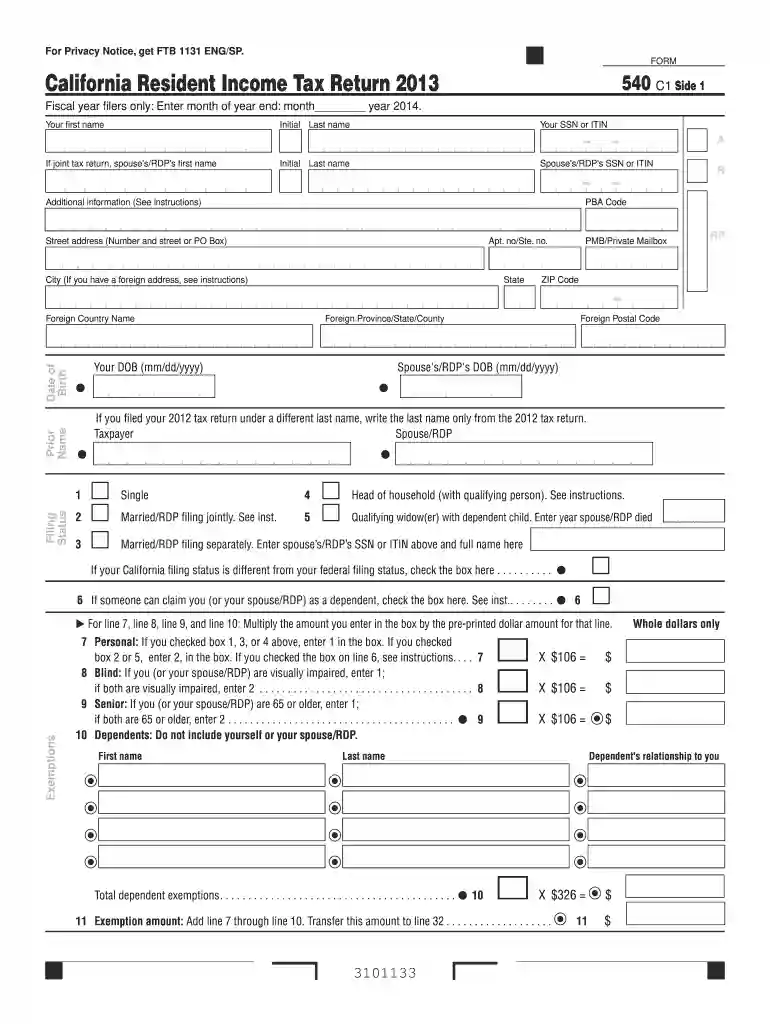
The 2013 Form 540 is the California Resident Income Tax Return used by residents of California to report their annual income and calculate state tax liabilities for the year 2013. This form is designed specifically for individuals residing in California, ensuring they accurately report incomes, taxes, and any applicable credits or exemptions to the state's tax authorities.
To obtain the 2013 Form 540, individuals can download it from the California Franchise Tax Board's (FTB) official website. Alternatively, forms may be available at local government offices, libraries, or post offices in California. For those preferring physical copies, it's advisable to contact local tax agencies or order by phone directly from the FTB for mail delivery.
Completing the 2013 Form 540 involves several steps:
Personal Information: Begin by filling in personal details such as name, address, and Social Security Number.
Filing Status: Select the appropriate filing status from categories like single, married filing jointly, head of household, etc.
Exemptions and Dependents: Declare any personal exemptions and list dependents to qualify for additional deductions.
Income Calculation: Report all sources of income, including wages, dividends, and self-employment earnings.
Tax Credits and Deductions: Calculate and apply any applicable tax credits and deductions.
Payments: Indicate any previous payments made, including estimated taxes or withholding.
Sign and Date: Ensure the form is signed and dated before submission to validate its authenticity.
Form 540 includes several critical sections that must be completed accurately:
The 2013 Form 540 is primarily used by:


Usage of the 2013 Form 540 adheres to California's state tax laws. Misrepresentation of information or failing to file can lead to penalties and interest. Therefore, it's critical to provide accurate information. Retaining a copy of the completed form and relevant documentation is advisable for legal and auditor checks.
For the 2013 tax year, the standard filing deadline for Form 540 was April 15, 2014. Extensions could be obtained, allowing residents additional time to file without facing penalties. Nevertheless, any taxes owed were still due by the original deadline to avoid late payment charges.
To accurately complete the 2013 Form 540, gather the following documents:
By ensuring all supported documents are on hand, taxpayers can seamlessly complete the form, reducing errors and rejections.
We've got more versions of the 2013 ca 540 form. Select the right 2013 ca 540 version from the list and start editing it straight away!
| Versions | Form popularity | Fillable & printable |
|---|---|---|
| 2025 | 4.9 Satisfied (32 Votes) | |
| 2024 | 4.5 Satisfied (41 Votes) | |
| 2023 | 4.8 Satisfied (57 Votes) | |
| 2022 | 4.4 Satisfied (58 Votes) | |
| 2021 | 4.8 Satisfied (196 Votes) | |
| 2020 | 4.4 Satisfied (68 Votes) | |
| 2019 | 4.3 Satisfied (176 Votes) | |
| 2018 | 4.3 Satisfied (120 Votes) | |
| 2017 | 4.3 Satisfied (127 Votes) | |
| 2016 | 4.4 Satisfied (234 Votes) | |
| 2015 | 4.3 Satisfied (243 Votes) | |
| 2014 | 4 Satisfied (31 Votes) | |
| 2013 | 4 Satisfied (47 Votes) | |
| 2012 | 4.3 Satisfied (54 Votes) | |
| 2011 | 4 Satisfied (35 Votes) |
At DocHub, your data security is our priority. We follow HIPAA, SOC2, GDPR, and other standards, so you can work on your documents with confidence.
AB540 students may apply for Cal Grants for the 2013-14 year. The application period for Cal Grant awards is January 1,. 2013 through March 2, 2013 andRead more
Respondents should be aware that notwithstanding any other provision of law, no person shall be subject to any penalty for failing to comply with a collectionRead more
Form 540. California Resident Income Tax Return. Use Form 540 to file California resident income tax return. Related: Instruction Booklet for form 540.Read more


