Ifrs sample Balance Sheet Templates

Browse Ifrs sample Balance Sheet Templates and generate a personalized financial statement. Adjust, complete, eSign, and distribute your balance sheets without holdups.


Get and manage Ifrs sample Balance Sheet Templates online

Speed up your file managing with our Ifrs sample Balance Sheet Templates category with ready-made document templates that suit your requirements. Access the document template, edit it, fill it, and share it with your contributors without breaking a sweat. Start working more effectively with the forms.

The best way to use our Ifrs sample Balance Sheet Templates:

  1. Open our Ifrs sample Balance Sheet Templates and search for the form you need.
  2. Preview your document to ensure it’s what you want, and click on Get Form to begin working on it.
  3. Modify, include new text, or point out important information with DocHub tools.
  4. Complete your form and save the modifications.
  5. Download or share your form with other people.

Discover all the possibilities for your online file administration with our Ifrs sample Balance Sheet Templates. Get your totally free DocHub account right now!


Video Guide on Ifrs sample Balance Sheet Templates management

video background

Commonly Asked Questions about Ifrs sample Balance Sheet Templates

IFRS 4 allowed various measurement approaches, including the use of local accounting methods. IFRS 17 introduces a more uniform and transparent approach, emphasizing the use of current values and risk adjustments to determine insurance contract liabilities.
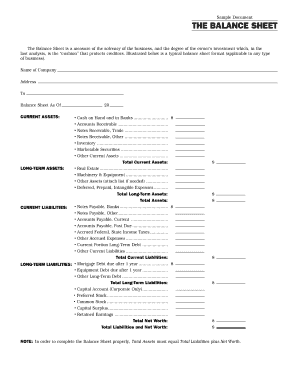
The Balance Sheet Template for Excel is a pre-designed spreadsheet that allows users to enter their companys financial information, including assets, liabilities, and equity. This template is useful for businesses of all sizes, as it can be customized to fit each companys specific needs.
It did not address other aspects of accounting by insurers, such as their financial assets and liabilities. The objective was to specify accounting for insurance contracts until the IASB completed the second phase of its insurance contracts project, resulting in IFRS 17.
IFRS covers a wide range of accounting activities. There are certain aspects of business practice for which IFRS set mandatory rules. Statement of financial position: This is the balance sheet.
❹ What changes? IFRS 17 requires a company to measure insurance contracts using updated estimates and assumptions that reflect the timing of cash flows and any uncertainty relating to insurance contracts. This requirement will provide transparent reporting about a companys financial position and risk.
IFRS 17 creates a universal language for insurance contract accounting, facilitating easier comparison between insurers across different markets. This comparability is crucial for investors and analysts who assess and benchmark the performance of insurance companies globally.
The balance sheet format under IFRS starts with non-current assets, followed by current assets, owners equity, non-current liabilities, and current liabilities. How is the IFRS Balance Sheet Format Different From Gaap? IFRS allows for greater flexibility in classifying assets and liabilities compared to GAAP.